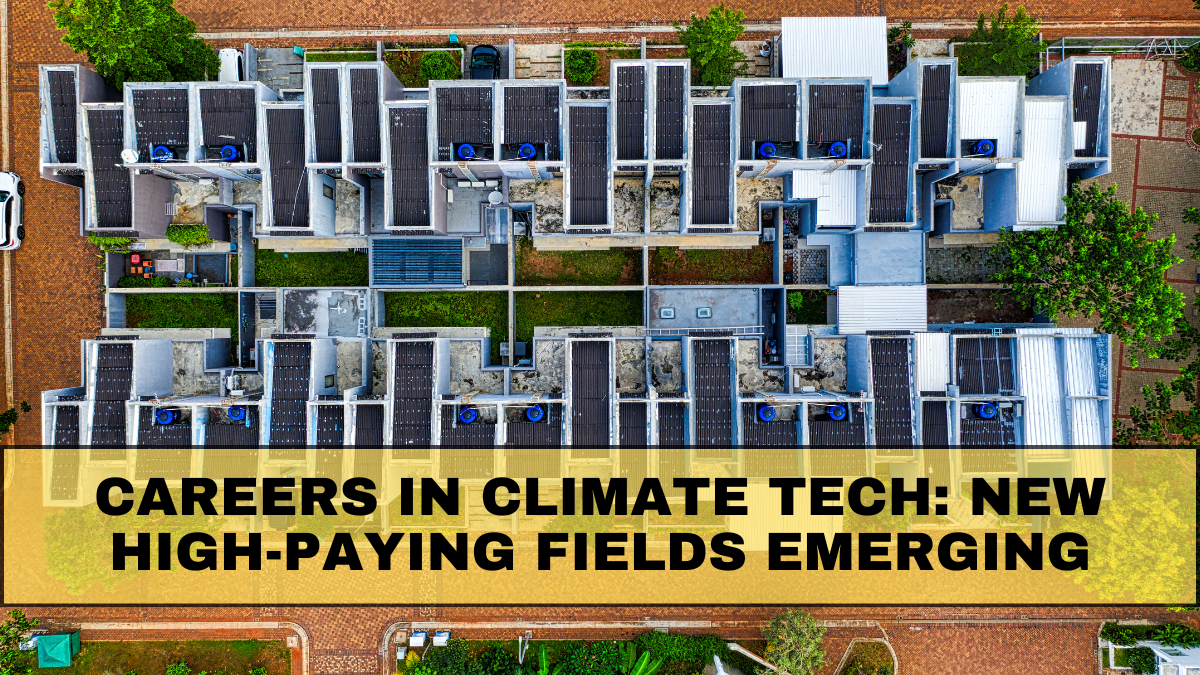
The global push for sustainability has created a surge in Climate Tech Careers, opening high-paying opportunities in renewable energy, environmental monitoring, and green innovation. Companies and governments are investing heavily in climate solutions, driving demand for professionals who can develop, implement, and maintain sustainable technologies. As industries adopt cleaner practices, the job market for climate tech specialists continues to grow rapidly.
Climate tech encompasses a range of sectors including renewable energy, carbon capture, electric mobility, smart agriculture, energy-efficient infrastructure, and environmental data analytics. Professionals in these areas are not only contributing to a greener planet but also securing rewarding careers with competitive salaries and long-term growth potential.

Why Climate Tech Careers Are in Demand
Rising climate awareness, regulatory pressure, and technological innovation are key drivers of demand. Businesses are looking to meet sustainability goals, reduce carbon footprints, and comply with environmental standards. This requires skilled personnel who can design green solutions, manage renewable energy projects, and analyze environmental data.
Governments and private enterprises are funding green startups, clean energy projects, and sustainable infrastructure, creating opportunities across engineering, research, data science, project management, and policy advisory roles. Climate tech jobs are often cross-disciplinary, combining technology expertise with environmental knowledge.
High-Paying Roles in Climate Tech
Some of the most lucrative positions include renewable energy engineers, sustainability analysts, environmental data scientists, climate policy consultants, and electric vehicle specialists. Professionals with experience in AI-driven climate modeling, energy storage solutions, and smart grids are particularly sought after.
The sector also values project management, consulting, and strategic planning skills, as companies need experts who can implement large-scale green initiatives efficiently. Remote work opportunities and global projects further enhance the appeal of these careers.
Preparing for a Career in Climate Tech
Candidates can prepare by acquiring relevant certifications, attending specialized courses, and gaining hands-on experience in green projects. Degrees in environmental engineering, energy systems, data science, and sustainability management are highly relevant. Additionally, keeping up with climate tech trends and participating in innovation challenges or internships helps build expertise and credibility.
Conclusion
Climate Tech Careers offer a combination of high demand, strong salaries, and meaningful work that contributes to global sustainability. Professionals entering this field can expect rapid career growth, opportunities across sectors, and the chance to make a tangible environmental impact. By focusing on technical skills, sustainability knowledge, and practical experience, individuals can position themselves as leaders in the emerging climate tech industry.
FAQs
What are climate tech careers?
Jobs in renewable energy, environmental monitoring, sustainable infrastructure, and green innovation aimed at addressing climate challenges.
Which roles pay the most in climate tech?
Renewable energy engineers, environmental data scientists, sustainability analysts, and climate policy consultants are among the highest-paying.
How can I prepare for a climate tech career?
Pursue relevant degrees, specialized certifications, hands-on projects, and internships in sustainability-focused fields.
Is demand for climate tech jobs growing?
Yes, global sustainability efforts, green policies, and technological innovation are driving strong demand.
Can climate tech careers be global?
Absolutely. Many opportunities exist worldwide, including remote roles and international projects focused on sustainability.