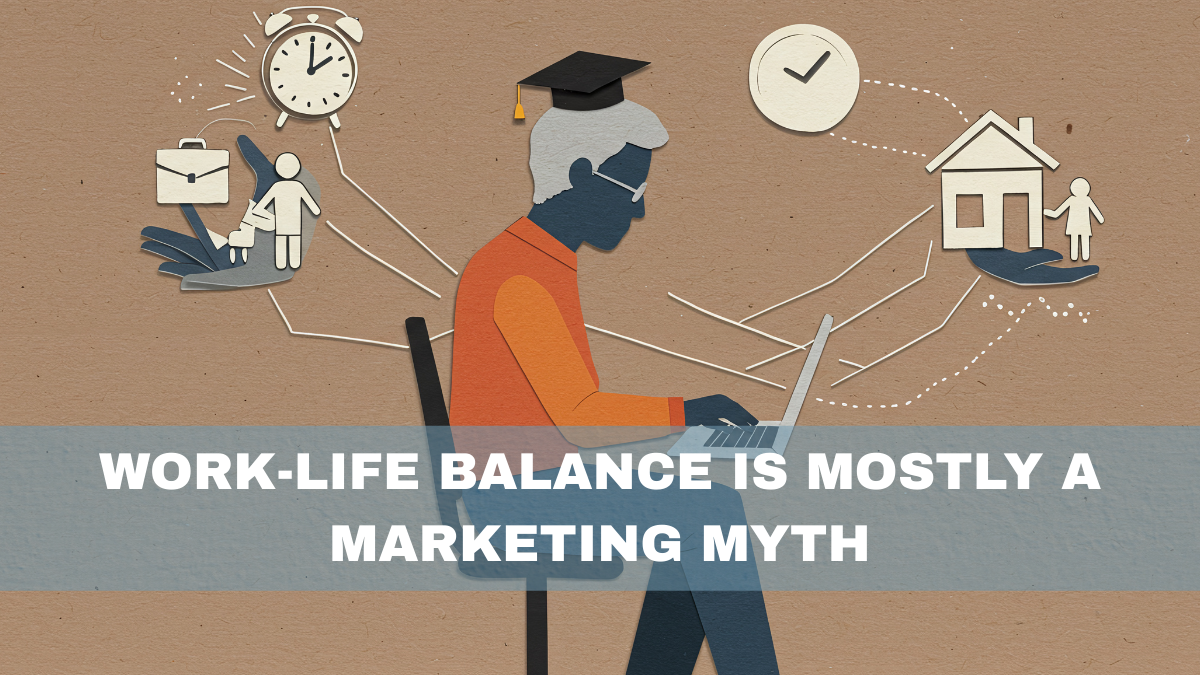
In 2026, these phrases sound comforting—but for millions of workers, they don’t match reality. The work life balance myth persists not because it’s true, but because it’s useful. It shifts responsibility from systems to individuals, making burnout feel like a personal failure instead of a structural problem.
People aren’t bad at balance. Many jobs are simply incompatible with it.
Where the Work Life Balance Myth Came From
The idea didn’t emerge from labor reform—it came from branding.
Companies popularized work-life balance to:
• Appear humane without changing workloads
• Attract talent without raising pay
• Normalize long hours through “flexibility”
• Frame exhaustion as poor self-management
The work life balance myth grew as a promise that required no systemic change.
Why Many Jobs Can’t Support Balance by Design
Balance assumes control over time. Most roles don’t offer that.
Structural blockers include:
• Fixed deadlines with variable workloads
• Always-on communication expectations
• Client-driven urgency
• Time-zone overlap requirements
When output is uncapped but time is fixed, balance becomes impossible.
How Burnout Economics Quietly Replaced Balance
Modern work optimizes for output per person, not sustainability.
Burnout economics looks like:
• Fewer employees doing more work
• Constant “urgent” tasks
• Rewarding responsiveness over results
• Celebrating resilience instead of fixing overload
The work life balance myth masks an economy that depends on exhaustion.
Why Flexibility Often Means Working More
Flexibility sounds freeing—until it isn’t.
What actually happens:
• Work spills into evenings
• Boundaries blur at home
• Availability becomes default
• Guilt replaces overtime pay
Flexible schedules often expand work, not contain it—fueling the work life balance myth.
The Jobs Where Balance Is Least Realistic
Some roles are structurally high-risk.
These include:
• Healthcare and emergency services
• Client-facing consulting
• Startup and high-growth roles
• Gig and platform-based work
• Managerial positions with accountability but no authority
In these cases, the work life balance myth feels almost insulting.
Why Advice Like ‘Set Boundaries’ Falls Flat
Boundaries only work when power exists.
Why advice fails:
• Saying no has career consequences
• Workload isn’t negotiable
• Performance reviews reward availability
• Replacement is easy
Telling individuals to fix systemic overload reinforces the myth.
How Hustle Culture Keeps the Myth Alive
Hustle culture reframes overwork as ambition.
It promotes:
• Long hours as dedication
• Burnout as weakness
• Rest as laziness
• Sacrifice as success
The work life balance myth survives because exhaustion is glamorized.
What People Actually Want (But Rarely Get)
Most workers aren’t asking for perfection.
They want:
• Predictable workloads
• True off-hours
• Fair staffing levels
• Respect for time
These are structural asks—not motivational ones.
Why Some Companies Can Offer Balance (And Most Can’t)
Balance isn’t impossible—it’s expensive.
It requires:
• More hiring
• Lower short-term output
• Better planning
• Leadership discipline
Few organizations are willing to trade growth for sustainability, keeping the work life balance myth alive.
What a More Honest Conversation Looks Like
Honesty beats optimism.
A better framework would ask:
• Is this role compatible with balance?
• What trade-offs exist?
• How long is this pace sustainable?
• What support actually exists?
Truth reduces guilt. Myths increase it.
What Individuals Can Realistically Do
While systems matter most, individuals still need survival strategies.
Practical steps:
• Choose roles with clearer boundaries
• Treat balance as seasonal, not constant
• Measure stress, not just income
• Plan exits from unsustainable phases
Escaping the work life balance myth starts with realism.
Conclusion
The work life balance myth isn’t failing because people lack discipline—it’s failing because modern work demands more than balance allows. Until workloads, expectations, and incentives change, balance will remain a slogan, not a standard.
In 2026, the most honest question isn’t “How do I balance better?”
It’s “Is this work designed to be balanced at all?”
FAQs
Is work-life balance achievable in 2026?
For some roles and companies, yes—but not universally.
Why does balance feel harder than before?
Because workloads expanded while boundaries eroded.
Is burnout an individual failure?
No. It’s often a structural outcome.
Does flexibility improve balance?
Not always. It often increases availability expectations.
What’s more realistic than balance?
Sustainable workloads, clear boundaries, and honest trade-offs.
Click here to know more.