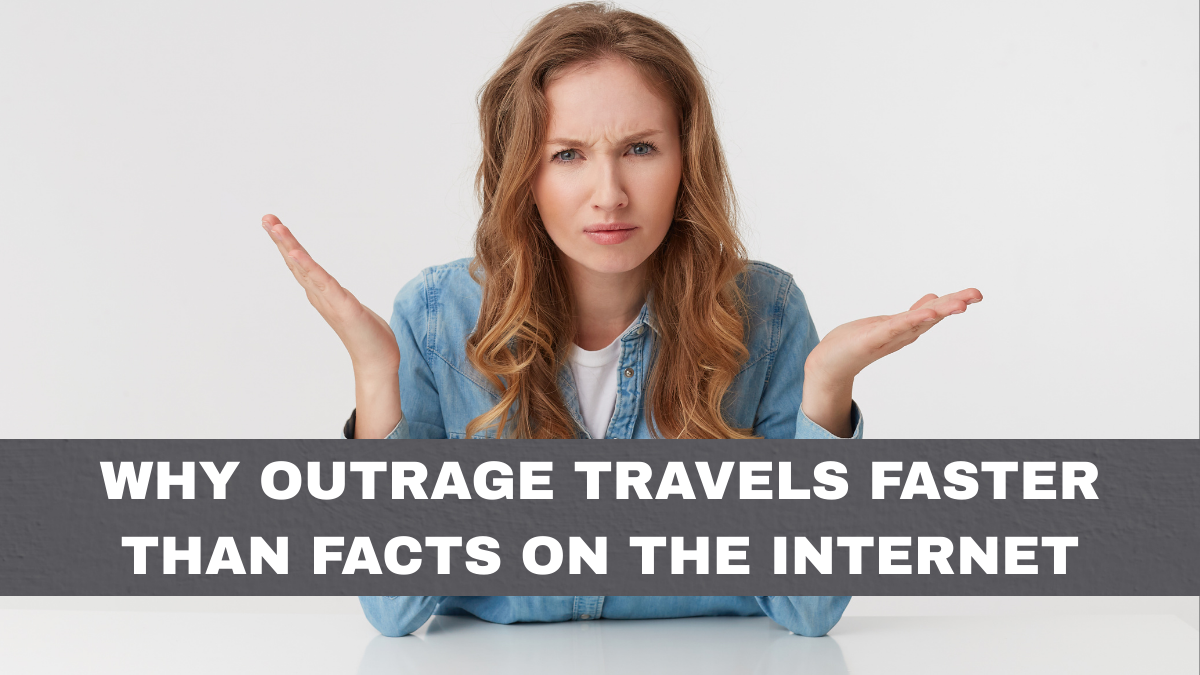
Scroll through any social platform and you’ll see the same pattern repeating again and again. A clip goes viral. Context disappears. Emotions explode. Opinions harden instantly. Hours later—sometimes days—the full facts emerge, but by then, the damage is done. This pattern is the internet outrage cycle, and it isn’t accidental. It’s engineered.
Outrage doesn’t just spread faster than facts—it’s rewarded for doing so. Understanding cancel culture psychology and the mechanics behind outrage explains why calm explanations struggle to compete in a system optimized for emotional intensity.
What the Internet Outrage Cycle Actually Is
The internet outrage cycle follows a predictable sequence.
It usually looks like this:
• A provocative clip or statement appears
• Context is removed or simplified
• Emotional reactions surge
• Social pressure demands a response
• Punishment or shaming occurs
• Clarifications arrive too late
By the time facts catch up, attention has already moved on.
Why Outrage Is More Shareable Than Facts
Outrage activates the nervous system. Facts don’t.
Outrage spreads because it:
• Triggers anger or moral shock
• Feels urgent and righteous
• Signals group belonging
• Requires little verification
Facts demand patience. Outrage demands action.
The Role of Algorithms in Amplifying Anger
Platforms are designed to maximize engagement, not accuracy.
Algorithms promote content that:
• Generates strong reactions
• Keeps people commenting
• Encourages rapid sharing
Anger, fear, and moral outrage outperform calm analysis every time.
Cancel Culture Psychology Explained
Cancel culture psychology isn’t about justice—it’s about social signaling.
People participate because:
• Public alignment feels safe
• Silence feels risky
• Group approval is rewarded
Calling out feels like moral action, even when information is incomplete.
Why Context Collapses Online
Nuance doesn’t survive speed.
Context collapses because:
• Short formats limit explanation
• Attention spans are fragmented
• Simplified narratives spread faster
The internet outrage cycle thrives on reduction, not understanding.
The Dopamine Hit of Moral Superiority
Outrage provides a psychological reward.
It delivers:
• A sense of righteousness
• Social validation
• Emotional release
This makes outrage addictive—even when it’s harmful.
Why Facts Arrive Too Late
Fact-checking takes time. Outrage doesn’t wait.
By the time facts emerge:
• Opinions are entrenched
• Emotional investment is high
• Reversal feels embarrassing
Correcting misinformation rarely travels as far as the original outrage.
How Social Pressure Fuels Outrage
Outrage spreads faster when silence is interpreted as agreement with wrongdoing.
This creates:
• Forced participation
• Performative statements
• Fear-driven reactions
People react quickly to avoid becoming targets themselves.
The Human Cost of the Outrage Cycle
The internet outrage cycle isn’t abstract—it affects real people.
Consequences include:
• Reputation damage
• Mental health harm
• Career disruption
• Social isolation
These effects often occur before facts are established.
Why Outrage Feels Necessary—but Isn’t
Outrage feels like accountability, but it often bypasses due process.
True accountability requires:
• Evidence
• Proportion
• Context
• Time
Outrage skips these steps entirely.
Why Calm Voices Get Ignored
Calm explanations lack urgency.
They:
• Don’t trigger emotional spikes
• Don’t feel share-worthy
• Don’t signal group loyalty
In outrage-driven systems, moderation looks like weakness.
Breaking the Internet Outrage Cycle
Stopping the cycle doesn’t mean apathy—it means restraint.
Effective interruptions include:
• Pausing before reacting
• Seeking full context
• Resisting performative responses
• Valuing accuracy over speed
Slowing down is an act of resistance.
What Platforms Could Change (But Haven’t)
Platforms could:
• Reduce algorithmic amplification
• Delay viral spread
• Promote contextual information
They don’t—because outrage drives engagement.
Conclusion
The internet outrage cycle exists because it works—for platforms, not for people. Outrage travels faster than facts because it’s emotionally charged, socially rewarded, and algorithmically amplified. Cancel culture psychology thrives in environments where speed matters more than truth.
Breaking this cycle requires discomfort: resisting immediacy, tolerating uncertainty, and choosing understanding over reaction. Facts still matter—but only when people are willing to wait for them.
FAQs
What is the internet outrage cycle?
It’s the rapid spread of emotional reactions before facts or context are established.
Why does outrage spread faster than facts?
Because it triggers strong emotions and is rewarded by algorithms.
How does cancel culture psychology work?
It’s driven by social pressure, moral signaling, and fear of exclusion.
Do fact-checks stop online outrage?
Rarely. They usually arrive after opinions are already fixed.
How can individuals avoid fueling outrage?
By pausing, seeking context, and resisting pressure to react immediately.
Click here to know more.