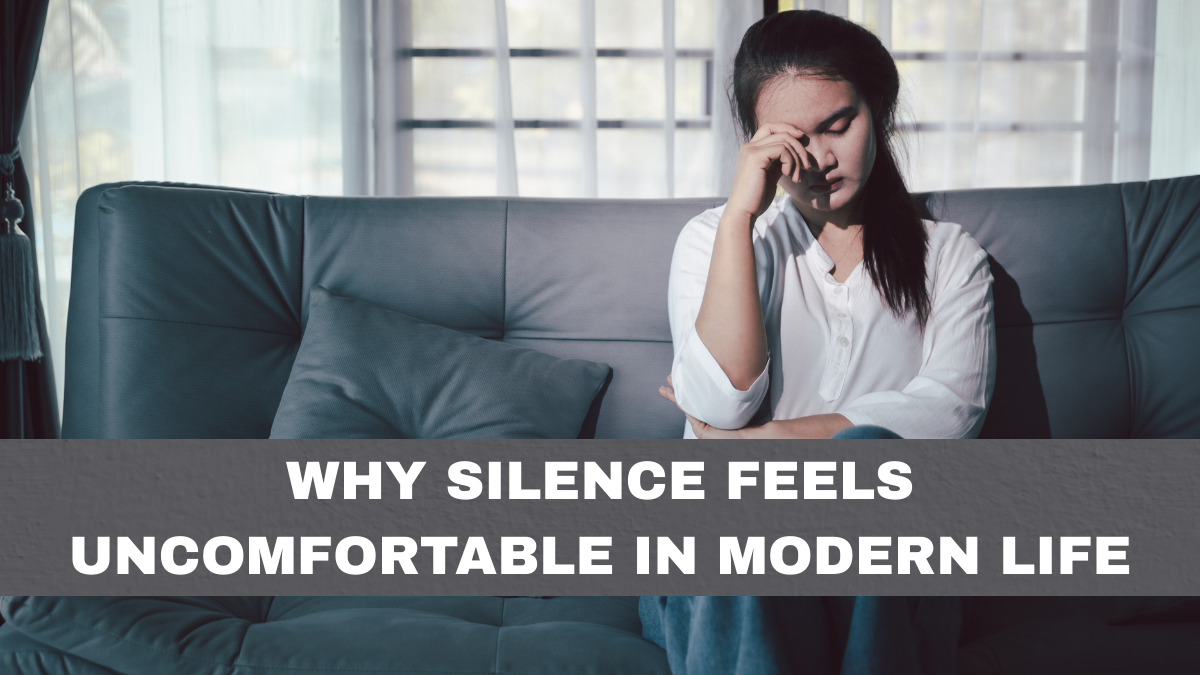
Silence used to be ordinary. It existed between conversations, during travel, in waiting rooms, and at home. Today, silence feels awkward, heavy, even threatening. People instinctively fill it with music, podcasts, scrolling, or background noise. This reaction isn’t random. The growing fear of silence is a direct response to living inside a world shaped by constant noise culture.
What’s changed isn’t silence itself—it’s our tolerance for it. Modern environments train the mind to expect continuous stimulation. When that stimulation disappears, discomfort rushes in. Silence becomes something to escape rather than something to experience.
How Silence Was Once a Normal Part of Life
Silence didn’t need justification. It appeared naturally.
People once experienced silence while:
• Walking alone
• Waiting without devices
• Sitting with thoughts
• Resting without distraction
These moments allowed the nervous system to reset. Silence wasn’t empty—it was neutral.
Why Silence Now Feels Awkward
In a high-stimulation environment, silence creates contrast.
Silence feels uncomfortable because:
• The brain expects input
• Attention has no anchor
• Internal thoughts become louder
Constant noise culture conditions the mind to equate silence with absence instead of rest.
The Role of Constant Noise Culture
Modern life is layered with sound.
Noise now comes from:
• Notifications
• Background media
• Open workspaces
• Traffic and devices
The nervous system rarely experiences quiet long enough to adapt.
Why People Reach for Noise Automatically
The urge to fill silence isn’t always boredom—it’s regulation.
People use noise to:
• Avoid uncomfortable thoughts
• Reduce anxiety
• Create a sense of presence
Over time, silence becomes associated with discomfort instead of calm.
Silence and Emotional Avoidance
Silence allows emotions to surface. That’s why it’s avoided.
In silence:
• Thoughts slow down
• Feelings become noticeable
• Unprocessed emotions appear
Noise becomes a shield against inner experience.
Why Being Alone With Thoughts Feels Hard
Many people haven’t practiced being alone mentally.
This difficulty comes from:
• Habitual distraction
• Unresolved stress
• Fear of self-reflection
The fear of silence is often fear of what might surface within it.
How Silence Supports Mental Health
Silence isn’t just absence—it’s recovery.
Silence helps:
• Lower nervous system arousal
• Improve focus
• Support emotional regulation
Without silence, mental fatigue accumulates quietly.
The Link Between Silence and Attention
Attention needs quiet to stabilize.
When silence disappears:
• Focus becomes brittle
• Attention fragments faster
• Restlessness increases
Noise culture weakens the brain’s ability to stay with one thing.
Why Silence Feels Socially Uncomfortable
Silence is often interpreted as awkwardness or disengagement.
Social discomfort comes from:
• Fear of judgment
• Pressure to perform
• Need to fill gaps
Modern norms treat silence as failure rather than presence.
How Silence Was Reframed as Inefficient
Productivity culture reframed silence as wasted time.
Silence now feels:
• Unproductive
• Suspicious
• Lazy
This framing makes quiet moments feel wrong—even when they’re needed.
Relearning How to Be Comfortable With Silence
Comfort with silence is a skill—and skills can return.
Helpful practices include:
• Device-free moments
• Sitting without background noise
• Allowing pauses in conversation
• Not rushing to fill quiet
Exposure rebuilds tolerance.
Using Silence Intentionally
Silence doesn’t need to be constant—it needs to be intentional.
When used deliberately, silence:
• Restores clarity
• Reduces overstimulation
• Improves self-awareness
It becomes a resource instead of a threat.
What Silence Teaches When We Stop Avoiding It
Silence reveals patterns.
It shows:
• What we’re avoiding
• Where stress lives
• How attention behaves
Avoiding silence avoids insight.
Conclusion
The fear of silence isn’t a flaw—it’s a learned response. Constant noise culture trained the brain to expect stimulation, making quiet feel uncomfortable and unfamiliar. Silence didn’t change. Our relationship with it did.
Reclaiming silence doesn’t require isolation or rejection of technology. It requires permission. Permission to pause, to listen inward, and to let quiet exist without immediately filling it. In a noisy world, silence isn’t emptiness—it’s medicine.
FAQs
Why does silence feel uncomfortable today?
Because constant stimulation trained the brain to expect noise and activity.
What is constant noise culture?
An environment filled with ongoing sound, media, and digital input that rarely allows quiet.
Is silence good for mental health?
Yes. Silence supports emotional regulation, focus, and nervous system recovery.
Why do people avoid being alone with silence?
Because silence allows thoughts and emotions to surface without distraction.
How can I become more comfortable with silence?
By gradually reducing background noise and allowing quiet moments without filling them.