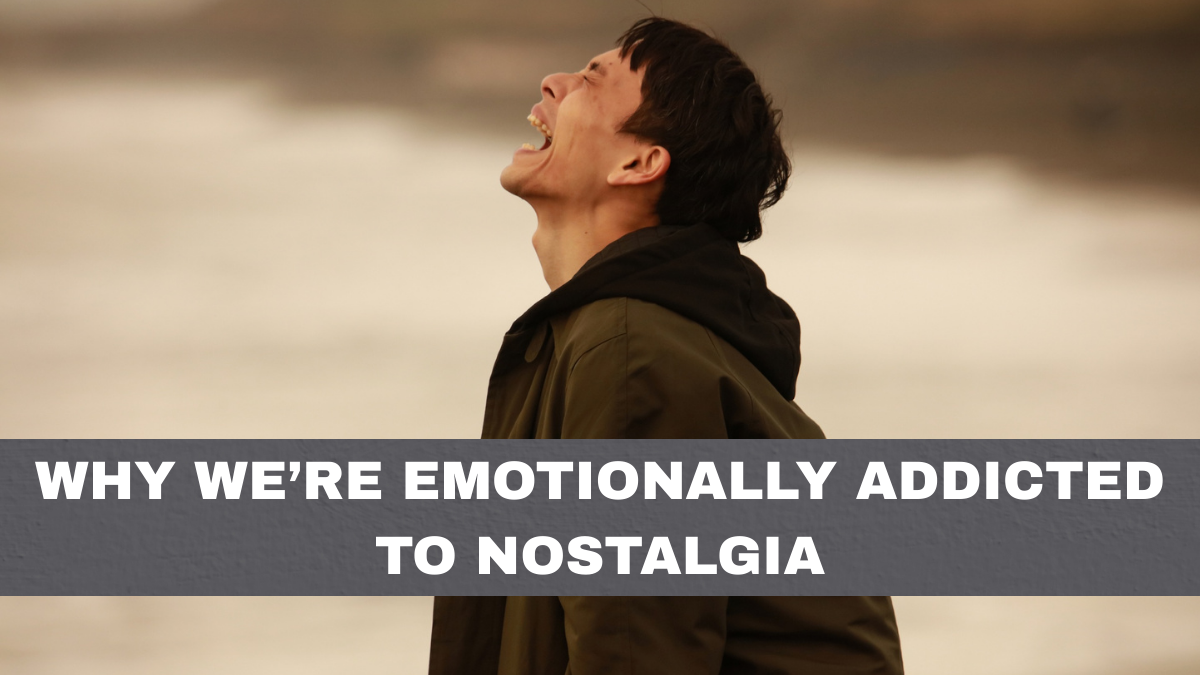
Scroll through social media, music playlists, or pop culture trends and one thing becomes obvious: the past is everywhere. Old songs resurface, retro aesthetics dominate, childhood shows are rebooted, and “things were better back then” has become a shared emotional reflex. This isn’t random. It reflects a growing nostalgia addiction—an emotional pull toward the past that feels comforting, familiar, and safe.
Nostalgia itself isn’t harmful. It becomes a problem when it turns into escape. The psychology behind this past obsession reveals why people cling to memories more tightly during uncertain times—and why the past often feels warmer than it truly was.

What Nostalgia Actually Is Psychologically
Nostalgia is a mixed emotion. It blends happiness, longing, and loss.
Psychologically, nostalgia:
• Activates memory-based comfort
• Reinforces identity continuity
• Reduces feelings of isolation
• Temporarily boosts mood
It reminds people who they were and where they came from—especially when the present feels unstable.
Why Nostalgia Feels So Powerful Today
Periods of rapid change increase emotional reliance on the past.
Nostalgia addiction intensifies because:
• The future feels uncertain
• Social norms change quickly
• Technology accelerates life
• Stability feels rare
The past becomes a mental anchor when the present feels overwhelming.
The Role of Uncertainty and Anxiety
When anxiety rises, the brain seeks safety. Memories provide it.
People turn to nostalgia because:
• The past feels known
• Outcomes already happened
• Threat feels absent
This is a classic coping mechanism—one rooted in emotional regulation, not logic.
Why the Past Feels Better Than It Was
Memory isn’t neutral. It edits.
The brain tends to:
• Forget routine discomfort
• Highlight emotional peaks
• Smooth over complexity
This distortion fuels past obsession psychology, making memories feel simpler and happier than reality ever was.
Nostalgia as Emotional Regulation
Nostalgia reduces stress temporarily.
It works because:
• Familiarity calms the nervous system
• Memories trigger social connection
• Identity feels more stable
But like any coping strategy, it loses effectiveness when overused.
When Nostalgia Turns Into Avoidance
Healthy nostalgia connects past and present. Addiction disconnects them.
Nostalgia becomes unhealthy when:
• The present feels intolerable
• Change is resisted
• Growth feels threatening
At this point, nostalgia addiction shifts from comfort to avoidance.
The Cultural Reinforcement of Nostalgia
Modern culture monetizes nostalgia heavily.
It’s reinforced through:
• Reboots and remakes
• Retro branding
• Algorithmic memory triggers
Culture feeds nostalgia because it’s emotionally reliable and commercially effective.
Why Nostalgia Creates a False Sense of Belonging
Nostalgia often centers on shared cultural moments.
This creates:
• Instant connection
• Collective identity
• Emotional shorthand
But belonging based only on the past can weaken engagement with the present.
How Nostalgia Affects Motivation
Excessive nostalgia can reduce forward momentum.
It may cause:
• Resistance to new experiences
• Fear of change
• Decreased risk-taking
When the past becomes idealized, the future feels less appealing.
The Difference Between Reflection and Obsession
Reflection integrates memory. Obsession replaces reality.
Reflection:
• Informs growth
• Provides perspective
Obsession:
• Replaces engagement
• Freezes identity
Understanding this distinction prevents nostalgia addiction from taking over.
Why Younger Generations Feel Nostalgic Too
Nostalgia isn’t limited to older adults.
Younger people feel it because:
• Digital life accelerates change
• Cultural cycles move faster
• Stability feels scarce
Even recent memories can feel distant in fast-moving environments.
Using Nostalgia Without Getting Stuck
Nostalgia doesn’t need to be eliminated—it needs balance.
Healthy use includes:
• Appreciating memories without escaping
• Using the past as context, not refuge
• Staying open to new experiences
Nostalgia works best when it supports, not replaces, the present.
Conclusion
Nostalgia addiction isn’t about loving the past—it’s about coping with uncertainty in the present. Past obsession psychology reveals how memory becomes a refuge when stability feels scarce. The danger isn’t remembering—it’s retreating.
The past can inform and comfort, but it can’t be lived in. Growth requires carrying memory forward, not hiding inside it. When nostalgia connects rather than replaces, it becomes a bridge—not a cage.
FAQs
What is nostalgia addiction?
It’s excessive emotional reliance on the past to cope with present uncertainty.
Why does nostalgia increase during stressful times?
Because familiar memories provide emotional safety and stability.
Is nostalgia bad for mental health?
Not inherently. It becomes harmful when it replaces engagement with the present.
Why does the past feel better than it really was?
Because memory filters out routine discomfort and highlights emotional positives.
How can nostalgia be used healthily?
By appreciating memories while staying open to growth and new experiences.
Click here to know more.