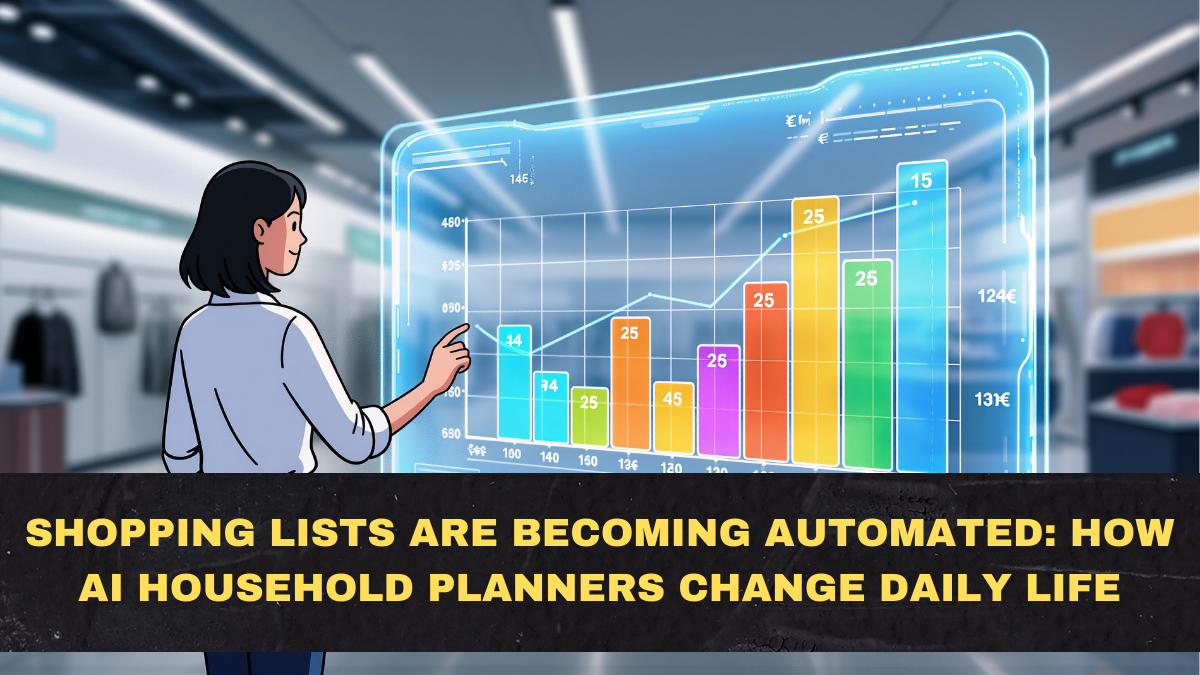
AI agents for shopping lists are quietly transforming one of the most ordinary parts of daily life: remembering what to buy. For decades, shopping lists were manual notes, mental reminders, or last-minute scribbles. Then came apps. Then reminders. Then shared family lists.
In 2026, that phase is ending.
Shopping lists are no longer written by humans. They are generated, maintained, and executed by AI household planners.
These systems now watch consumption patterns, predict needs, coordinate meals, manage inventory, and automatically reorder essentials — often before anyone realizes something is running out.
This is not just convenience. It is the beginning of autonomous household logistics.
Why Shopping Lists Are Perfect for Automation
Household shopping is repetitive, predictable, and data-rich.
Most homes buy:
• The same staples
• On similar schedules
• In consistent quantities
• For recurring meals
• With seasonal variation
Humans forget:
• When milk runs out
• Which spices are missing
• What snacks are left
• When cleaning supplies finish
• What tomorrow’s meal requires
This makes shopping lists ideal for:
• Pattern detection
• Consumption forecasting
• Reorder automation
• Meal-driven planning
AI can predict needs better than memory ever could.
What AI Household Planners Actually Do
Modern household AI agents go far beyond list creation.
They now:
• Track pantry inventory
• Monitor fridge contents
• Analyze meal plans
• Predict consumption cycles
• Generate shopping lists automatically
• Optimize quantities
• Suggest substitutions
• Schedule reorders
Instead of asking:
“What do we need to buy?”
The system already knows:
• What is missing
• What is running low
• What meals are planned
• What preferences apply
• What budget limits exist
The list appears — already complete.
How Meal Planning AI Drives Shopping Automation
Meal planning AI is the core engine behind automation.
These systems:
• Analyze past meals
• Learn dietary preferences
• Track allergies and restrictions
• Balance nutrition goals
• Generate weekly menus
From the menu, the AI:
• Breaks down ingredients
• Checks existing inventory
• Calculates quantities needed
• Builds optimized shopping lists
Instead of planning meals after shopping,
homes now shop based on planned meals.
This reduces:
• Food waste
• Duplicate purchases
• Forgotten ingredients
• Last-minute store trips
Meal planning becomes the command center of household supply.
Why Reordering Is Becoming Fully Automatic
Reordering is where automation becomes powerful.
AI agents now:
• Monitor usage frequency
• Track depletion rates
• Predict stock-out dates
• Schedule replenishment
• Place orders automatically
Common examples include:
• Milk
• Eggs
• Bread
• Rice
• Cooking oil
• Cleaning products
• Pet food
• Toiletries
The system handles:
• Vendor selection
• Price comparison
• Delivery scheduling
• Quantity optimization
Humans only intervene when:
• Preferences change
• Budgets tighten
• Brands are switched
Shopping becomes background infrastructure.
How Household Automation Changes Daily Routines
The impact on daily life is subtle but profound.
Homes now experience:
• Fewer emergency store trips
• No forgotten essentials
• More predictable spending
• Faster meal prep
• Lower cognitive load
Instead of:
“Did we buy detergent?”
People now ask:
“Is the system handling it?”
Household management shifts from:
• Remembering
To:
• Reviewing and approving
Mental energy is freed for:
• Family
• Work
• Health
• Planning
• Leisure
This is one of the first consumer automations that truly reduces daily stress.
Why Retailers Are Racing to Integrate With AI Planners
Retailers see household planners as the next demand channel.
Integration enables:
• Direct reorder pipelines
• Personalized recommendations
• Dynamic pricing
• Subscription hybrids
• Loyalty automation
Instead of competing on:
• Store visits
Retailers now compete on:
• Default supplier status
• AI recommendation ranking
• Reorder reliability
• Delivery precision
The battle shifts from:
• Shelf space
To:
• Algorithmic shelf placement inside household planners.
Winning that position locks in long-term customer relationships.
How Preferences and Budgets Are Built Into Automation
Automation does not mean losing control.
Modern systems allow users to define:
• Preferred brands
• Organic vs regular
• Dietary restrictions
• Price ceilings
• Bulk vs small packs
• Store priorities
Budgets can enforce:
• Monthly spending caps
• Category limits
• Alert thresholds
• Approval requirements
AI learns:
• Substitution tolerance
• Promotion sensitivity
• Seasonal behavior
• Family consumption patterns
The system becomes:
• Personalized
• Budget-aware
• Health-aware
• Preference-driven
Not generic automation.
Why Trust Is the Biggest Barrier to Adoption
Despite benefits, adoption depends on trust.
Users worry about:
• Overspending
• Brand bias
• Hidden promotions
• Data tracking
• Loss of control
• Wrong quantities
That is why leading systems provide:
• Full visibility dashboards
• Edit-before-order flows
• Spending previews
• Order history logs
• Easy cancellation
• Override controls
Automation only succeeds when users feel:
• In control
• Informed
• Able to intervene instantly
Without trust, automation stalls.
How This Changes Household Economics
Automation changes spending behavior.
Effects include:
• Fewer impulse buys
• Lower food waste
• Better inventory utilization
• More stable monthly budgets
• Higher subscription efficiency
At the same time:
• Default brand loyalty increases
• Vendor lock-in grows
• Price sensitivity may decrease
• Recommendation power rises
Household planners quietly become:
• Demand shapers
• Brand gatekeepers
• Spending influencers
This gives them enormous economic influence.
Why Smart Homes Accelerate This Trend
Smart appliances amplify automation.
Connected devices now:
• Report inventory levels
• Track usage
• Detect spoilage
• Signal maintenance needs
• Trigger reorders
Examples include:
• Fridges scanning contents
• Coffee machines tracking capsules
• Washing machines tracking detergent
• Pet feeders tracking food
The home itself becomes a data-producing supply chain.
Shopping moves from:
• Human-initiated
To:
• Sensor-driven
This is the foundation of autonomous households.
The New Risks of Household Automation
Automation introduces new vulnerabilities.
Risks include:
• Over-ordering loops
• Supplier bias
• Algorithmic nudging
• Privacy exposure
• Household profiling
• Manipulative promotions
That is why governance is emerging:
• Approval thresholds
• Recommendation transparency
• Sponsored listing disclosure
• Brand neutrality rules
• Spending anomaly detection
Without safeguards, planners become:
• Sales engines
• Not household assistants
Control will determine long-term acceptance.
What Household Planning Looks Like by Late 2026
The dominant model becomes:
• Weekly AI-generated meal plans
• Auto-built shopping lists
• Smart inventory tracking
• Scheduled reorders
• Budget-aware automation
• Human approval for major changes
Households no longer manage:
• Lists
• Memory
• Timing
• Quantities
They manage:
• Preferences
• Budgets
• Rules
Logistics becomes invisible.
Conclusion
AI agents for shopping lists are transforming households from reactive buyers into automated supply systems. By linking meal planning, inventory tracking, and intelligent reordering, daily life becomes smoother, cheaper, and less mentally exhausting.
In 2026, the biggest lifestyle upgrade is not a gadget.
It is never running out of what you need again.
Because the future of convenience is not faster shopping.
It is not needing to shop at all.
FAQs
What are AI agents for shopping lists?
They are AI systems that track consumption, plan meals, generate shopping lists, and automate reorders.
How does meal planning AI help shopping automation?
It creates menus, calculates ingredients, checks inventory, and builds optimized shopping lists automatically.
Can users control what gets reordered?
Yes. Users set brand preferences, budgets, quantity limits, and approval rules.
Does this reduce food waste?
Yes. Better forecasting and inventory tracking significantly reduce overbuying and spoilage.
Will this replace manual shopping completely?
No. It automates routine essentials, while users still handle discretionary and special purchases.
Click here to know more.