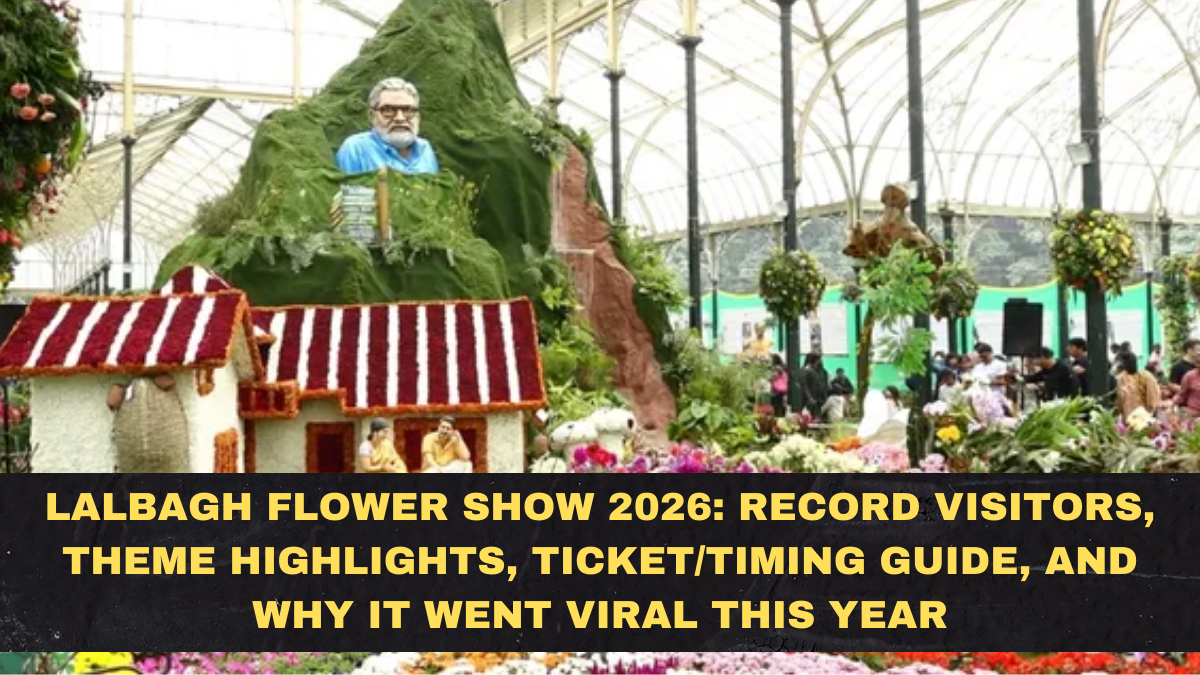
The Lalbagh Flower Show 2026 did not just attract crowds in Bengaluru. It triggered a city-wide cultural moment. Families postponed trips, tourists reworked itineraries, and local residents queued for hours just to get inside the botanical garden. What was once seen as a pleasant seasonal exhibition has now turned into a viral civic event that dominates social feeds, weekend plans, and tourist checklists.
This year’s show crossed previous visitor records by a wide margin, and not by accident. The theme design, flower architecture scale, visual spectacle, and social-media friendliness combined into a perfect storm. People were not just going to see flowers. They were going to witness something that felt historically “big” for Bengaluru.
This Lalbagh Flower Show 2026 guide explains why the show went viral, what the theme actually meant, how ticketing and entry worked in practice, what visitors experienced inside, and what first-time attendees should know before planning a visit.
Why the Lalbagh Flower Show Felt Different in 2026
The emotional tone of the 2026 edition was fundamentally different from earlier years. Past shows were mostly treated as quiet garden exhibitions visited by retirees, school groups, and nature enthusiasts. This year, it felt like a city-scale festival.
One reason was scale. The central floral structure was significantly larger, more detailed, and more visually dramatic than in recent editions. It created a landmark-like centerpiece that people immediately recognized in photos and videos.
Another reason was cultural relevance. The theme tapped into a strong regional and emotional identity, which made people feel proud, nostalgic, and curious at the same time.
That combination turned casual interest into mass attendance.
The Theme That Triggered the Record Footfall
The theme design in 2026 was not just decorative. It was narrative.
Instead of generic floral sculptures, the show centered around a cultural and literary concept deeply rooted in Karnataka’s identity. The floral architecture recreated iconic symbols, heritage references, and visual metaphors that resonated with local pride.
Visitors were not just admiring flowers. They were reading meaning into the structures, discussing symbolism, and sharing emotional reactions online.
That emotional engagement is what pushed the show from “nice outing” into “must-see event.”
Why Social Media Made It Explode
The Lalbagh Flower Show 2026 was almost perfectly engineered for viral spread, even if unintentionally.
The central installation looked stunning in wide-angle shots. The flower tunnels and arches created cinematic walking visuals. The lighting made evening photos look unreal. Every corner of the garden offered an Instagram-ready frame.
People were not just visiting. They were content-creating.
Once the first wave of viral reels and photos hit social platforms, footfall surged as people rushed to see what the hype was about.
What Visitors Actually Experienced Inside Lalbagh
Inside the garden, the atmosphere felt more like a fair than a quiet botanical exhibition.
Crowds moved slowly through themed zones, stopping constantly for photos and videos. Volunteers and security staff managed queues around the main floral structures. Families sat on lawns, ate snacks, and treated it as a full-day outing.
The flower diversity was unusually high, with rare imported species mixed with local varieties. The landscaping was denser and more layered than in previous years, which created a richer sensory experience.
For many visitors, it felt worth the long queues.
Ticketing and Entry Reality in 2026
Official ticket prices remained affordable, but entry logistics became a real challenge.
Peak-hour queues stretched far outside the gates, especially on weekends. Security checks and crowd control slowed entry. Many visitors underestimated how long it would take just to get inside.
People who arrived early in the morning or late in the evening had a dramatically smoother experience. Mid-day visitors faced the worst congestion.
This created two very different experiences depending on timing.
Why Families and Tourists Showed Up in Huge Numbers
The audience mix in 2026 was broader than ever.
Families treated it as a picnic and photo day. Couples treated it as a romantic date outing. Tourists treated it as a Bengaluru landmark visit. School groups treated it as an educational trip.
This multi-segment appeal multiplied total footfall.
The show was no longer serving a niche audience. It became a city-wide attraction.
What First-Time Visitors Commonly Got Wrong
The biggest mistake was poor timing.
Many people arrived during peak afternoon hours assuming entry would be quick. They ended up standing in queues longer than they spent inside the garden.
Another mistake was underestimating walking distance. Lalbagh is massive, and covering the entire exhibition zone takes significant physical effort.
Visitors wearing uncomfortable footwear or arriving with elderly family members without planning rest breaks struggled the most.
Why This Show Changed Lalbagh’s Public Image
The 2026 edition fundamentally altered how people perceive Lalbagh.
It is no longer seen only as a peaceful morning walk park or a once-a-year flower exhibition spot. It is now seen as a legitimate cultural venue capable of hosting mass-scale events.
This shift has long-term implications for how Bengaluru uses Lalbagh in future festivals and public programs.
The Economic Ripple Effect Around Lalbagh
Local businesses benefited massively.
Street vendors, food stalls, parking operators, and nearby restaurants saw unusual spikes in revenue. Ride-hailing demand surged in the area throughout the exhibition period.
Hotels reported increased bookings from domestic tourists visiting specifically for the flower show.
This turned the exhibition into a mini economic festival for the neighborhood.
Why the Lalbagh Flower Show 2026 Will Be Remembered
This edition crossed an invisible threshold.
It proved that cultural exhibitions in India can generate mass excitement if designed with emotional relevance and visual impact.
It also showed how physical events can still dominate attention in a digital world.
People did not just attend.
They participated in a collective moment.
Conclusion: The Lalbagh Flower Show Is No Longer Just a Flower Show
The Lalbagh Flower Show 2026 was not just about flowers.
It was about identity, spectacle, nostalgia, and social participation.
It transformed a traditional botanical exhibition into a viral cultural phenomenon.
For Bengaluru, it marked a shift in how public cultural events are designed and consumed.
For visitors, it became a memory-making experience rather than a casual outing.
This is why it broke records.
And this is why future editions will never be treated casually again.
FAQs
Why did the Lalbagh Flower Show 2026 get so crowded?
Because of a culturally resonant theme, viral social media content, and large-scale visual installations.
Was the theme different from previous years?
Yes. It had deeper cultural and emotional relevance.
Were ticket prices high in 2026?
No. Prices remained affordable.
What was the best time to visit?
Early mornings and late evenings had shorter queues.
Was it family-friendly?
Yes. Families formed a large part of the crowd.
Will future shows be this popular?
Very likely, because expectations have permanently changed.