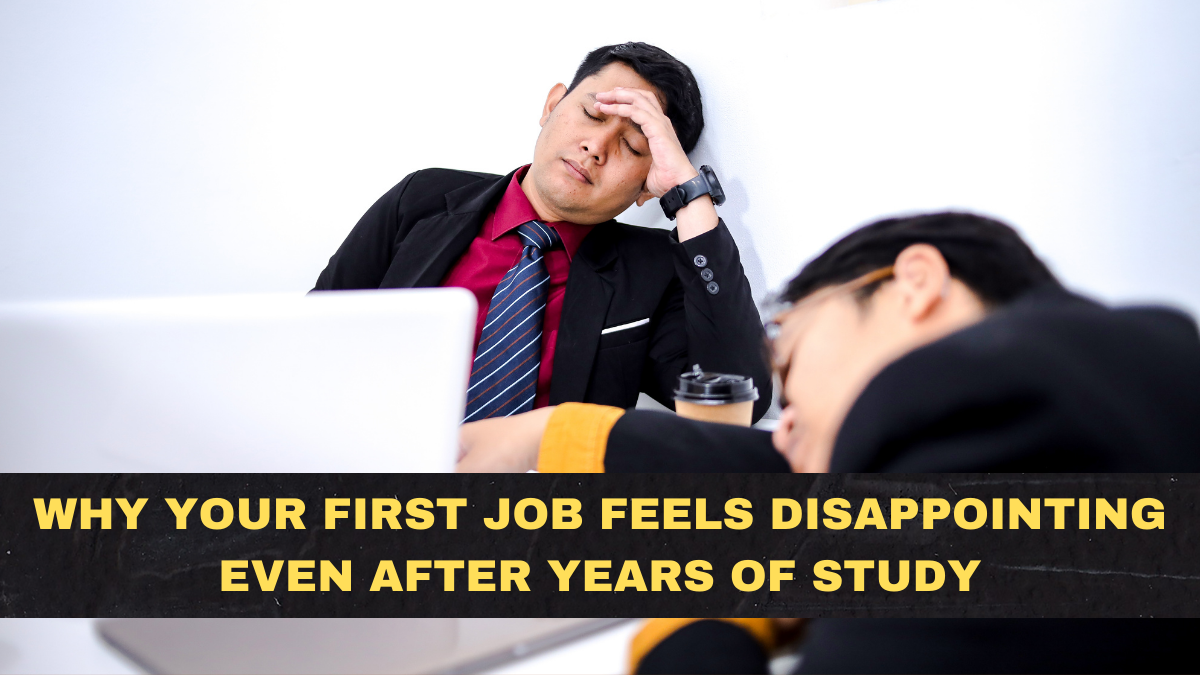
For many graduates in India, landing the first job feels like the finish line after years of exams, pressure, and preparation. Families celebrate, peers congratulate, and relief sets in briefly. Then reality hits. In 2026, a growing number of freshers report that their first job feels underwhelming, stressful, or even pointless. The disappointment is not accidental; it is the result of a deep mismatch between expectations built during education and the reality of early professional life.
This emotional drop is confusing because nothing “went wrong” on paper. The job exists, the salary is coming, and the role looks respectable. Yet motivation fades quickly. Understanding why first job disappointment happens helps freshers avoid self-blame and make smarter decisions early in their careers.
Why Expectations Are Unrealistically High
Years of education create the belief that effort automatically converts into meaningful work. Students imagine creative tasks, impact, learning, and recognition from day one.
Colleges, placement talks, and social media reinforce this optimism. Realistic descriptions of entry-level work are rarely discussed.
In 2026, freshers enter workplaces expecting purpose and autonomy, only to encounter structure, hierarchy, and routine.
The Reality of Entry-Level Work
Most first jobs involve basic tasks. Documentation, support work, repetitive processes, and limited decision-making are common.
Organizations design roles to minimize risk, not maximize fulfillment. Learning happens slowly and often without guidance.
This gap between imagined contribution and actual responsibility fuels early disappointment.
Why Freshers Feel Underutilized
Freshers often feel their education is wasted. Complex subjects studied for years are replaced by simple, repetitive work.
This does not mean the role lacks value. It means companies separate learning from execution deliberately.
In 2026, many freshers misinterpret this phase as failure rather than apprenticeship.
Low Pay Amplifies Emotional Frustration
When salaries barely cover living costs, disappointment deepens. Freshers question whether the sacrifice was worth it.
Comparisons with peers worsen the feeling. Someone always appears to be earning more or doing something “better.”
Low initial pay combined with high expectations creates emotional dissonance early in careers.
The Shock of Workplace Culture
College environments reward individual performance. Workplaces reward conformity, collaboration, and patience.
Office politics, communication styles, and unwritten rules surprise freshers. Feedback is indirect, and praise is rare.
This cultural adjustment is harder than academic challenges and contributes heavily to first job dissatisfaction.
Why Colleges Don’t Prepare Students for This Phase
Education systems focus on getting students placed, not settled. Workplace realities are rarely part of curricula.
Students graduate without understanding reporting structures, timelines, or organizational behavior.
In 2026, this preparation gap leaves freshers emotionally unready for professional life.
The Myth That Passion Appears Instantly
Many believe the first job should feel meaningful immediately. When it does not, panic sets in.
Passion usually develops after competence. Mastery precedes enjoyment in most careers.
Expecting instant fulfillment sets freshers up for disappointment rather than growth.
Why This Phase Is Still Valuable
Despite dissatisfaction, first jobs build discipline, exposure, and basic professional skills.
Understanding systems, deadlines, and teamwork creates a foundation for future roles.
In 2026, those who treat the first job as a learning phase progress faster than those who disengage emotionally.
How Freshers Can Reframe the Experience
Shifting perspective helps. Viewing the first job as paid training reduces frustration.
Setting short-term learning goals restores a sense of progress. Skill-building outside work maintains momentum.
This reframing transforms disappointment into strategic patience.
When Disappointment Becomes a Warning Sign
Not all dissatisfaction should be ignored. Toxic environments, constant anxiety, or ethical discomfort deserve attention.
Learning should not come at the cost of mental health. Early exits are sometimes necessary.
In 2026, discernment matters as much as endurance.
Conclusion: First Job Disappointment Is Normal, Not Failure
Feeling disappointed in a first job does not mean a wrong career choice was made. It reflects unrealistic expectations colliding with real-world systems.
In 2026, the first job is a starting point, not a verdict on future success. Careers unfold gradually, not instantly.
Freshers who understand this phase avoid unnecessary panic and use early experiences as stepping stones rather than stopping points.
FAQs
Is it normal to feel disappointed in the first job?
Yes, many freshers feel this way due to a gap between expectations and entry-level reality.
Does first job dissatisfaction mean a wrong career choice?
Not necessarily. Early roles rarely reflect long-term potential.
How long should someone stay in their first job?
Long enough to learn core skills and workplace basics, unless the environment is harmful.
Should freshers quit if they feel bored?
Boredom alone is not a reason to quit. Learning and growth matter more initially.
Can first job disappointment affect confidence?
Yes, which is why understanding this phase helps prevent self-doubt.
How can freshers make the most of their first job?
By focusing on skill-building, observing systems, and preparing for better-aligned roles later.