Overpacking is rarely about fashion. It is usually about uncertainty. People pack “just in case” outfits because they are unsure how days will unfold, how photos will look, or whether weather and plans will change. In 2026, travel capsule wardrobes are gaining popularity because they remove that uncertainty with structure, not restriction. When outfits are planned logically, packing becomes calm and predictable.
A travel capsule wardrobe is not about wearing boring clothes or repeating the same look. It is about choosing pieces that work together naturally. With the right combination of silhouettes, colors, and layers, a small set of clothes can create far more outfit options than a stuffed suitcase ever does. This guide explains how to do that realistically, especially for Indian travelers.

Why Capsule Wardrobes Solve the Overpacking Problem
Most overpacking happens because clothes are chosen individually instead of as a system. Standalone pieces feel necessary, but they rarely work together smoothly.
A capsule wardrobe forces compatibility. Every top works with every bottom, and layers integrate naturally. This removes decision fatigue during the trip and reduces the urge to pack backups.
In 2026, travelers value mental ease as much as physical comfort, and capsule packing supports both.
The 12 Core Pieces That Form a Travel Capsule
A functional travel capsule usually includes tops, bottoms, layers, and one versatile outerwear piece. Neutral colors form the base, while one or two accent pieces add variety.
For example, two breathable t-shirts, one dressy top, one relaxed shirt, two bottoms, one light jacket, one warm layer, sleepwear, and compact activewear cover most scenarios. Each piece must work across multiple contexts.
The goal is flexibility, not perfection.
How 12 Pieces Turn Into 30 Outfit Options
Outfit multiplication happens when silhouettes and colors align. Neutral bottoms paired with varied tops already create multiple combinations.
Layering doubles outfit possibilities. A jacket or shirt worn open changes the look without adding bulk. Accessories further shift appearance without taking space.
When outfits are planned visually before packing, repetition becomes invisible.
Color Strategy That Prevents Mismatch
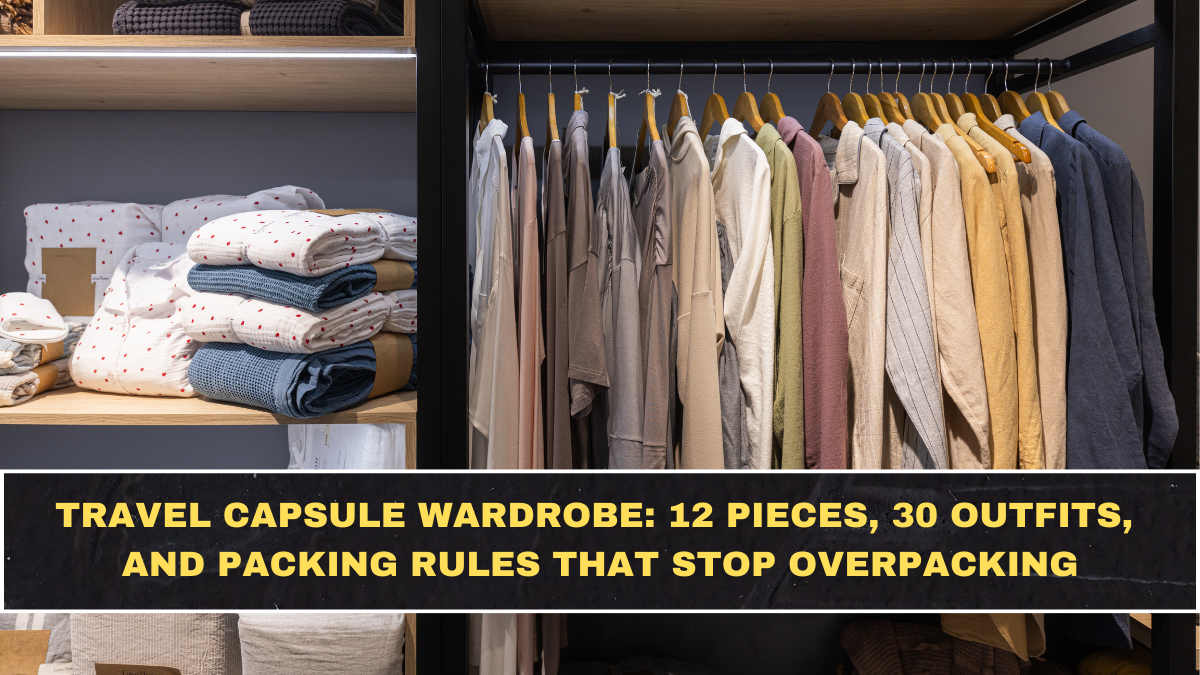
A tight color palette is essential. Neutrals like black, beige, navy, or grey anchor the wardrobe, while one or two accent colors add interest.
Avoid single-use colors that only work with one item. Every piece should match at least three others.
This approach eliminates “I have nothing to wear” moments during the trip.
Fabric Choices That Travel Well
Wrinkle-resistant, quick-dry fabrics outperform delicate materials. They reduce the need for ironing and handle washing easily.
Natural blends feel comfortable in varied climates, while synthetics help with moisture control. Avoid fabrics that hold odor or lose shape quickly.
Fabric performance matters more than brand or trend.
Footwear: The Most Common Overpacking Mistake
Shoes consume the most space and add weight. Most trips only require two pairs: one walking shoe and one versatile casual pair.
Each shoe should work with most outfits. Single-purpose footwear rarely justifies the space it takes.
Comfort and compatibility should guide footwear choices.
Layering Rules That Handle Weather Changes
Instead of packing heavy items, use layers. A light jacket over a shirt adapts to temperature shifts better than bulky outerwear.
Layering also adds style variation without adding pieces. Scarves and compact shawls provide warmth and visual change.
This approach works especially well for trips with mixed climates.
Accessories That Earn Their Space
Accessories should serve more than one purpose. A scarf can be warmth, style, or sun protection.
Belts, compact jewelry, and a neutral bag upgrade outfits without bulk. Avoid accessories that only work with one look.
Small items create visual variety efficiently.
Laundry Strategy That Reduces Clothing Count
Planning one mid-trip wash allows fewer clothes. Quick-dry fabrics make this easy even in hotel rooms.
Carrying a small detergent sachet simplifies washing. Drying overnight reduces the need for spares.
Laundry planning is the silent backbone of capsule packing.
Why Capsule Packing Improves Travel Experience
With fewer choices, mornings become easier. Time spent choosing outfits drops significantly.
Light luggage improves mobility, reduces transport costs, and lowers physical strain. Travel feels smoother and less chaotic.
The psychological relief is often greater than expected.
Conclusion: Packing Less Is a Skill, Not a Sacrifice
A travel capsule wardrobe in 2026 is about control and confidence, not minimalism for its own sake. When clothes are chosen intentionally, they support the trip instead of complicating it.
The best travel wardrobes are invisible. They work quietly, adapt effortlessly, and never demand attention. Packing less does not reduce options; it reveals how many options already exist.
When your suitcase feels light, your travel usually does too.
FAQs
Is a capsule wardrobe suitable for long trips?
Yes, with laundry planning and smart layering, it works even better for longer travel.
Can capsule wardrobes work for different weather conditions?
Yes, layered clothing adapts more effectively than bulky items.
Do capsule wardrobes limit style?
No, they enhance it by creating cohesive outfits consistently.
How many shoes should I pack?
Usually two versatile pairs are enough for most trips.
What if I attend a special event during travel?
Include one dressy versatile piece that works across outfits.
Is capsule packing practical for families?
Yes, especially when planning outfits visually before packing.