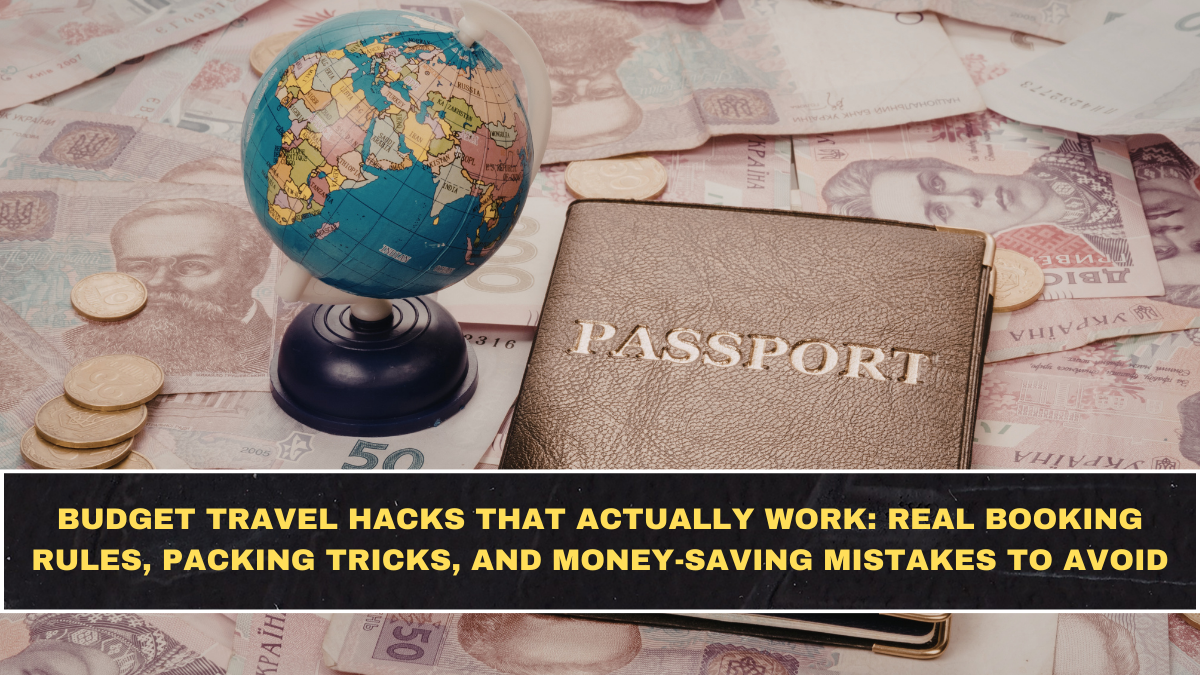
Budget travel in 2026 is no longer about cutting comfort or chasing unrealistic deals. Travelers are smarter, platforms are more transparent, and hidden costs show up faster than before. What still works are habits and decisions made before booking, not last-minute compromises during the trip. People who consistently travel on a budget do fewer things, but they do them deliberately.
The biggest shift is mindset. Budget travel now means spending where it matters and avoiding leaks that quietly inflate costs. Flights, stays, food, and local transport all have predictable patterns. Once you understand those patterns, saving money becomes systematic instead of stressful.
Why Most “Budget Travel Hacks” Fail in Real Life
Many popular travel hacks fail because they ignore context. Booking the cheapest flight without checking baggage rules often leads to higher total costs later.
Another common failure is over-optimizing. Spending hours chasing marginal savings burns time and energy without meaningful returns.
Real budget travel works when decisions are simple, repeatable, and aligned with how travel actually unfolds on the ground.
Flight Booking Rules That Save Money Consistently
The biggest flight savings come from flexibility, not timing tricks. Being open to early morning or late-night departures reduces fares more reliably than chasing specific days.
Avoid booking add-ons during checkout unless necessary. Seat selection, meals, and baggage are often cheaper when added later or avoided entirely.
Comparing total cost, not base fare, prevents surprises. A slightly higher ticket with included baggage often costs less overall.
Train and Bus Travel Hacks People Overlook
Trains and buses offer predictable savings when booked with planning. Flexible class selection and alternate routes often open cheaper options.
Overnight journeys save on accommodation while preserving travel time. This works best for routes with reliable schedules and comfortable seating.
Local booking counters sometimes offer clarity that apps do not, especially for regional routes.
Packing Light: The Most Reliable Budget Hack
Packing light is the single most effective travel hack. It eliminates baggage fees, reduces transport costs, and simplifies movement.
Carrying fewer items also reduces impulse spending. When bags are manageable, travelers walk more and rely less on taxis.
Light packing forces better outfit planning and reduces “just in case” clutter that rarely gets used.
Stay Choices That Balance Cost and Comfort
The cheapest stay is not always the best value. Location determines daily transport costs and energy levels.
Stays slightly outside tourist zones often offer better pricing and quieter environments. Good connectivity matters more than proximity.
Choosing stays with basic kitchen access saves significantly on food over multi-day trips.
Food Spending Without Missing Local Flavors
Eating every meal at popular spots drains budgets quickly. Mixing one local specialty meal with simpler daily food works better.
Street food can be affordable and enjoyable when hygiene is observed. Locals’ queues are often safer indicators than online ratings.
Carrying snacks and water reduces impulse purchases during transit and sightseeing.
Local Transport Choices That Add Up
Short taxi rides feel cheap but accumulate quickly. Walking, public transport, and shared rides stretch budgets further.
Buying daily or multi-day passes often saves money, especially in cities with structured transit.
Knowing peak hours prevents surge pricing and delays.
Shopping and Souvenir Spending Traps
Impulse shopping is one of the fastest budget leaks. Souvenirs bought early often feel unnecessary later.
Setting a fixed souvenir budget prevents guilt and overspending. Fewer meaningful items beat many forgettable purchases.
Local markets away from main attractions usually offer better prices and authentic items.
Common “Money-Saving” Mistakes That Cost More
Booking non-refundable options without certainty increases risk. Flexibility is often worth the small extra cost.
Overpacking “to avoid buying later” often backfires due to baggage charges and inconvenience.
Skipping travel insurance to save money exposes travelers to high unexpected costs.
How to Build a Personal Budget Travel System
The best budget travelers follow a system, not tricks. They track core expenses, leave buffer funds, and avoid emotional spending.
Pre-deciding splurge categories keeps guilt low and satisfaction high. Everything else stays controlled.
Consistency across trips improves outcomes more than one-time hacks.
Conclusion: Budget Travel Is About Control, Not Sacrifice
Budget travel in 2026 rewards clarity, not deprivation. The most effective savings come from decisions made before the trip begins and habits maintained throughout.
When travelers focus on value instead of price, trips feel richer even with lower spending. Budget travel stops feeling restrictive and starts feeling intentional.
Money saved without stress is the only saving that truly counts.
FAQs
What is the biggest budget travel mistake?
Ignoring total cost and focusing only on base prices.
Does booking early always save money?
Not always, but flexibility matters more than timing.
Is light packing really that important?
Yes, it reduces costs, effort, and stress across the trip.
Are budget stays safe?
Yes, when location, reviews, and basic amenities are checked.
How much buffer should I keep in my travel budget?
A small buffer helps handle unexpected costs without stress.
Can budget travel still feel comfortable?
Absolutely, when spending is intentional and well-planned.