Artemis II is often described as a “test flight with people,” but that undersells what this mission actually represents. It is the first time in decades that humans will travel beyond low Earth orbit, and it marks NASA’s real return to deep-space crewed missions. Unlike robotic launches or Earth-orbit flights, Artemis II is designed to prove that humans, spacecraft, and systems can safely operate together far from home.
For many readers, Artemis II sounds complex or abstract. In reality, it is a carefully structured mission with a clear purpose, a defined crew, and a limited but critical set of objectives. Understanding this flight makes the entire Artemis program easier to follow, because almost everything that comes next depends on Artemis II going right.

What Exactly Is Artemis II?
Artemis II is a crewed test mission that sends astronauts around the Moon without landing on it. The spacecraft will loop around the Moon and return to Earth, following a trajectory known as a lunar flyby. This path allows NASA to test deep-space navigation, life-support systems, and human performance beyond Earth’s protective environment.
Unlike Apollo-era missions, Artemis II uses modern systems built for long-term exploration. The mission is not about planting flags or conducting surface experiments. Its goal is validation: proving that the spacecraft, launch system, and crew operations work together as designed in real conditions.
Who Is on the Artemis II Crew?
The Artemis II crew consists of four astronauts, selected to represent a mix of experience, backgrounds, and operational roles. Each crew member has a specific responsibility tied to navigation, systems monitoring, and mission execution. This is not a symbolic flight; every astronaut has a technical job throughout the mission.
The crew size reflects future exploration needs. Four astronauts allow NASA to test workload balance, communication protocols, and emergency procedures in deep space. Lessons learned here will directly shape how later missions are staffed and trained.
How Long Will the Mission Last?
Artemis II is planned as a roughly ten-day mission from launch to splashdown. This duration is long enough to stress-test life-support systems, crew routines, and psychological factors without pushing hardware beyond its current design limits. It mirrors the length of future lunar missions while remaining manageable for a first crewed flight.
During these days, astronauts will follow structured schedules that include navigation checks, system diagnostics, and communication tests. The mission also evaluates how crews adapt physically and mentally to prolonged exposure outside low Earth orbit.
What Is the Lunar Flyby Plan?
The lunar flyby trajectory sends the spacecraft around the far side of the Moon before returning to Earth. This route allows NASA to test high-speed navigation, deep-space communication delays, and gravitational dynamics unique to lunar missions. It also places the crew farther from Earth than any humans have traveled in decades.
This trajectory is critical because it closely resembles paths used for future landings and gateway operations. By flying this route with people onboard, NASA gathers data that cannot be replicated with simulations or robotic missions alone.
What Spacecraft and Rocket Are Being Used?
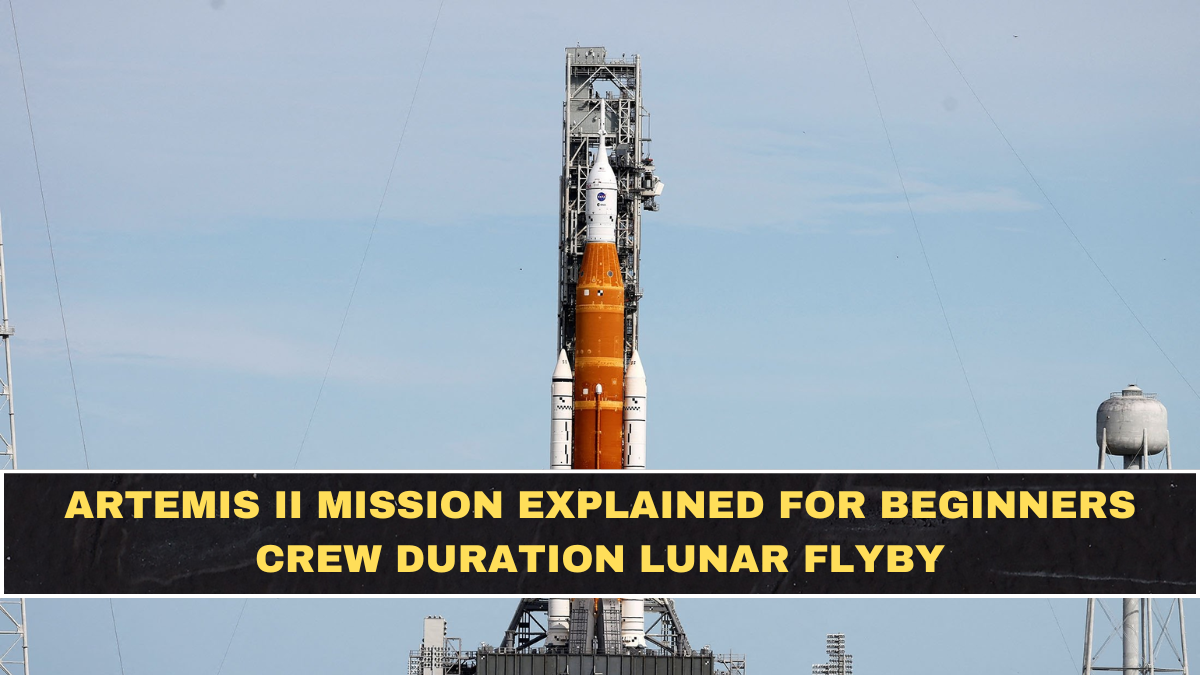
Artemis II uses NASA’s Orion spacecraft, designed for deep-space missions, paired with the Space Launch System rocket. Orion provides life support, navigation, and re-entry protection, while the rocket delivers the energy needed to escape Earth’s orbit and reach the Moon.
This mission tests Orion’s performance with humans aboard for the first time beyond Earth orbit. Heat shields, guidance systems, and recovery procedures will all be validated under real mission conditions, making Artemis II a full end-to-end systems check.
Why Artemis II Matters More Than It Sounds
Artemis II is not about headlines; it is about confidence. A successful mission proves that NASA can safely send humans beyond Earth orbit again, using systems designed for repeat use and future expansion. Without this validation, later missions face delays or redesigns.
The mission also signals a shift in how space exploration is approached. Artemis is built for sustainability rather than one-off achievements. Artemis II shows whether that philosophy works in practice, not just on paper.
How Artemis II Shapes Future Lunar Missions
Everything after Artemis II depends on its results. Data from crew performance, spacecraft behavior, and mission operations feeds directly into planning for lunar landings and long-term presence. Small issues discovered here prevent major failures later.
This mission sets standards for training, safety margins, and system redundancy. It influences how astronauts live, work, and respond to emergencies during future missions that go beyond simple flybys.
What This Means for the Bigger Space Picture
Artemis II also carries symbolic weight. It demonstrates continued human relevance in space exploration alongside increasingly capable robots. The mission reinforces the idea that humans remain central to exploration, decision-making, and adaptation in unknown environments.
For international partners and future missions, Artemis II acts as a benchmark. Its success or failure shapes timelines, cooperation plans, and long-term exploration strategies well beyond this single flight.
Conclusion: A Quietly Historic Mission
Artemis II may not involve a landing, but it is one of the most important crewed missions in modern spaceflight. It bridges the gap between testing hardware and committing humans to sustained lunar exploration. Every system, decision, and data point from this mission carries weight.
By understanding Artemis II, beginners gain clarity on why this flight matters so deeply. It is not just a trip around the Moon; it is the foundation upon which the next era of human exploration is being built.
FAQs
Is Artemis II landing on the Moon?
No, Artemis II performs a lunar flyby without landing, focusing on testing systems with astronauts onboard.
How many astronauts are on Artemis II?
The mission includes four astronauts, each with defined operational roles.
How long does Artemis II last?
The mission is planned to last around ten days from launch to Earth return.
Why is a lunar flyby important?
It tests deep-space navigation, communication, and human performance beyond Earth orbit.
What spacecraft is used for Artemis II?
NASA’s Orion spacecraft is used, launched by the Space Launch System rocket.
Why is Artemis II critical for future missions?
It validates systems and crew operations needed for lunar landings and long-term exploration.