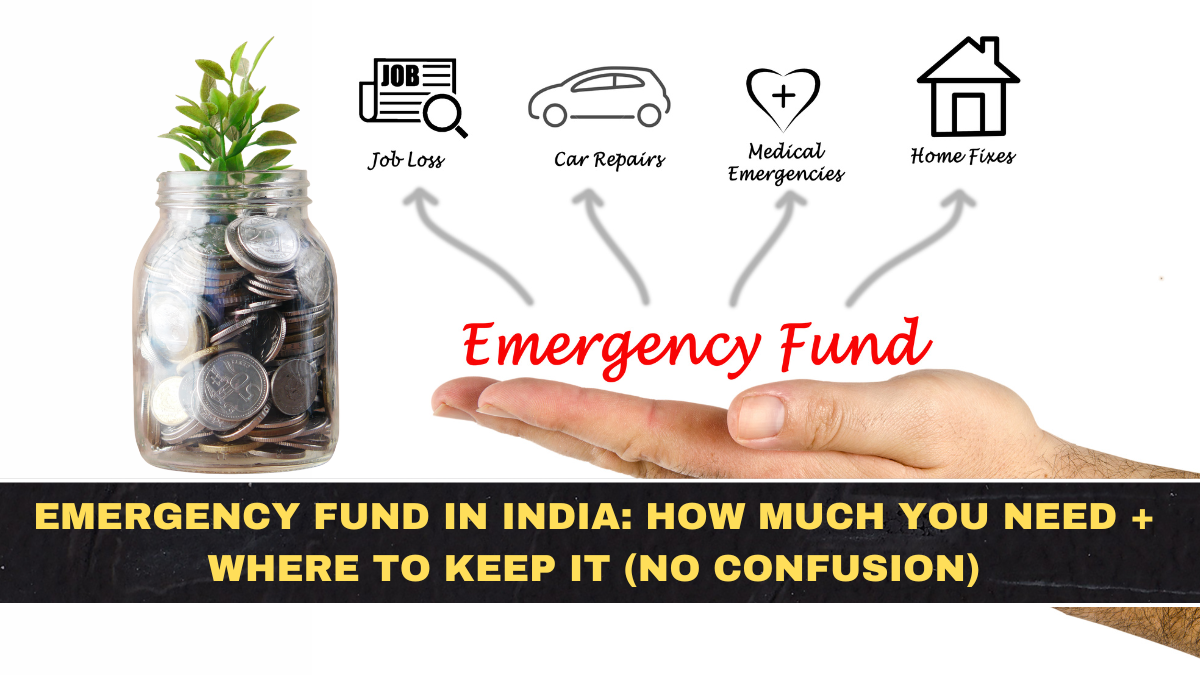
An emergency fund is not an investment. It is a financial shock absorber. Job loss, medical emergencies, sudden relocation, or unexpected repairs can disrupt income immediately. Without liquid savings, most people rely on credit cards or personal loans with interest rates ranging between 12% and 36% annually.
Data from lending platforms shows that personal loan interest rates in India typically range from 10% to 24%, while credit card revolving interest can exceed 30% per year. That makes emergency borrowing extremely expensive. A properly built emergency fund prevents high-cost debt.
How Much Emergency Fund Do You Actually Need
The standard global guideline is 3–6 months of essential expenses. However, the correct number depends on income stability and family responsibility.
Here is a practical framework:
| Situation | Recommended Emergency Fund Size |
|---|---|
| Stable salaried job | 3–4 months of expenses |
| Variable income / self-employed | 6–9 months of expenses |
| Single income household with dependents | 6–12 months of expenses |
| High EMI burden (>40% income) | Minimum 6 months |
The calculation must include only essential expenses, not lifestyle spending.
How to Calculate Your Required Amount
Step 1: List essential monthly expenses.
Example:
| Expense Category | Monthly Cost |
|---|---|
| Rent / EMI | ₹25,000 |
| Groceries | ₹10,000 |
| Utilities | ₹4,000 |
| Insurance | ₹3,000 |
| School Fees | ₹8,000 |
| Transport | ₹5,000 |
| Total Essential Expenses | ₹55,000 |
If total essential expenses = ₹55,000
For 6 months coverage:
₹55,000 × 6 = ₹3,30,000 emergency fund target.
This is your minimum survival buffer.
Where Should You Park Emergency Money
Emergency money must be:
-
Highly liquid
-
Low risk
-
Accessible within 24–48 hours
Here is a comparison of parking options:
| Option | Liquidity | Risk | Typical Return |
|---|---|---|---|
| Savings Account | Instant | Very Low | 2.5–4% |
| Sweep-in FD | Same day | Very Low | 4–6% |
| Liquid Mutual Fund | 1 business day | Low | 5–7% |
| Short-term FD | Locked tenure | Very Low | 6–7% |
For true emergencies, at least 30–40% should remain in savings or sweep-in structure.
The Ladder Method (Smart Structuring)
Instead of keeping everything in one place, use a 3-layer approach:
Layer 1 (Immediate Access – 30%)
Savings account for instant use.
Layer 2 (Short-Term Access – 40%)
Liquid mutual fund or sweep FD for slightly better returns.
Layer 3 (Buffer Layer – 30%)
Short-duration FD for extended emergency.
Example for ₹3,30,000 fund:
| Layer | Allocation | Amount |
|---|---|---|
| Savings | 30% | ₹99,000 |
| Liquid Fund | 40% | ₹1,32,000 |
| Short FD | 30% | ₹99,000 |
This structure balances liquidity and yield.
How Long Does It Take to Build One
If you save ₹15,000 per month toward emergency fund:
₹3,30,000 ÷ ₹15,000 = 22 months.
If you receive bonus or tax refund, accelerate funding.
A realistic target is to build at least 3 months within first year, then extend to 6 months gradually.
Common Mistakes People Make
Many people treat fixed deposits for vacations or gadgets as emergency funds. That defeats the purpose. Emergency fund is for income disruption, not lifestyle upgrades.
Another mistake is investing emergency money in equity mutual funds. Equity markets can fall 20–30% in short term. That volatility makes equity unsuitable for emergency reserves.
When to Increase Your Emergency Fund
Recalculate emergency fund if:
-
EMI increases
-
Family size increases
-
Income becomes unstable
-
You switch jobs
-
You become self-employed
Emergency fund must evolve with life changes.
Emergency Fund vs Insurance
Health insurance and term insurance are separate protections. Insurance covers specific risks. Emergency fund covers liquidity gap before claim settlement and non-insurable events like job loss.
You need both. One cannot replace the other.
Conclusion
An emergency fund protects you from turning temporary problems into long-term debt. The right size depends on income stability, EMI burden, and dependents. For most Indian households, 3–6 months of essential expenses is the minimum baseline.
Park the money safely using a layered approach that balances liquidity and modest returns. Build it systematically, review annually, and never dip into it for non-emergencies.
FAQs
Is 3 months emergency fund enough in India?
It may be sufficient for stable salaried individuals, but 6 months is safer for households with dependents or EMIs.
Can I keep emergency fund in mutual funds?
Only in liquid or ultra-short-term funds. Equity funds are too volatile for emergency savings.
Should I invest emergency fund for higher returns?
No. Safety and liquidity are more important than returns for emergency money.
What if I already have credit cards for emergencies?
Credit cards carry high interest rates if not paid immediately. An emergency fund prevents expensive debt.