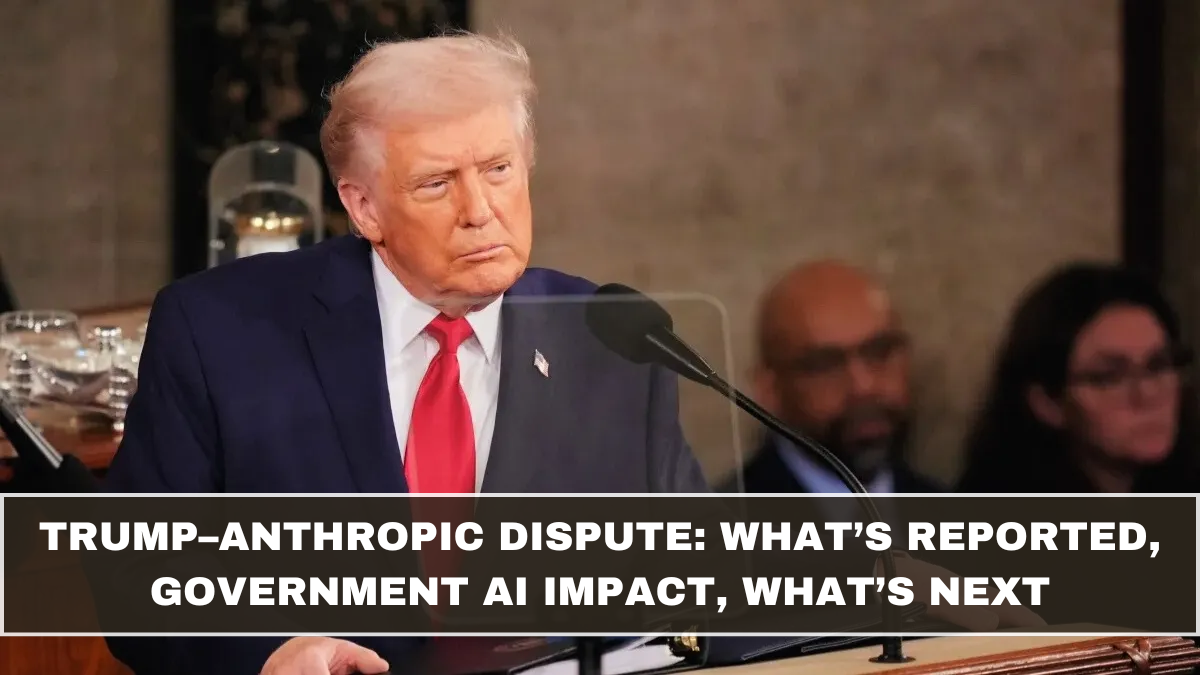
Reports of a dispute involving government use of artificial intelligence systems and potential restrictions on certain AI providers have generated widespread discussion. The issue centers on claims that policies could limit government agencies’ use of specific AI technologies in defense, security, and administrative operations. The developments have drawn attention because government AI procurement decisions directly influence the technology industry and national security infrastructure.
This article explains what has been reported, the potential policy impact on government AI use, how procurement rules work, and what the developments could mean for AI companies and public sector technology adoption.
What the Reported Government AI Ban Means
A government technology restriction generally refers to limits on procurement, deployment, or integration of specific software systems within public sector operations. Such restrictions may arise due to security concerns, data protection policies, or regulatory compliance requirements.
Government agencies often evaluate AI tools based on security standards, data handling practices, and operational reliability before approval. Policy changes can temporarily restrict access to specific platforms until compliance requirements are met.
| Policy Element | What It Involves |
|---|---|
| Procurement restriction | Limits on government purchase |
| Security review | Risk assessment process |
| Compliance requirement | Data and safety standards |
| Temporary suspension | Usage pause until approval |
These measures typically focus on risk management rather than permanent prohibition.
How Government AI Procurement Works
Government agencies follow structured procurement systems when adopting technology solutions. The process includes technical evaluation, security verification, and cost assessment before final approval. Defense and security agencies usually apply stricter standards than civilian departments.
The procurement process often involves multiple stages to ensure reliability and compliance.
| Procurement Stage | Purpose | Typical Duration |
|---|---|---|
| Technical evaluation | Performance testing | Several weeks |
| Security assessment | Data protection review | 1–3 months |
| Compliance approval | Regulatory clearance | Variable |
| Deployment phase | Integration into systems | Ongoing |
Any policy change affecting procurement can delay technology adoption across agencies.
Why Governments Regulate AI Tools
Artificial intelligence systems process large volumes of data and may interact with sensitive information. Governments implement strict policies to ensure data security, operational transparency, and ethical compliance.
Key regulatory concerns include:
-
Data privacy and storage location
-
Model reliability and accuracy
-
Security vulnerabilities
-
National security risks
-
Algorithm transparency
These factors influence decisions on whether AI systems can be deployed in government operations.
| Regulatory Concern | Policy Objective |
|---|---|
| Data security | Protect sensitive information |
| System reliability | Reduce operational risk |
| Transparency | Ensure accountability |
| Ethical standards | Prevent misuse |
Regulation aims to balance innovation with security and public safety.
Potential Impact on AI Companies
Government contracts represent a significant revenue source for technology companies. Procurement restrictions or policy reviews can affect company valuation, market competition, and research investment.
Technology firms working with government agencies must meet strict compliance requirements. Policy changes may require additional security certifications or infrastructure adjustments before approval.
| Business Impact Area | Possible Effect |
|---|---|
| Government contracts | Delayed approvals |
| Market competition | Shift in vendor selection |
| Compliance costs | Increased investment |
| Technology development | Regulatory alignment |
Policy decisions can influence the broader AI industry landscape.
Pentagon and Defense Technology Context
Defense agencies use AI for logistics planning, cybersecurity monitoring, intelligence analysis, and operational efficiency. Because these applications involve sensitive data, security standards remain extremely high.
Defense-related AI systems must meet strict verification protocols including data protection compliance and operational reliability testing. Policy decisions affecting AI procurement in defense sectors can influence national security technology strategy.
| Defense AI Use Case | Purpose |
|---|---|
| Cybersecurity monitoring | Threat detection |
| Logistics optimization | Resource management |
| Intelligence analysis | Data processing |
| Operational planning | Decision support |
These applications require rigorous evaluation before deployment.
Policy Impact on Government Technology Adoption
Restrictions on specific AI providers may slow adoption of new technologies across government departments. Agencies may shift to alternative vendors or delay implementation until compliance issues are resolved.
Technology policy changes can also influence long-term government strategy for digital transformation, automation, and public service delivery.
| Impact Area | Expected Outcome |
|---|---|
| Technology rollout | Possible delay |
| Vendor selection | Increased competition |
| Security compliance | Stricter standards |
| Innovation pace | Temporary slowdown |
Policy decisions shape the pace of AI integration in public sector systems.
What Happens Next
Policy reviews typically involve security assessment, compliance verification, and regulatory clarification. Authorities may update guidelines or modify procurement requirements after evaluation.
| Next Step | Purpose |
|---|---|
| Security audit | Risk evaluation |
| Policy clarification | Define usage rules |
| Compliance review | Verify standards |
| Implementation decision | Approve or restrict use |
Future outcomes depend on regulatory findings and security assessments.
Broader Debate Around Government AI Use
The situation reflects a broader global debate about AI governance, data protection, and technology regulation. Governments worldwide are developing frameworks to manage risks while supporting innovation.
Balancing technological advancement with security oversight remains a key challenge in modern digital policy.
Conclusion
The reported dispute involving government AI procurement highlights the growing importance of regulation in artificial intelligence deployment. Policy decisions affecting technology providers can influence government operations, defense systems, and the broader AI industry. Security compliance, data protection, and operational reliability remain central to procurement decisions. As policy reviews continue, outcomes will shape how governments adopt AI technologies and manage technological risk in the future.
Frequently Asked Questions
What does a government AI ban mean?
It usually refers to restrictions on procurement or use of specific AI systems until security or compliance requirements are satisfied.
Why do governments regulate AI tools?
Governments regulate AI to protect sensitive data, ensure reliability, and prevent security risks.
How does government procurement affect AI companies?
Government contracts influence revenue, market competition, and technology development priorities for AI companies.
Why is AI important for defense agencies?
AI supports cybersecurity, logistics, intelligence analysis, and operational planning in defense systems.
What happens after a policy review?
Authorities evaluate security risks and compliance standards before approving or modifying technology use.