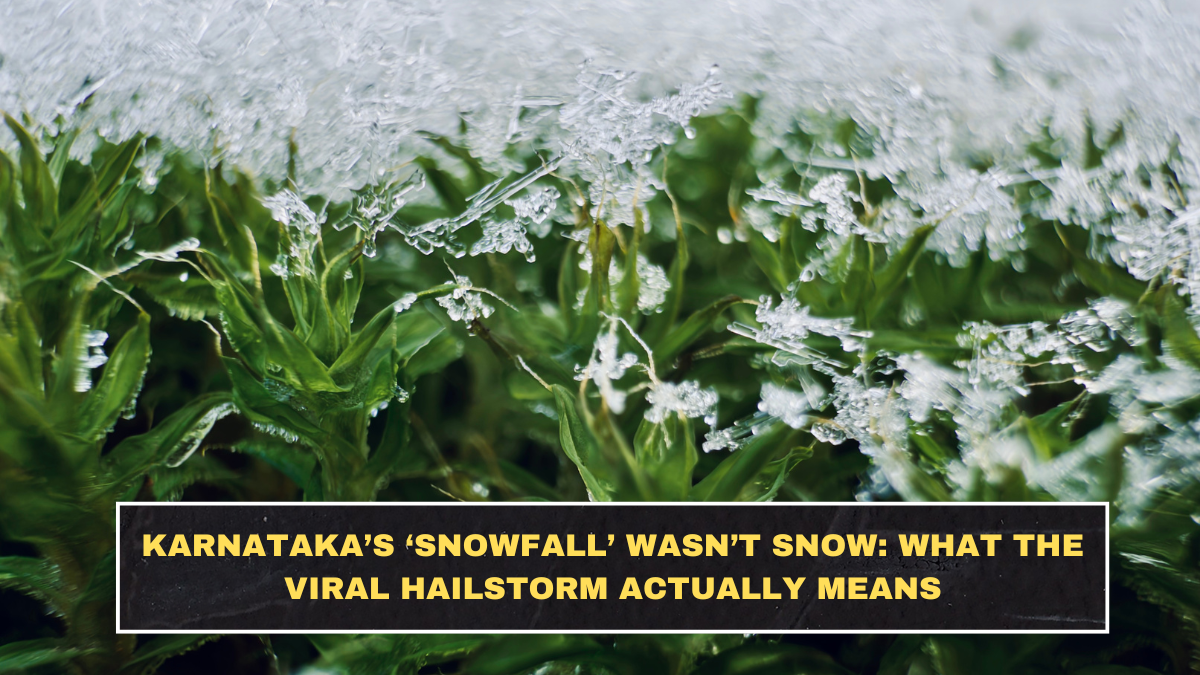
When videos from Karnataka started going viral, many people genuinely believed it had snowed — which sounds absurd if you understand India’s climate. Karnataka does not experience snowfall in normal conditions, especially in plains and villages where these clips came from.
What people actually saw was a hailstorm, where chunks of ice fell from the sky and accumulated on the ground, creating a white blanket that looked similar to snow. The reason it looked dramatic is because the hail was both intense and continuous for a short duration, covering roads, fields, and rooftops quickly.
This wasn’t a rare miracle — it was a weather event that most people simply don’t understand properly.
Why Does This Matter Beyond Viral Videos?
Most people treat such videos as entertainment, but events like this are actually warning signals. Hailstorms are not harmless — they can damage crops, vehicles, rooftops, and even injure people.
In agricultural regions, hailstorms can destroy standing crops within minutes. For farmers, this is not a viral moment — it’s financial loss. For cities, it can disrupt traffic, damage infrastructure, and create sudden safety risks.
Ignoring the seriousness of such events just because they look “beautiful” is a mistake.
What Causes Hailstorms Like This?
Hailstorms form when strong upward air currents carry water droplets high into the atmosphere, where temperatures are below freezing. These droplets freeze into ice and grow larger as they move up and down in the cloud before eventually falling to the ground.
This process requires:
- Strong heat at the surface
- Rapid upward air movement
- Cold air at higher altitudes
In recent weather patterns, these conditions are becoming more frequent due to temperature instability. That’s why hailstorms are appearing in places where people don’t expect them.
How Is Hail Different From Snow?
A lot of confusion comes from not knowing the difference between hail and snow.
Here’s a clear comparison:
| Feature | Hailstorm | Snowfall |
|---|---|---|
| Formation | Frozen raindrops in storm clouds | Ice crystals formed in cold air |
| Shape | Hard ice balls | Soft flakes |
| Duration | Short and intense | Slow and continuous |
| Region | Can occur in many climates | Only in cold regions |
| Impact | Damaging | Usually less damaging |
So what people saw in Karnataka was not snow — it was a high-intensity hail event.
What’s Happening Right Now (Data-Based Insight)?
Weather data shows an increase in localized extreme events like hailstorms across India. In recent years:
- Several states have reported unexpected hailstorms during March and April
- Temperature differences between ground and upper atmosphere have increased
- Short-duration storms with high intensity are becoming more frequent
In Karnataka’s case, strong convection (rising hot air) combined with moisture created ideal conditions for hail formation.
Reports from affected regions suggest:
- Hail accumulation lasted 10–20 minutes
- Ice pellets covered fields and roads quickly
- Crop damage was reported in some areas
These are not isolated patterns — they are part of a broader shift in weather behavior.
What Should People Do During a Hailstorm?
Most people don’t react properly because they underestimate the risk.
Here’s what actually helps:
- Move indoors immediately when hail starts
- Avoid standing near windows or glass surfaces
- Park vehicles under shelter to prevent dents
- Stay away from open areas where falling ice can cause injury
Even small hailstones falling at high speed can hurt, and larger ones can cause serious damage.
What Are the Common Misunderstandings?
The biggest misunderstanding is calling it “snowfall.” That shows a lack of awareness.
Other common mistakes include:
- Thinking hailstorms are harmless
- Standing outside to record videos
- Ignoring early weather warnings
- Not protecting vehicles or crops in time
These mistakes turn a manageable situation into avoidable loss.
What Should You Watch Next?
You should start paying attention to:
- Sudden temperature spikes followed by cloud build-up
- IMD thunderstorm alerts
- Increasing frequency of such viral weather events
These are early signals of changing climate patterns, not random one-off incidents.
Reality Check: Is This Normal Weather?
No — and pretending it is normal is ignorance.
India is experiencing more weather variability, where extreme events happen suddenly and unpredictably. Hailstorms in unexpected regions are part of that trend.
If you keep treating these events as “rare,” you’ll never be prepared when they happen again — and they will.
Conclusion: What Does This Viral Hailstorm Really Mean?
This Karnataka event is not about snow or viral content — it’s about understanding how weather is changing. What looked beautiful on camera was actually a high-impact event with real consequences.
The smarter approach is not to get impressed — it’s to get informed. Because the next time this happens, it may not just be something you watch on your phone. It could affect your area directly.
FAQs
Did it really snow in Karnataka?
No, it was a hailstorm, not snowfall. The white layer was accumulated ice pellets.
Why did the hail look like snow?
Because it covered the ground completely in a short time, creating a similar visual effect.
Are hailstorms dangerous?
Yes, they can damage crops, vehicles, and even cause injuries.
Why are such events increasing?
Changing temperature patterns and atmospheric instability are increasing extreme weather events.
How long do hailstorms usually last?
They are typically short, lasting 10–30 minutes, but can cause significant damage quickly.
Click here to know more.