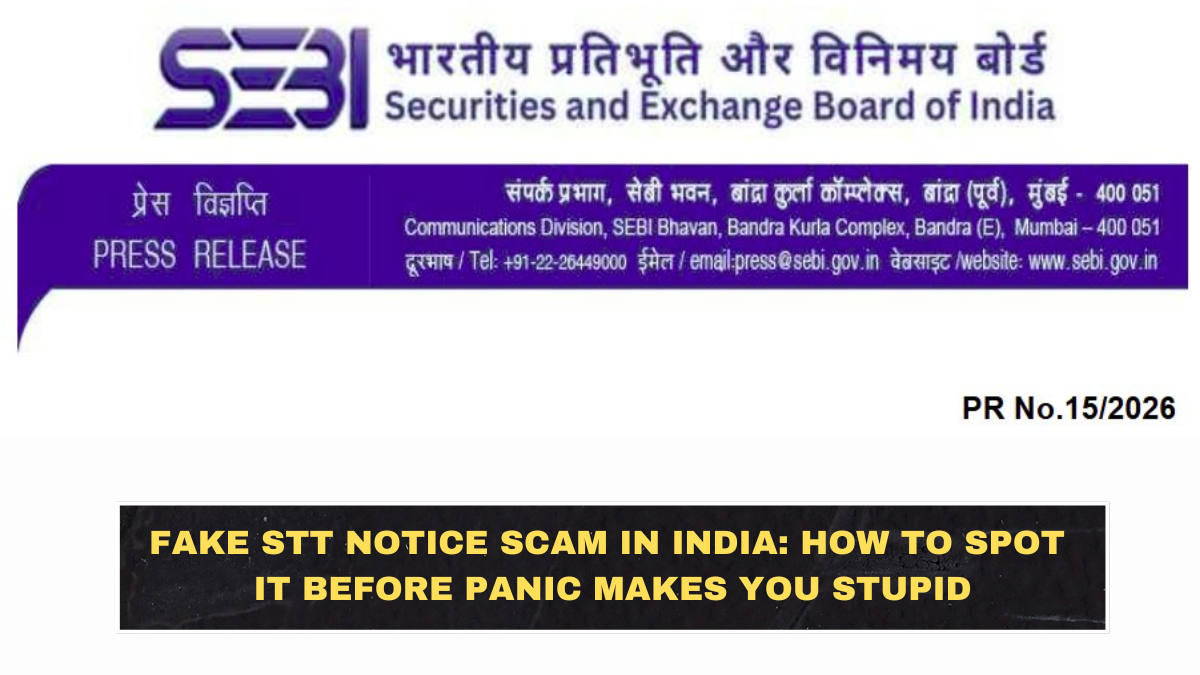
SEBI issued a public caution on 26 February 2026 warning that fraudsters were sending fake notices using forged SEBI letterheads and asking people to pay supposed outstanding Securities Transaction Tax (STT) amounts. SEBI said these notices were fake and cautioned the public not to trust such communications blindly.
This scam works because the message looks official, uses tax language people do not fully understand, and creates urgency around payment or release of funds. Once people panic, they stop verifying. That is exactly why this kind of fraud keeps finding victims
 .
.
What SEBI has clearly said
SEBI’s February 2026 warning is the most important fact here: SEBI said it does not issue such recovery notices demanding STT payment in this fake manner and asked the public to stay alert to forged communications.
SEBI also separately warned investors the same day about other stock-market scams, including fake account-handling services that promise “risk-free” profits. That broader warning matters because these fake STT notices often fit into the same fraud pattern: first show fake profits or blocked funds, then demand tax or fee payments to “unlock” them.
How the fake STT notice scam usually works
The scam is usually built around fear and fake authority. A person is told that profits, withdrawals, or account access are blocked because an STT payment is pending. Then the fraudster sends a forged notice with logos, letterheads, reference numbers, and official-sounding language. The goal is simple: make the victim pay before they think.
Sometimes this appears after a fake trading or investment journey. Victims may first see fake gains on a sham platform. When they try to withdraw, they are told to pay “tax,” “STT,” or some other charge first. That pattern also appears in recent Indian investment scams reported by news outlets, where fake profits were shown before extra payments were demanded.
The red flags most people ignore
| Red flag | Why it is suspicious |
|---|---|
| Notice asks for urgent payment of STT | SEBI publicly warned about fake STT payment notices in February 2026. |
| Document uses SEBI branding to pressure you | Fraudsters were using forged SEBI letterheads. |
| Someone says funds will be released only after “tax” payment | This is a common pressure tactic in fake investment scams. |
| You are asked to pay into random accounts or through unofficial channels | Real market intermediaries must be verifiable; NSE tells first-time investors to deal only with SEBI-registered entities. |
| The sender cannot be independently verified | SEBI’s investor-support page tells investors to verify registration status of intermediaries before dealing. |
What you should do before reacting
First, do not pay anything just because the document looks official. Verify the sender independently through SEBI’s official site or investor-support channels. SEBI’s investor-support page provides tools to check intermediary registration and official support routes, including SCORES for complaints.
Second, check whether the investment platform, broker, or adviser is actually registered. NSE’s investor fraud guidance says investors should deal only with SEBI-registered brokers and should not be swayed by incentives or appearances.
Third, do not confuse tax language with legitimacy. Fraudsters rely on the fact that many retail investors do not fully understand STT, capital gains tax, or brokerage charges. That ignorance is the scam’s weapon. If you do not understand the demand, verify before doing anything.
What this means for ordinary investors
The bigger lesson is not just “beware of one fake notice.” The real lesson is that many investors still trust paperwork more than verification. That is foolish. SEBI’s February 2026 warning and its broader anti-scam push show that fake authority is now a major fraud tool in the Indian market.
If someone sends you a notice demanding money and your first instinct is to pay instead of verify, you are exactly the kind of target these scammers want.
Conclusion
The fake STT notice scam in India is simple: fraudsters create panic using forged SEBI-style documents and pressure people into paying fake tax demands. SEBI has already warned the public about this exact scam as of 26 February 2026.
The fix is brutally basic. Verify the sender, verify the platform, verify the registration, and never treat official-looking paperwork as proof by itself. Panic is expensive, and scammers know it.
FAQs
What is the fake STT notice scam?
It is a fraud where scammers send forged notices, often using fake SEBI branding, demanding payment of supposed outstanding Securities Transaction Tax. SEBI warned about this publicly on 26 February 2026.
Did SEBI really issue a warning about fake STT notices?
Yes. SEBI published a press release titled “Caution to the Public regarding fake STT notices” on 26 February 2026.
How can I verify if an investment-related notice is real?
Use official SEBI investor-support channels and verify whether the intermediary is registered. SEBI’s investor-support page provides registration-check tools and complaint routes.
Why do people fall for fake STT notices?
Because the scam uses official-looking documents, tax jargon, urgency, and fear of losing money or access to funds. Victims often panic before they verify.