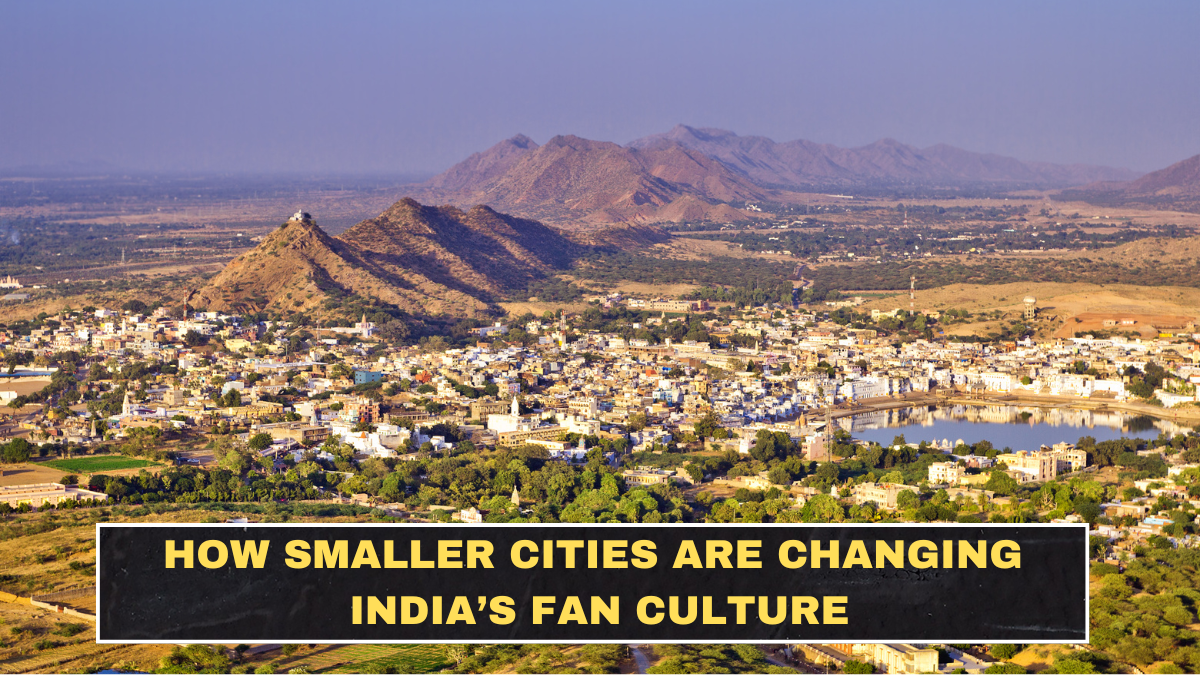
A lot of media coverage still acts as if Indian fan culture lives mainly in Mumbai, Delhi, Bengaluru, Chennai, and a few big stadium cities. That is outdated. The clearest proof is IPL 2026’s Fan Park rollout. The BCCI announced the first phase across 15 cities in 11 states, including places like Rohtak, Bhopal, Nagpur, Tumakuru, Mathura, Nizamabad, Meerut, Nadiad, Ratnagiri, and Rourkela. That is not accidental geography. It is a direct bet on regional audiences outside the usual metro spotlight.
The event design also matters. These Fan Parks are not just giant screens. The IPL says they include food courts, kids’ zones, music, virtual batting, bowling nets, photo booths, and other matchday activities. In simple terms, the league is turning fandom into a local live experience, not just a broadcast habit. That is a bigger cultural shift than many people realize.
Why Smaller Cities Matter More Now
The biggest reason is scale. India’s sports economy crossed ₹18,864 crore in 2025, growing 13.4% year on year, and cricket still contributed about 89% of that total. When one sport dominates that heavily, the next stage of growth cannot depend only on metro audiences. It has to expand deeper into regional India, where attention, aspiration, and participation are already strong.
There is also a distribution logic here. Smaller cities may have fewer chances to host major live sporting events, but that does not mean fan interest is weak. It often means access is weaker. Fan Parks, screenings, and branded local activations are ways of reducing that gap. The IPL’s official statement says the whole purpose is to take the IPL experience beyond stadiums and create a community-driven environment for fans. That language matters because it shows the league understands fandom as something that can be built regionally, not just televised nationally.
Fan Culture Is Becoming More Public and More Distributed
One of the biggest changes is that fandom is becoming more visible outside metros. Earlier, smaller-city fans were mostly counted through TV ratings or digital views. Now they are being treated as event audiences too. That is a different commercial category. A ratings audience watches. An event audience shows up, brings friends, spends time, posts content, and becomes more valuable to brands. This is partly an inference, but it is grounded in how the Fan Park model is being designed and expanded.
JioStar’s IPL 2025 report supports this broader shift. It said IPL 2025 brought together about 1 billion viewers across TV and digital, while connected TV viewership grew 49%. That tells you fan behavior is no longer tied to one screen or one city pattern. Fans are consuming cricket through phones, connected TVs, and now public event formats too. Smaller-city fandom is not peripheral anymore. It is part of the mainstream growth engine.
Table: What Smaller Cities Are Changing in Indian Fan Culture
| Shift | Current evidence | Why it matters |
|---|---|---|
| Regional spread of live fandom | IPL Fan Parks first phase covers 15 cities in 11 states, many outside metros | Fandom is being built where stadium access is lower. |
| Sports economy pressure | India’s sports economy reached ₹18,864 crore in 2025; cricket contributed 89% | Growth now depends on wider audience monetization, not only metros. |
| Event-style engagement | Fan Parks include food, kids’ zones, games, music, and live screenings | Fans are being treated as community participants, not passive viewers. |
| Multi-screen fandom | IPL 2025 CTV viewership grew 49% | Fan behavior is spreading across formats and settings. |
| Bigger commercial value | IPL franchises are drawing billion-dollar investor interest | Stronger fan markets make sports properties more investable. |
Why Brands and Leagues Care So Much
Brands care because smaller cities are no longer just “emerging markets” in the old sense. They are active consumption markets with strong emotional engagement. A local Fan Park or public screening gives a sponsor something better than a static ad spot. It gives presence inside a memory-making event. That is commercially more useful than just being seen on a broadcast ticker.
Leagues care because distributed fandom strengthens the whole business model. The IPL already sits inside India’s dominant sports economy, and investor interest in IPL franchises keeps rising, including billion-dollar team deals announced this week. That kind of investment only makes sense when buyers believe fan demand can deepen and spread further, not stay trapped in a few stadium cities.
What This Means for Indian Sports and Entertainment
The deeper shift is simple: fan culture in India is becoming less centralized. Smaller cities are not just consuming what metros create. They are becoming part of how leagues, broadcasters, and brands design the fan experience itself. The BCCI’s regional Fan Park strategy is one example, but the implication is wider. Once smaller-city audiences prove they will show up physically, not just watch remotely, more events, more activations, and more local sports-business experiments become easier to justify. This last point is an inference, but it follows logically from the current rollout.
Conclusion
Smaller cities are changing India’s fan culture because fandom is no longer being treated as something that lives only on metro screens or inside major stadiums. The IPL’s 2026 Fan Park expansion, the size of India’s cricket-led sports economy, and the growth of cross-screen viewing all point in the same direction: regional audiences are becoming central to how sports attention is built and monetized.
The blunt truth is this: India’s fan culture was always bigger than metros. The difference now is that leagues and brands are finally acting like they understand that. And once that shift becomes permanent, smaller cities will matter a lot more to the business of sports than many people still assume.
FAQs
Are IPL Fan Parks really focused on smaller cities in 2026?
Yes. The first phase includes 15 cities in 11 states, with many non-metro locations such as Rohtak, Mathura, Nizamabad, Meerut, Nadiad, Ratnagiri, and Rourkela.
Why do smaller cities matter so much for fan culture now?
Because India’s sports economy is growing, cricket still dominates it, and future fan growth cannot depend only on metro audiences.
Is this only about watching matches on big screens?
No. The Fan Park model includes music, food, games, kids’ zones, and other activities, which makes it a live community experience, not just a screening.
Are smaller-city fans important to the IPL business too?
Yes. The IPL’s overall business is attracting major investment, and wider fan engagement across more cities strengthens the long-term value of the league and its franchises.