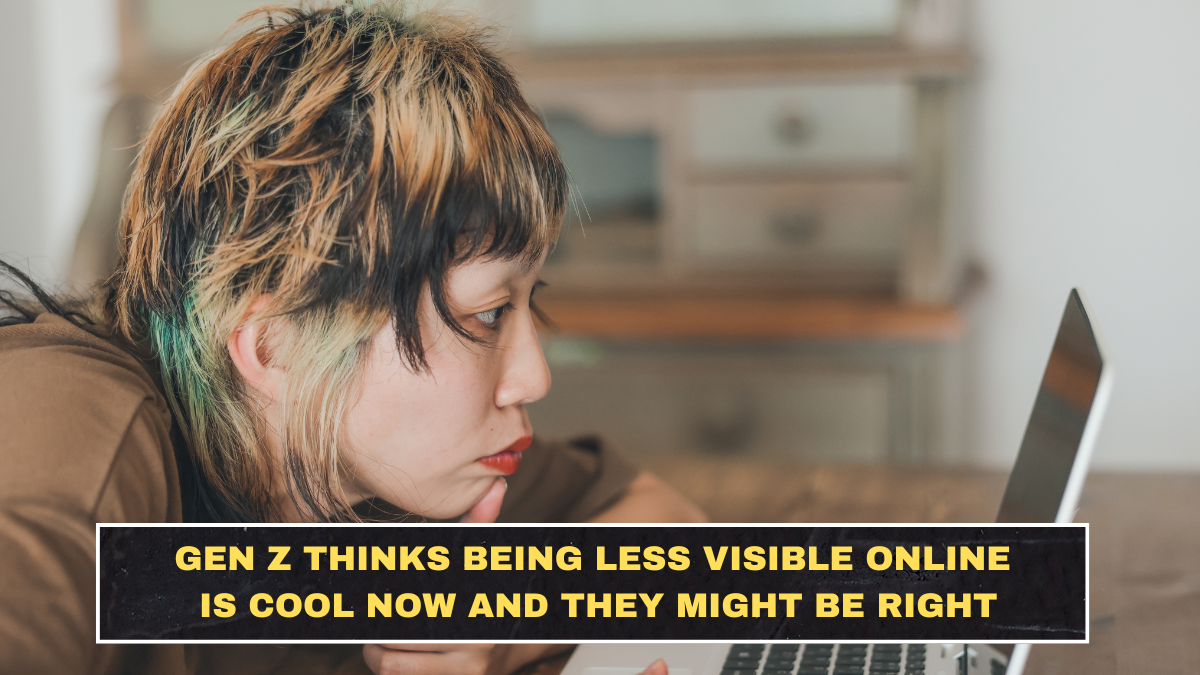
Gen Z is not leaving the internet. That lazy take is wrong. What is actually changing is where and how they show up. Public posting is losing status, while private sharing, close friends circles, DMs, alt accounts, and selective interaction are becoming more normal. A recent Times of India report described this as the “posting zero” trend, where young users stay online but stop feeding the public-facing content machine. That is not a disappearance. It is a change in behavior.
This matters because publishers, brands, and even creators still assume visibility equals relevance. It does not. Gen Z is still deeply digital, but the public feed now feels crowded, performative, and harder to trust. GWI’s 2026 Gen Z report says its findings are based on more than 230,000 annual Gen Z interviews and highlights connection, especially group-chat style connection, as a defining behavior. In India, the ET-Snapchat Gen Z Index powered by Kantar says Gen Z shares differently in public and private spaces, with “DMs, alt accounts, and Close Friends” being the more honest zone.
Gen Z is still online, just less publicly online
The biggest mistake is assuming less posting means less internet use. That is false. Pew Research says most U.S. teens still use social media, and nearly half say they are online almost constantly. Its 2025 fact sheet also says YouTube is used by 90% of teens, while TikTok, Snapchat, and Instagram still reach more than half. So this is not digital withdrawal. It is selective participation.
The pattern looks simple when stripped of hype: public posting feels high-pressure, while private interaction feels safer and more real. The Kantar-backed India index puts it bluntly: Gen Z is “curated for the public, real for the circle.” That one line explains the whole shift better than most trend pieces do. Public feeds are now a stage. Private channels feel like actual conversation.
What is pushing Gen Z toward “posting zero”
One reason is fatigue. Public platforms are overloaded with ads, polished personal branding, and now AI-generated noise. The Times of India report quotes experts describing public posting as exhausting and increasingly performative, while young users say they are bored of the visibility game and prefer using social media as a tool rather than as a public diary. That lines up with broader trust and authenticity concerns seen in younger audiences. Ofcom reported in late 2025 that fewer adults feel freer to be themselves online than offline, and only 35% felt they could share opinions more easily online.
Another reason is control. Private sharing gives Gen Z tighter audience control, lower social pressure, and less permanent self-exposure. That is why group chats, Close Friends stories, Reddit-style communities, and second accounts feel more useful than the old “post for everyone” model. Even GWI’s broader trend language points to connection-first behavior rather than broadcast-first behavior.
What the behavior shift looks like in practice
| Trend area | What is happening | Why it matters |
|---|---|---|
| Public posting | Less frequent feed posting | Lower appetite for performance and social pressure |
| Private sharing | More DMs, Close Friends, alt accounts | Feels safer, more authentic, more controlled |
| Platform behavior | Users still spend heavy time online | Posting less does not mean using less internet |
| Offline culture | More interest in in-person hobbies and niche communities | Identity is moving beyond the public feed |
The table matters because too many people confuse “quiet feed” with “low engagement.” That is sloppy thinking. A quieter profile can still belong to someone who is highly active across messaging, niche communities, video consumption, and private interaction. The behavior is not anti-internet. It is anti-performance.
What this means for publishers and brands
If you are chasing Gen Z attention, stop building content as if the public feed is still the center of youth culture. It is not. Content now has to earn saves, shares in DMs, group chat relevance, and conversation value. That means sharper angles, less generic inspiration nonsense, and more content people actually want to send to someone specific. The old vanity metrics mindset is weak because public posting behavior is no longer the cleanest signal of interest.
For publishers, this is also a Discover lesson. Stories that explain a real cultural shift with data, examples, and clarity have a better chance than empty trend jargon. “Posting zero” works as a topic because it connects digital fatigue, identity, private sharing, and changing youth behavior in one clean frame. But if the article is vague, it dies. Readers do not reward lazy packaging anymore.
Conclusion
Gen Z is not becoming less digital. It is becoming less publicly performative. That is a smarter distinction, and frankly, many older internet habits deserved to die. Public feeds increasingly feel like unpaid branding labor, while private spaces feel more human. The “posting zero” shift matters because it changes how attention, trust, and relevance now work online. Anyone still measuring youth culture only by who posts the most is reading the internet badly.
FAQs
Is Gen Z quitting social media completely?
No. Current data shows teens and young users are still highly active online. The change is more about posting less publicly and interacting more privately through DMs, smaller circles, and selective communities.
What does “posting zero” actually mean?
It refers to being online without regularly posting on public feeds. Users may still scroll, message, watch videos, join group chats, or use private stories, but they do not feel the need to constantly broadcast their lives.
Why does Gen Z prefer private sharing now?
Because private sharing offers more control, less pressure, and a greater sense of authenticity. Public platforms often feel crowded, curated, and exhausting, while private circles feel more real.
Why should publishers care about this trend?
Because audience behavior is changing. Content now needs to be useful enough to get privately shared, not just publicly liked. That changes how articles should be written, packaged, and distributed.
Click here to know more