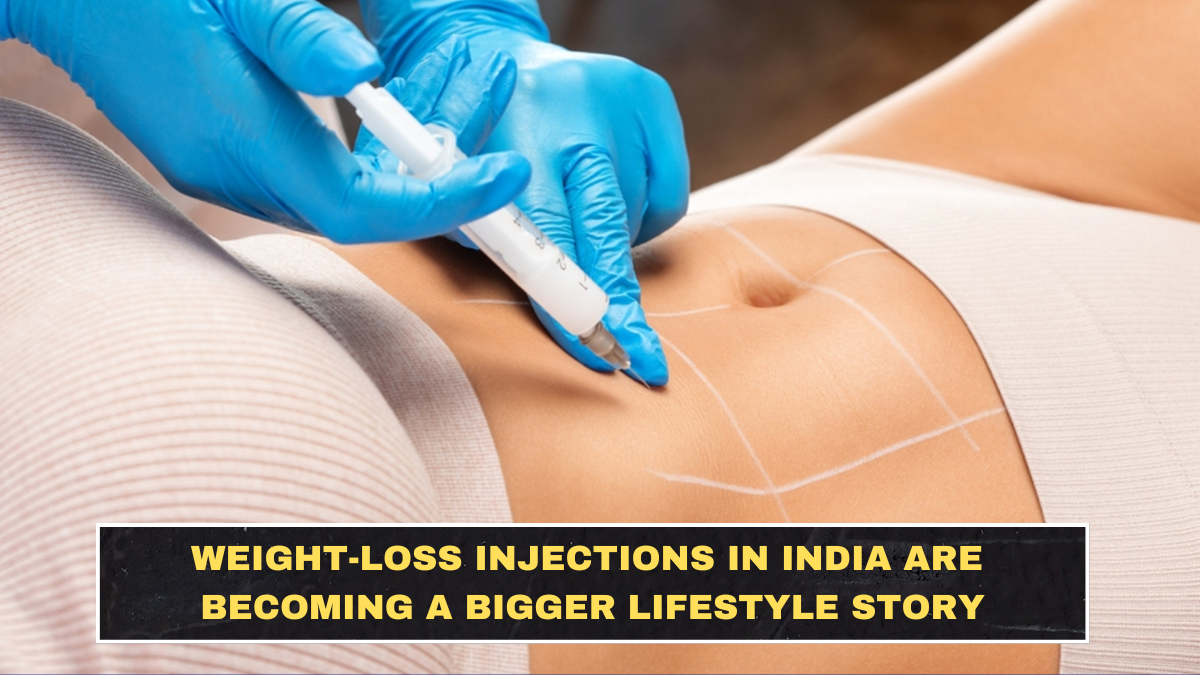
Weight-loss injections in India are no longer staying inside diabetes clinics and obesity treatment discussions. They are moving into mainstream lifestyle culture, especially in urban wellness circles where appearance, timelines, and social pressure matter as much as health. Reuters reported on April 3, 2026 that injections such as Eli Lilly’s Mounjaro and Novo Nordisk’s Wegovy are increasingly being used by soon-to-be brides and some grooms as part of pre-wedding transformation packages, with clinics promoting these drugs alongside skin and hair treatments.
That shift matters because it changes the meaning of the product. A medication originally intended for obesity or diabetes-related management starts getting treated like a premium beauty shortcut. Reuters also reported that India’s weight-loss drug market could reach about ₹80 billion by 2030, which shows this is not a tiny, elite curiosity anymore. It is becoming a real commercial category with social momentum behind it.
The medical use and the lifestyle use are not the same thing
This is where people start fooling themselves. Drugs like Mounjaro, Wegovy, and Ozempic are not magic “slim fast” tools for anyone who wants to look better in photos. Reuters’ April 3 report said doctors in India are warning that these drugs should be used only with medical justification, even as demand rises among people trying to hit wedding or appearance goals. That warning exists for a reason: medical eligibility, dosage progression, side effects, and monitoring still matter, even when social media makes the process look glamorous.
The broader market is also moving fast because access is getting easier. Reuters reported on March 31, 2026 that Novo Nordisk cut India prices for Ozempic and Wegovy by up to 36% and 48% respectively, after generic semaglutide competition intensified. That means these drugs are not only more visible now, but in some cases more financially reachable than before. When price drops meet appearance pressure, demand tends to accelerate fast.
Why Mounjaro has become such a talking point
Mounjaro got a head start in India’s mainstream conversation because Eli Lilly launched it in India in March 2025 before Novo’s full push strengthened, and Reuters reported its pricing for low doses at about ₹3,500 for 2.5 mg and ₹4,375 for 5 mg vials at launch. Reuters later reported that Lilly also launched Mounjaro pens in India, making the product easier to use and more competitive in the premium obesity-drug race. Convenience matters a lot in turning a medical therapy into a lifestyle product.
Reuters also reported in late 2025 that Mounjaro had become India’s top-selling diabetes and obesity drug, helped partly by longer patent protection for tirzepatide compared with semaglutide. That matters because it gave Lilly a strong commercial lead while semaglutide-based competition was becoming crowded. In plain language, Mounjaro became both a medical product and a status product at the same time.
What is pushing the trend higher in India
| Driver | What is happening | Why it matters |
|---|---|---|
| Pre-wedding pressure | Clinics are marketing transformation packages to brides and grooms | Weight loss is being sold as part of appearance prep. |
| Lower prices | Novo cut Ozempic and Wegovy prices sharply in India in March 2026 | More people can consider these drugs financially. |
| Generic competition | Indian drugmakers launched cheaper semaglutide versions after patent expiry | Access is widening beyond premium urban buyers. |
| Strong commercial demand | India’s obesity-drug market is projected to reach about ₹80 billion by 2030 | The category is becoming a major business, not a niche. |
| Easier formats | Lilly launched Mounjaro pens in India in 2025 | Better convenience helps mainstream adoption. |
The social pressure behind the trend is not a small side issue
The ugly truth is that this trend is not just about health improvement. Reuters’ reporting on “Mounjaro brides” made it clear that body-image pressure in marriage markets is a major factor. Some users reported confidence gains after losing weight, but the same story also showed how family expectations and social judgment can shape these decisions. This is not harmless wellness culture. In many cases, it is social pressure wearing a medical costume.
That distinction matters because once a drug becomes part of beauty competition, people stop asking the right questions. They stop asking whether they are medically eligible, how long treatment may need to continue, or what happens after stopping. They start asking only whether it will make them thinner by a specific date. That is exactly how a legitimate medical tool gets pushed into irresponsible use. Reuters’ March 24 report that India’s drug regulator tightened surveillance against unauthorized sale and promotion of weight-loss drugs shows the authorities understand this risk too.
The market is growing, but so are misuse concerns
India’s regulator is not tightening surveillance for fun. Reuters reported on March 24, 2026 that the drug regulator stepped up checks against unauthorized sale and promotion of weight-loss drugs after cheaper generic semaglutide versions entered the market. Reuters also reported on March 19 that semaglutide patent expiry opened the door to cheaper options but raised concerns about misuse and uneven oversight. That tells you the market is expanding faster than the control systems can comfortably ignore.
This is the real tension in the trend. On one side, there is genuine medical benefit for eligible patients with obesity or diabetes-related needs. On the other side, there is growing use driven by beauty anxiety, status signaling, and deadline-based body transformation. Those are not the same thing, and pretending they are is intellectually dishonest. The drugs may work, but the reason people want them is often messier than the marketing suggests.
Conclusion
Weight-loss injections in India are becoming a bigger lifestyle story because medical treatment, affordability, competition, and appearance pressure are colliding at the same time. Mounjaro, Wegovy, and related drugs are no longer just obesity or diabetes therapies in public perception. They are becoming part of the modern status-and-transformation economy, especially in high-pressure social settings like weddings. The problem is not that the drugs exist. The problem is that too many people are beginning to view them as a shortcut first and a medical treatment second.
FAQ
Why are weight-loss injections trending in India?
They are trending because demand is rising from both medical users and lifestyle-driven users, while pricing has become more competitive and access has widened through generics and new launches. Reuters reported that India’s obesity-drug market could reach about ₹80 billion by 2030.
Why is Mounjaro talked about more than some other drugs?
Mounjaro gained strong attention because Lilly launched it in India early, later added pen formats, and benefited from strong commercial demand in a rapidly growing obesity-drug market. Reuters also reported that it became India’s top-selling diabetes and obesity drug.
Are these injections being used for weddings and appearance goals?
Yes. Reuters reported on April 3, 2026 that some clinics in India are promoting these injections as part of pre-wedding transformation packages for brides and grooms.
Is the Indian government concerned about misuse?
Yes. Reuters reported that India’s drug regulator tightened surveillance against unauthorized sale and promotion of weight-loss drugs in March 2026 as the market expanded and cheaper versions entered.