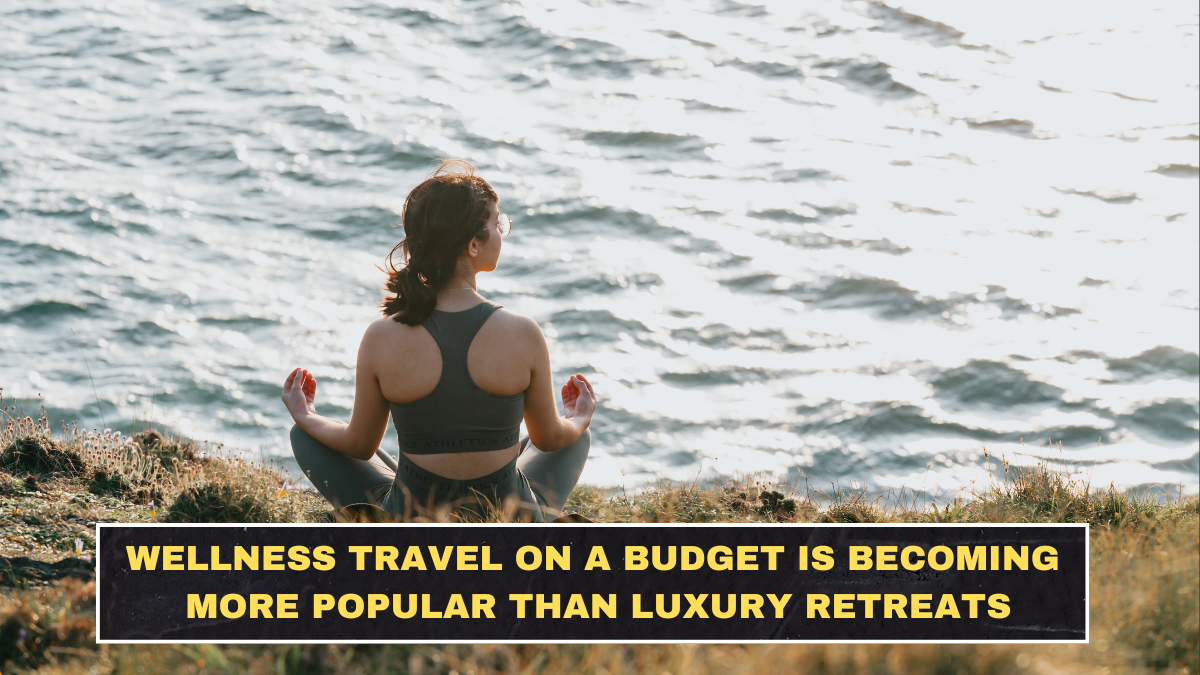
Wellness travel is no longer limited to expensive retreats with spa menus and designer yoga decks. More travelers now want cheaper trips that still help them rest, move, eat better, and return home feeling less drained. That shift fits a larger market trend: the Global Wellness Institute says the global wellness economy reached $6.8 trillion in 2024, while wellness tourism continues growing as people try to maintain healthy routines while traveling.
The lazy assumption is that wellness travel must be luxury travel. That is outdated. Recent travel trend reporting for 2026 points toward more meaningful, intentional, and experience-led travel, while Skyscanner’s India travel trends highlight “best value destinations” and stronger budget awareness among travelers. In plain terms, people still want wellbeing, but they do not all want to pay retreat-level prices for it.

Why budget wellness travel is growing
The first reason is simple: people want recovery without overspending. Booking.com’s travel predictions found that many travelers are willing to plan trips around wellbeing and longevity, but that does not automatically translate into luxury budgets. At the same time, 2026 travel trend coverage shows travelers are increasingly choosing calmer, more purposeful journeys rather than chasing only status travel.
The second reason is flexibility. A wellness trip today can mean a quiet homestay, a beach walk, better sleep, fewer screens, local food, and a slower schedule. It does not need a branded retreat package to count. Global Wellness Institute defines wellness tourism broadly as travel where people seek to maintain or improve wellbeing, which leaves plenty of room for budget-friendly versions.
What budget wellness travel usually looks like
| Budget wellness choice | Why travelers like it |
|---|---|
| Off-season nature trips | Lower costs and less crowd stress |
| Simple stays with kitchens | Better food control and spending control |
| Walking, hiking, swimming | Free or low-cost movement |
| Sleep-first itineraries | More rest, less exhaustion |
| Slower local travel | Less rushing, more mental reset |
This is also where many people fool themselves. They think a packed itinerary equals value for money. Usually it just means they return more tired than before. Some 2026 travel trend reports point to slower, more meaningful travel, community-oriented wellness, and even grocery-focused local exploration, which all fit a lower-cost wellness model far better than luxury excess does.
Why it often works better than luxury retreats
Luxury wellness retreats can be useful, but they are not automatically better. Many people get more benefit from affordable habits they can repeat after the trip ends. A quiet three-day break with walking, sleep, simple meals, and less digital overload may do more for someone than a costly retreat they cannot realistically maintain in real life. That is also why travel reports for 2026 keep leaning toward meaningful, restorative travel rather than only high-end indulgence.
Budget wellness travel also matches current spending behavior. Skyscanner’s 2026 trends emphasize value, and broader trend reporting suggests travelers are trying to protect the quality of trips while making budgets go further. That makes affordable wellness more realistic than luxury wellness for a much bigger group of people.
How travelers are keeping wellness trips affordable
The smarter approach is not to chase “cheap luxury.” It is to strip the trip down to what actually improves wellbeing:
- travel in shoulder season when prices are softer
- choose destinations where walking and nature are free
- stay somewhere with a kitchen or breakfast included
- avoid overbooking activities
- build the trip around sleep, movement, and food quality
- spend on one or two useful experiences, not constant extras
That is more rational than paying heavily for a “wellness” label attached to a hotel package. The wellness part is often the behavior, not the branding. Global Wellness Institute’s framing supports that broader view, because wellness tourism includes maintaining healthy habits while away, not only visiting elite retreats.
Why this matters in 2026
This trend matters because it broadens who wellness travel is for. When travel brands only market wellness through luxury resorts, they shrink the audience. But when the category includes affordable, slower, health-conscious trips, it becomes relevant to students, families, remote workers, and younger travelers with tighter budgets. That lines up with current travel trend coverage showing more intentional travel choices and continued consumer interest in wellbeing-focused experiences.
Conclusion
Wellness travel on a budget is becoming more popular because people want trips that actually make them feel better without wrecking their finances. The core of wellness travel is not luxury pricing. It is rest, movement, food, calm, and a less exhausting way to travel. Anyone still treating wellness tourism as a rich-person niche is missing where the broader market is heading.
FAQs
1. Can wellness travel really be done on a budget?
Yes. Wellness travel can include simple, lower-cost choices like walking holidays, quiet stays, better sleep, local food, and slower itineraries rather than expensive retreat packages.
2. Is budget wellness travel replacing luxury retreats?
Not completely, but it is clearly becoming more relevant because it is more accessible and fits current value-conscious travel behavior better.
3. What is the cheapest way to build a wellness trip?
Usually by focusing on off-season travel, nature, sleep, simple food, and fewer paid activities instead of buying a heavily packaged retreat experience. This is more practical and often more sustainable after the trip ends.
4. Why are more travelers choosing this in 2026?
Because many travelers want meaningful and restorative trips, but they are also watching costs more carefully and looking for better value.