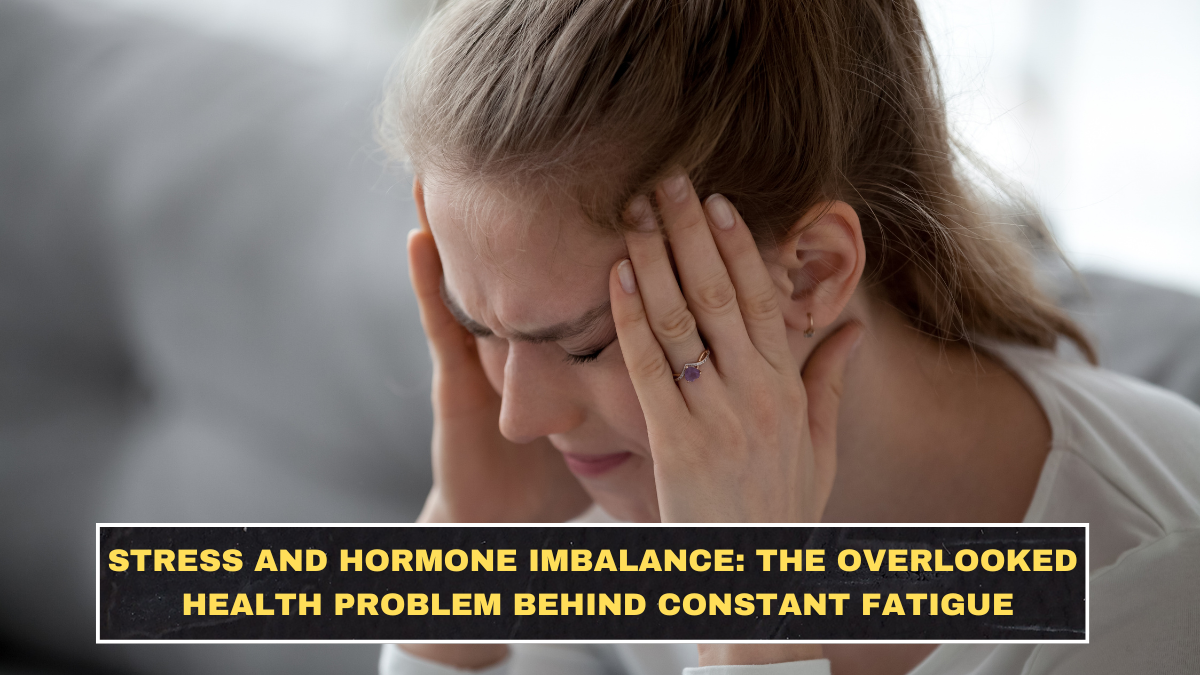
It is real, but people use the phrase too loosely. Stress affects hormones because the body’s stress response involves the hypothalamic-pituitary-adrenal axis, which drives cortisol and interacts with other systems tied to sleep, metabolism, and reproduction. The problem is that social media turns this into vague nonsense, where every bad day becomes “hormones are wrecked.” That is lazy. Stress can disrupt the body, but it does not mean every symptom is proof of some mysterious imbalance.
What does chronic stress actually do to the body?
Chronic stress keeps the body in a state of repeated activation, and that can disrupt far more than mood. Mayo Clinic says long-term exposure to cortisol and other stress hormones can disrupt almost all of the body’s processes, raising the risk of anxiety, depression, digestive problems, headaches, muscle tension, heart disease, sleep problems, weight gain, and problems with memory and focus. That list matters because many people keep treating stress like a personality issue instead of a whole-body issue. It is not just “feeling overwhelmed.” It is a biological load.
What symptoms do women often notice first?
Usually not something dramatic enough to make them stop. More often it looks like constant fatigue, broken sleep, brain fog, irritability, low patience, cravings, feeling wired late at night, and dragging through the day. That does not mean cortisol is always high in some cartoonish way. Chronic stress can create dysregulation, not just one neat direction. Cleveland Clinic notes that high or low cortisol can affect health, and research reviews describe chronic stress as disrupting cortisol regulation rather than following one simple pattern.
| Symptom people notice | How they usually dismiss it |
|---|---|
| Constant fatigue | “I just need more sleep” |
| Brain fog | “My focus is off lately” |
| Sleep disruption | “I’m just stressed this week” |
| Irritability | “I’m in a mood” |
| Cycle changes | “It will sort itself out” |
Can stress really affect sleep that much?
Yes, and this is one of the clearest parts of the problem. Stress and sleep feed each other in both directions. Mayo Clinic lists sleep problems among the common effects of chronic stress, and NIH-linked research describes stress as part of the relationship between sleep and metabolism through activation of the HPA axis. In plain language, stress makes sleep worse, and poor sleep makes the body less resilient to stress. That loop is why people can feel stuck for months without realizing they are reinforcing the same problem every night.
Can stress affect periods and reproductive hormones too?
Yes, it can. Chronic stress has been linked to disruption in the hypothalamic-pituitary-gonadal axis and to ovulatory dysfunction. Reviews in women’s health also describe chronic stress as contributing to menstrual irregularities and anovulation. That does not mean every late period is automatically a stress problem, but it does mean cycle changes should not be brushed aside when stress is running high. Women often get told to ignore this until it becomes a bigger issue, which is backward.
Why do so many women blame themselves instead of the stress load?
Because overload gets normalized. Women are often carrying work stress, caregiving, sleep disruption, and mental load all at once, then judging themselves for not functioning like machines. The body does not care whether the stress came from a toxic job, a family crisis, poor sleep, or constant pressure. It still reacts. What gets missed is that feeling exhausted, foggy, short-tempered, and physically off all the time is not a character flaw. It is often a sign the system has been under strain for too long. That does not sound dramatic, but it is usually the truth.
What actually helps instead of just sounding good online?
The useful answer is less glamorous than the internet wants. Lowering stress load, improving sleep timing, getting regular movement, and treating sleep disruption seriously matter more than chasing trendy hormone hacks. NIH sleep guidance emphasizes consistent routines and light management for sleep-wake regulation, and Mayo Clinic’s stress guidance makes clear that chronic stress affects multiple body systems, which means the fix is rarely one supplement or one “cortisol detox.” If symptoms are persistent, the smart move is to get properly evaluated instead of self-diagnosing from short videos.
When should someone stop guessing and talk to a doctor?
When fatigue, sleep problems, cycle changes, mood symptoms, or cognitive trouble are becoming persistent or disruptive. The phrase “hormone imbalance” is broad enough to be misleading, and Cleveland Clinic says it can represent many different hormone-related conditions. That is exactly why guessing is not enough. Sometimes stress is the main driver. Sometimes there is also a thyroid issue, reproductive hormone problem, metabolic issue, or something else that needs real medical attention. The longer people romanticize resilience, the longer they delay clarity.
FAQs
Can chronic stress raise cortisol?
Yes. Cortisol is part of the body’s stress response, and chronic stress can disrupt cortisol regulation over time.
Can stress cause sleep problems?
Yes. Mayo Clinic lists sleep problems as a common effect of chronic stress, and research links stress-related HPA axis activation with sleep disruption.
Can stress affect menstrual cycles?
Yes. Chronic stress has been linked to menstrual irregularities, ovulatory dysfunction, and changes in reproductive hormone regulation.
Is “hormone imbalance” always caused by stress?
No. Stress can affect hormones, but the term “hormone imbalance” covers many different medical issues, so persistent symptoms should not be self-diagnosed casually.