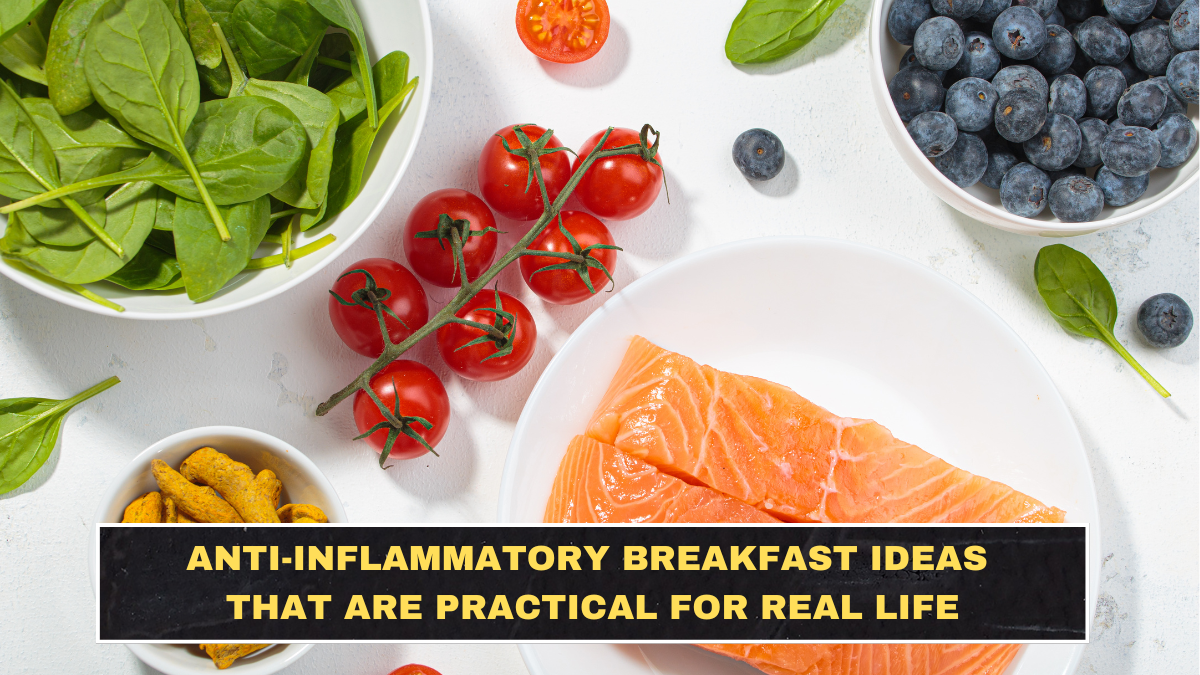
A breakfast does not become anti-inflammatory because someone sprinkled chia seeds on dessert and called it wellness. The pattern matters more than the label. The foods most consistently linked with an anti-inflammatory style of eating are whole, minimally processed foods such as fruits, vegetables, whole grains, beans, nuts, seeds, fish, olive oil, and modest amounts of yogurt or other low-fat dairy. That is why Mediterranean-style eating keeps coming up in serious nutrition guidance instead of disappearing like a trend.

Why do so many “healthy” breakfasts fail?
Because they look healthy but behave like a sugar spike. A muffin and flavored coffee can still leave you hungry an hour later. Sweet granola bowls often have the same problem. A smarter breakfast has fiber, some protein, and healthy fats, so it actually keeps you steady instead of giving you fake energy and then dropping you on your face by mid-morning. Harvard and Mayo guidance both keep pointing back to whole grains, nuts, seeds, beans, fruit, and healthy fats for a reason. That combination does more real work than packaged “superfood” branding ever will.
Which ingredients pull the most weight?
Oats are one of the easiest wins. The Arthritis Foundation notes oatmeal may support gut health and improve cholesterol, and Harvard also points to oats, nuts, seeds, and berries as practical breakfast staples. Berries matter because they add fiber and plant compounds without turning breakfast into a sugar bomb. Nuts, chia, and flax help because they bring healthy fats and more staying power. Olive oil, beans, yogurt, and even fatty fish also fit this pattern depending on the kind of breakfast you actually enjoy.
| Breakfast base | Why it works |
|---|---|
| Oats | Fiber, filling, easy to build on |
| Greek yogurt or plain yogurt | Protein, pairs well with fruit and seeds |
| Eggs | Practical protein that keeps breakfast substantial |
| Beans or lentils | Fiber and protein without junk |
| Whole-grain toast | Better base than refined pastries |
| Berries, nuts, seeds | Add fiber, healthy fats, and texture |
What are realistic anti-inflammatory breakfast ideas?
Here are the kinds of breakfasts that actually make sense in a normal life, not just on a nutrition poster.
Oatmeal with berries, walnuts, and ground flax is one of the easiest options. It is cheap, filling, and based on ingredients that keep showing up in anti-inflammatory eating advice. Plain Greek yogurt with berries, chia seeds, and a few nuts also works well if you want something fast and cold. Whole-grain toast with avocado and eggs is another solid option because it gives you fiber, protein, and healthier fats instead of just fast carbs.
If you prefer savory food, stop forcing yourself to eat sweet breakfasts. Lentils or beans with eggs, spinach, and olive oil make a much stronger meal than sugary cereal pretending to be convenient. Arthritis Foundation recipe guidance even includes lentils and eggs as a practical breakfast combination. If you want something more substantial on weekends, a vegetable omelet with mushrooms, greens, tomatoes, and a side of fruit is a smarter move than pancakes drowning in syrup.
What should people stop buying?
Stop buying breakfasts that rely on health halos instead of actual nutrition. Sweetened yogurts, “protein” bars, flavored instant oatmeal, and bakery-style granola can all look clean while still being heavily processed or loaded with added sugar. Harvard’s anti-inflammatory guidance is blunt about choosing whole, unprocessed foods with no added sugar as much as possible. That does not mean breakfast has to be joyless. It means you should stop confusing expensive packaging with a good food choice.
How can you make this easier on busy mornings?
Keep the formula simple: one fiber-rich base, one protein source, one healthy fat, and one fruit or vegetable. That is it. Overnight oats, pre-portioned nuts, frozen berries, boiled eggs, plain yogurt, and whole-grain toast all make this easier. The goal is not to build a perfect anti-inflammatory breakfast every morning. The goal is to stop making the same lazy choices that leave you hungry, over-caffeinated, and reaching for junk by 10 a.m. A good breakfast should make the day easier, not turn into another self-improvement performance.
FAQs
Is oatmeal really anti-inflammatory?
It can fit very well into an anti-inflammatory breakfast pattern, especially when paired with berries, nuts, or seeds instead of a lot of added sugar. The Arthritis Foundation and Harvard both point to oats as a useful breakfast staple.
Are eggs okay in an anti-inflammatory breakfast?
Yes. Eggs can be a practical protein source, especially when paired with vegetables, beans, or whole grains instead of processed breakfast foods. Mediterranean-style guidance allows moderate amounts of eggs, dairy, poultry, and fish within an overall whole-food pattern.
Is yogurt a good breakfast choice?
Plain yogurt or Greek yogurt can be a strong option because it adds protein and works well with fruit, nuts, and seeds. The problem is usually the sugary flavored versions, not yogurt itself.
What is the easiest anti-inflammatory breakfast to start with?
Oatmeal with berries and nuts is probably the easiest place to start because it is simple, filling, and built around ingredients that repeatedly show up in anti-inflammatory eating advice.