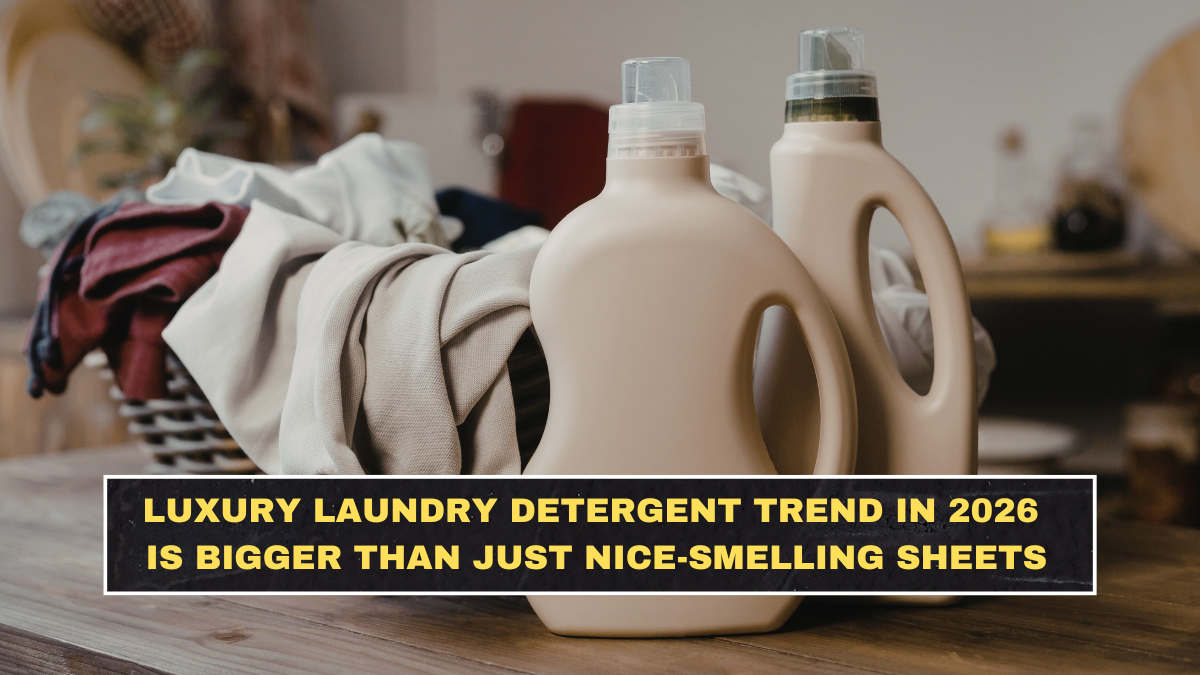
Luxury laundry detergent is trending because laundry is being pulled into the same premium lifestyle logic that already transformed body wash, candles, hand soap, and home fragrance. Recent coverage from Marie Claire says premium detergents are now being marketed as part of a sensory lifestyle category rather than a plain cleaning product, with brands such as The Laundress, Dedcool, Homecourt, L’Avant, and Laundry Sauce pushing fragrance-first positioning.
The broader detergent market is still large and growing, but the interesting shift is not basic detergent demand. It is premiumization. Mordor Intelligence says the laundry detergents market is expected to grow from about $107.52 million in 2026 to $134.42 million by 2031, while category commentary increasingly highlights innovation, premium liquid formats, and changing consumer preferences. That tells you this is not only about washing clothes. It is about selling a better-feeling routine.
What makes luxury detergent different from regular detergent?
The honest answer is not “it cleans better by default.” Luxury detergent usually differs through fragrance profile, branding, concentration, packaging, and the promise of turning laundry into a personal ritual. WWD reported that The Laundress launched an Indulgent Collection in late 2025 specifically framed around detergents that act like fine fragrance for fabric. Marie Claire made the same point in 2026, describing detergent as a kind of base layer in a curated fragrance wardrobe.
That matters because a premium detergent is not competing only on stain removal. It is competing on emotional payoff. Buyers are paying for a scent experience, better-looking packaging, and the feeling that even household chores can reflect taste. That is why this category behaves more like beauty or fragrance marketing than like traditional home care.
Is this trend really about cleaning, or mostly about scent?
Mostly scent. That is the blunt truth. Luxury laundry detergent is growing because people want their clothes, sheets, and towels to smell more expensive, more distinct, and more intentional. Marie Claire’s recent reporting centered the category around fragrance-led indulgence rather than raw cleaning performance, and product lists for 2026 are heavily organized around “best-smelling” detergents and perfume-like scent profiles.
This does not mean performance is irrelevant. It means scent is the emotional hook. The product becomes a way to extend fragrance beyond skin and into fabric, bedding, and even identity. That is why this trend is bigger than “nice-smelling sheets.” It taps into the same consumer instinct that made home fragrance, premium body care, and ritual-driven products grow so quickly.
Why are people willing to pay more for detergent now?
Because detergent is becoming a small luxury, not just a utility purchase. In a stressed consumer culture, small indulgences often sell better than big ones. Marie Claire explicitly framed luxury detergent as one of those accessible upgrades people justify because it changes an everyday experience without feeling as extravagant as a major purchase.
There is also a premium-home angle. Trend reporting in household cleaning for 2026 keeps pointing to design-led, fragrance-led, and refillable home-care products as growth areas. That means detergent is now being folded into broader “how my home feels” spending, not just “what removes dirt.” Once a category shifts from function to mood, price resistance usually weakens.
Which parts of the trend are real, and which parts are just marketing?
| Part of the trend | What is real? | What is mostly marketing? |
|---|---|---|
| Better fragrance | Many premium detergents do offer more layered, perfume-like scents | “Luxury” does not automatically mean better cleaning |
| Higher concentration | Some formulas are highly concentrated and last longer per bottle | Premium price is not always matched by huge value |
| Better experience | Packaging, scent, and ritual can make laundry feel more enjoyable | Enjoyable does not mean necessary |
| Lifestyle status | The category clearly has social and aesthetic appeal | Identity-based branding often inflates the product story |
That is the practical way to read the category. The experience upgrade is real. The idea that everyone now needs prestige detergent is nonsense. Buyers should stop pretending this is purely rational shopping. It is emotional shopping with a cleaner excuse.
Which brands and product styles are pushing the category?
The category is being pushed by fragrance-forward and design-forward brands. Marie Claire specifically highlighted Dedcool, Homecourt, The Laundress, L’Avant, and Laundry Sauce as key names in the current wave, while WWD covered The Laundress expanding into a more indulgent fragrance-led collection in late 2025. PureWow’s 2026 roundup also reflects how the conversation has shifted toward scent-led premium detergents rather than only stain-fighting claims.
That matters because these brands are not fighting to be the cheapest or most generic. They are trying to own scent memory, packaging appeal, and repeat purchase behavior. In other words, they are selling vibe with foam.
Who is this trend actually for?
This trend makes sense for people who care about scent layering, premium home routines, or the emotional side of domestic life. If someone already buys candles, elevated hand wash, designer room sprays, or fragrance-forward body care, luxury detergent fits naturally into that behavior. It is part of the same sensory spending pattern.
It makes less sense for buyers who only care about value, stain removal, or low-cost household basics. Those buyers are usually better off ignoring the trend entirely. A lot of people will convince themselves they are buying “better cleaning” when they are mostly buying a prettier scent story. That is fine, but they should at least be honest about it.
Why is this trend likely to keep growing?
Because it sits at the overlap of home fragrance, premium self-care, and design-led home products. Market reports continue to project ongoing detergent-category growth, and 2026 trend coverage keeps describing home care as a space where sensory appeal and premiumization are becoming more important, not less.
The bigger reason is behavioral. Laundry is repetitive, intimate, and strongly tied to how people experience clothing and bedding. Once brands taught consumers to think of scent as part of identity, detergent was always going to be pulled into that game too.
Conclusion
Luxury laundry detergent is trending in 2026 because it turns a routine chore into a sensory, lifestyle-coded purchase. The category is being driven less by radical cleaning breakthroughs and more by fragrance, premium packaging, and the idea that even fabric care can be part of personal taste. Brand launches and current beauty-home coverage both show the same thing: detergent is no longer being sold as only a cleaner. It is being sold as an experience.
The smarter takeaway is simple. Luxury detergent can be worth it if you care about scent, ritual, and the emotional feel of everyday products. But a lot of this trend is still marketing dressed as refinement. If you only want clean clothes, you do not need it. If you want your laundry to feel like fragrance culture, then yes, this category makes perfect sense.
FAQs
Is luxury laundry detergent actually better than regular detergent?
Not automatically. It may offer more refined fragrance, nicer packaging, and a more premium experience, but that does not guarantee dramatically better cleaning performance.
Why are scented premium detergents booming in 2026?
They are booming because consumers are treating laundry more like a lifestyle and fragrance category, not just a household necessity.
Which brands are driving the luxury detergent trend?
Recent coverage points to brands such as The Laundress, Dedcool, Homecourt, L’Avant, and Laundry Sauce as major names in the current premium wave.
Who should skip this trend?
People who care mainly about cost efficiency and basic cleaning should probably skip it. Luxury detergent makes more sense for buyers who value scent, home ritual, and premium-feeling products.
Click here to know more