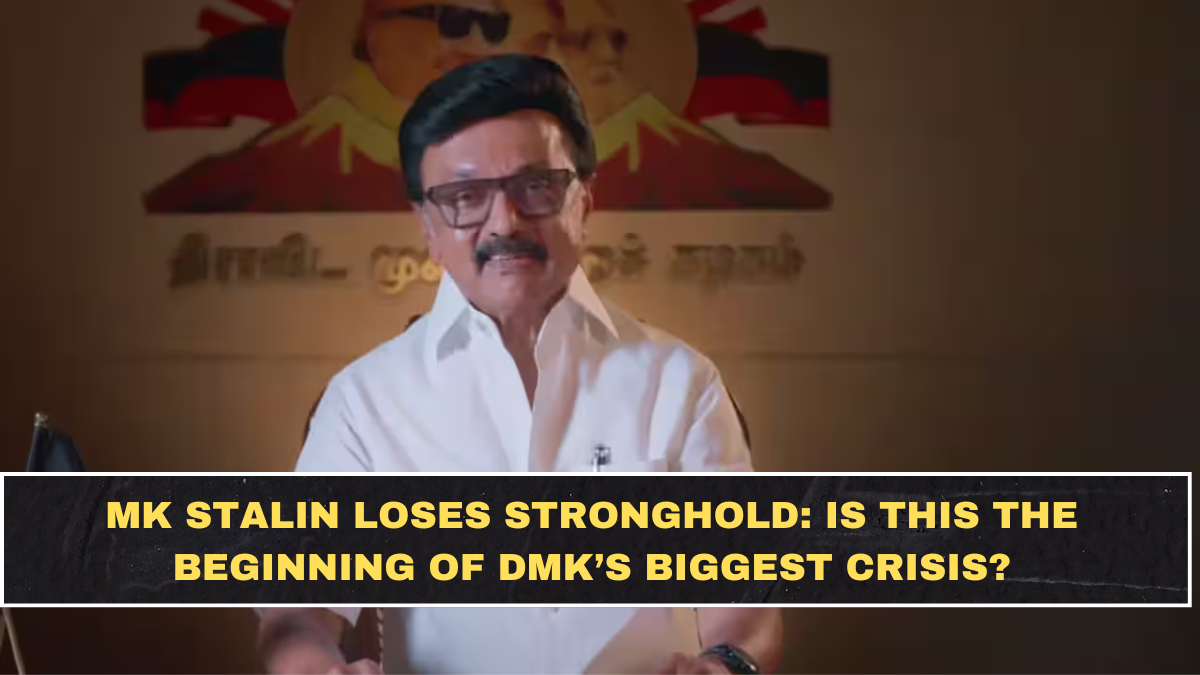
MK Stalin’s defeat in his own political stronghold has become one of the biggest headlines of the Tamil Nadu election result. Reports said Stalin lost the Kolathur constituency by around 8,795 votes to TVK candidate V S Babu, turning what was expected to be a safe seat into a symbol of DMK’s deeper crisis. This was not just a seat loss; it was a psychological blow to the ruling party.
The bigger damage is that Stalin also resigned as Tamil Nadu Chief Minister after DMK’s poor performance. Deccan Herald reported that DMK won 59 seats in the 234-member Assembly and emerged as the principal opposition party, while Vijay’s TVK became the dominant new force in the state. That shift has changed Tamil Nadu’s political conversation almost overnight.
What Went Wrong For DMK?
DMK’s problem was not one single issue; it was a pile-up of fatigue, anti-incumbency and voter hunger for change. Vijay’s TVK gave voters a fresh emotional alternative, while DMK appeared to be fighting a defensive election. Once voters started seeing TVK as a serious force, the old DMK-AIADMK equation began to crack badly.
| Factor | Impact On DMK |
|---|---|
| Anti-incumbency | Voters looked for a fresh alternative |
| Vijay’s TVK wave | Youth and urban voters shifted sharply |
| Stalin’s seat loss | Damaged DMK’s confidence and image |
| Congress support to TVK | Isolated DMK further in power talks |
| Reduced seat count | Pushed DMK into opposition space |
The harsh reality is that DMK underestimated the emotional pull of Vijay’s campaign. Celebrity politics alone does not win elections, but when a star becomes a symbol of change, the threat becomes real. DMK looked experienced, but TVK looked new, energetic and disruptive. In this election, that image gap mattered.
Why Is Kolathur So Symbolic?
Kolathur was more than a constituency for Stalin; it was his political base and comfort zone. Losing there made the result look personal, not just political. A former DMK MLA publicly blamed local leadership for failing to protect Stalin’s stronghold, showing that the party’s internal blame game had already begun after the verdict.
This is where DMK’s crisis becomes serious. When a leader loses his own stronghold, workers start questioning booth management, local leadership and campaign strategy. The opposition does not need to attack much because the defeat itself becomes the headline. For DMK, Kolathur may now become the seat that defines its 2026 collapse.
Is Vijay Now DMK’s Biggest Threat?
Vijay’s TVK did not just take votes; it took the centre stage. NDTV reported that TVK fell short of the 118-seat majority mark but was likely to form the government with outside support. India Today also reported that Vijay welcomed Congress MLAs at TVK headquarters, signalling a new post-result alliance equation.
What makes Vijay dangerous for DMK is not only the seat count. It is the fact that he has created a new political imagination among voters. DMK can no longer rely only on history, ideology or traditional networks. It now has to fight a leader who has mass appeal, emotional loyalty and a strong anti-establishment image.
What Must DMK Fix Immediately?
DMK’s next move cannot be cosmetic. If the party treats this result as a temporary setback, it will be fooling itself. The defeat has exposed weaknesses in messaging, local leadership, youth connect and campaign energy. A party that once shaped Tamil Nadu’s political direction must now prove it can still read the voter’s mind.
DMK needs to focus on:
- Rebuilding booth-level trust in lost seats
- Creating a sharper youth-focused message
- Controlling internal blame before it spreads
- Giving Udhayanidhi Stalin a clearer opposition role
- Accepting that TVK is now a real long-term rival
The uncomfortable truth is that DMK’s biggest enemy now is denial. If the party only blames local mistakes, it will miss the larger public mood. Voters did not just punish candidates; they signalled that Tamil Nadu’s political structure is changing.
Conclusion: Is This DMK’s Biggest Warning?
MK Stalin’s defeat in a stronghold and DMK’s fall to 59 seats have created the party’s biggest crisis in years. This is not the end of DMK, but it is definitely the end of easy assumptions. The party can no longer act like Tamil Nadu politics will automatically return to the old DMK versus AIADMK pattern.
Vijay’s TVK has forced a new era, and DMK must either rebuild fast or risk losing the next generation of voters. The brutal truth is simple: Stalin’s defeat is not just about one seat. It is a warning that DMK’s old strength may not be enough for Tamil Nadu’s new political mood.
FAQs
Did MK Stalin lose his stronghold?
Yes, reports said MK Stalin lost the Kolathur constituency by around 8,795 votes to TVK candidate V S Babu. The loss became one of the biggest symbolic shocks of the Tamil Nadu election result.
How many seats did DMK win in Tamil Nadu election 2026?
Deccan Herald reported that DMK won 59 seats in the 234-member Tamil Nadu Assembly. The party became the principal opposition after losing power.
Why is Stalin’s defeat important?
Stalin’s defeat matters because Kolathur was seen as his political stronghold. Losing there damaged DMK’s image and raised serious questions about the party’s ground-level control.
Is TVK now stronger than DMK?
In this election, TVK emerged ahead of DMK and became the main force in Tamil Nadu politics. DMK still has a major base, but TVK is now clearly a serious long-term threat.
Click here to know more