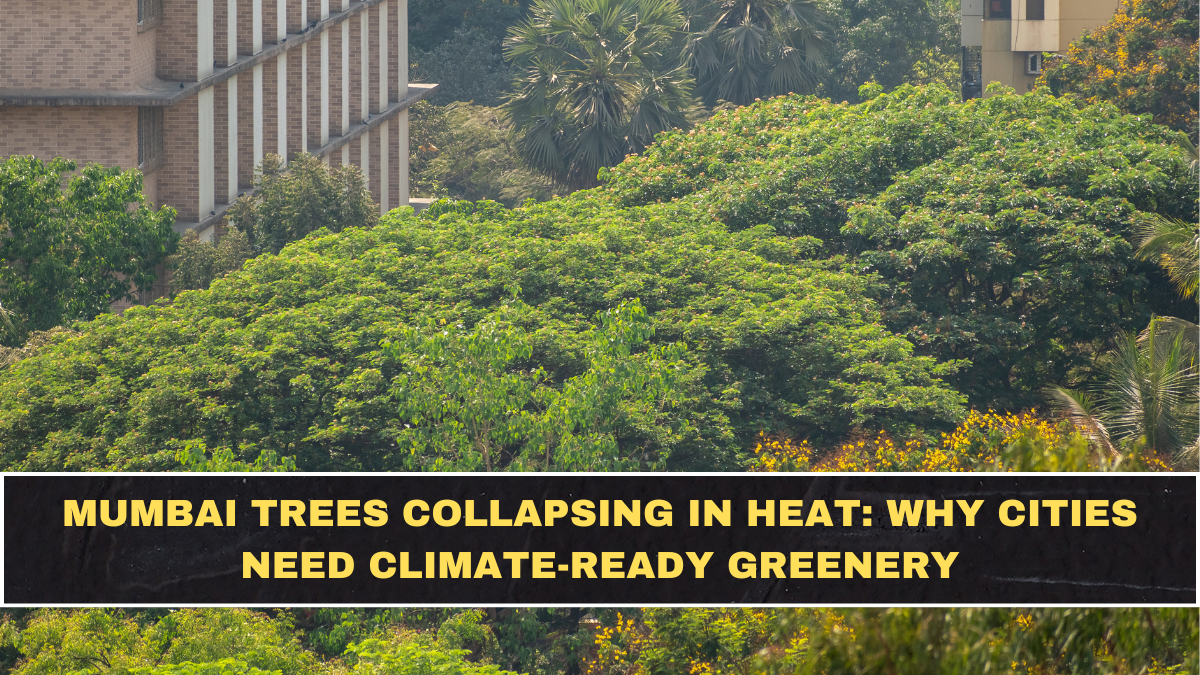
Mumbai’s tree crisis has taken a worrying turn before the monsoon. After a spate of summer tree falls, including a Khar incident where two girls were critically injured after a tree collapsed on a moving autorickshaw, the BMC has started a citywide effort to water large mature trees in high-footfall areas. Civic officials linked the rise in collapses to heat stress, loss of soil moisture and weakening of branches and roots.
This is unusual because Mumbai normally sees more tree and branch collapses during monsoon winds and heavy rain, not peak summer. The fact that trees are weakening before the rains should worry every city planner. It shows that urban greenery cannot be treated as decoration anymore; trees now need scientific care, open soil, planned watering and protection from concrete suffocation.
What Is BMC Doing Now?
The BMC has directed departments to water mature, adult trees across Mumbai, especially around crowded areas such as railway stations, hospitals and bus depots. The garden department will handle trees in gardens and recreational spaces, while the Solid Waste Management department will water roadside trees during regular road-cleaning work. BMC has also asked CSR-maintained divider plantation groups and citizens in residential complexes to water trees in private and nearby public spaces.
| BMC Action | Target Area | Why It Matters |
|---|---|---|
| Tree watering drive | Mature trees | Reduces heat stress |
| Priority locations | Stations, hospitals, bus depots | Protects high-footfall zones |
| Garden department role | Parks and gardens | Maintains green spaces |
| SWM department role | Roadside trees | Uses existing road-cleaning routes |
| Citizen appeal | Housing societies and compounds | Expands care beyond civic land |
The move is practical, but it also exposes a bigger failure. Mature trees should not reach a stage where emergency hydration is needed to prevent collapse. If roots are trapped under concrete, soil is dry and branches are heat-stressed, the city is reacting late.
Why Does Heat Damage Trees?
Extreme heat can cause trees to lose soil moisture quickly. When water in the soil becomes insufficient, trees begin drawing water from internal tissues, creating stress in the xylem system that carries water. Civic officials described this as hydraulic failure or embolism, where air bubbles block water movement inside the tree, drying branches even while the tree may still look alive from outside.
This is why tree danger is not always visible to ordinary people. A tree may look green, but its roots may be weak, branches may be brittle and soil support may be poor. Once that happens, even without strong winds, a branch or full tree can collapse suddenly. That makes heat-stressed trees a public-safety issue, not only an environmental concern.
Is Pruning Helping Or Hurting?
BMC has also been carrying out a large pre-monsoon pruning drive. The civic body identified 46,336 trees for pruning, with 12,561 already trimmed and 33,775 remaining before the May 31 deadline. It also identified 325 dead or dangerous trees, of which 279 had already been removed. Officials say pruning is needed because overgrown branches can become unstable during monsoon storms.
But environmentalists have warned that mass trimming during heat stress can worsen the city’s ecological imbalance. Their concern is simple: trees provide shade, cool roads and support bird nesting. If pruning is done carelessly, it can expose roads to harsher sunlight and weaken the same urban canopy Mumbai needs most during extreme heat.
Why Is This A Bigger Climate Warning?
Mumbai is also dealing with heat, humidity and water stress. BMC announced a 10% water cut from May 15 as lake levels fell and officials prepared for a below-average monsoon risk linked to El Niño-related conditions. That means the city is facing a difficult combination: rising heat, stressed trees, falling lake levels and pre-monsoon safety risks.
The warning is bigger than Mumbai. Indian cities are built with too much concrete and too little breathing space for roots. Footpaths, roadworks, utilities and redevelopment projects often choke tree bases, reducing water absorption. If cities want shade and cooling benefits from trees, they cannot keep burying roots under cement and then act surprised when trees become unstable.
What Should Citizens Do?
Citizens cannot replace civic planning, but they can reduce risk around homes, societies and local streets. Housing societies should inspect large trees before monsoon, avoid cementing around trunks and water mature trees during long dry spells. Any tilted, cracked, hollow, termite-affected or branch-heavy tree should be reported to civic authorities instead of being ignored until collapse.
Practical steps include:
- Keep soil open around tree bases instead of sealing roots with cement
- Water mature trees during extreme dry heat, especially in compounds
- Report leaning trees, cracked trunks and heavy dead branches
- Avoid parking under visibly weak trees during storms or heat alerts
- Do not demand reckless cutting when scientific pruning is enough
- Protect shade trees because they reduce local heat stress
The blunt truth is that citizens often want shade but also want fully paved compounds, clean-looking concrete bases and no leaf litter. That mindset is part of the problem.
Conclusion
Mumbai’s heat-stressed tree collapses are a serious warning about how cities manage greenery. BMC’s hydration drive may reduce immediate risk, but emergency watering is not a long-term climate solution. Trees need open soil, healthy roots, scientific pruning, regular monitoring and protection from reckless construction.
The real lesson is uncomfortable: urban trees cannot survive as afterthoughts trapped between roads, concrete, wires and redevelopment pressure. If Mumbai wants cooler streets and safer monsoons, it must treat trees as climate infrastructure, not decorative roadside objects.
FAQs
Why Are Trees Collapsing In Mumbai Before Monsoon?
Trees are reportedly weakening because extreme heat is reducing soil moisture and stressing roots and branches. Civic officials said heat-related hydraulic failure or embolism can dry parts of a tree internally, making collapses possible even before monsoon winds arrive.
What Is BMC’s Tree Hydration Drive?
BMC’s tree hydration drive is a citywide effort to water mature trees in high-footfall areas such as railway stations, hospitals, bus depots, gardens and roadside locations. The aim is to reduce heat stress and prevent sudden weakening or collapse.
Is Tree Pruning Safe During Heatwaves?
Pruning can be necessary for dangerous branches before monsoon, but careless or excessive trimming during heatwaves can reduce shade, disturb bird nesting and increase local heat. Scientific pruning is safer than mass cutting or random branch removal.
How Can Housing Societies Protect Trees?
Housing societies should keep soil open around tree bases, water mature trees during extreme heat, report dangerous branches, avoid cementing roots and request scientific inspection before cutting. Good tree care reduces both heat stress and collapse risk.