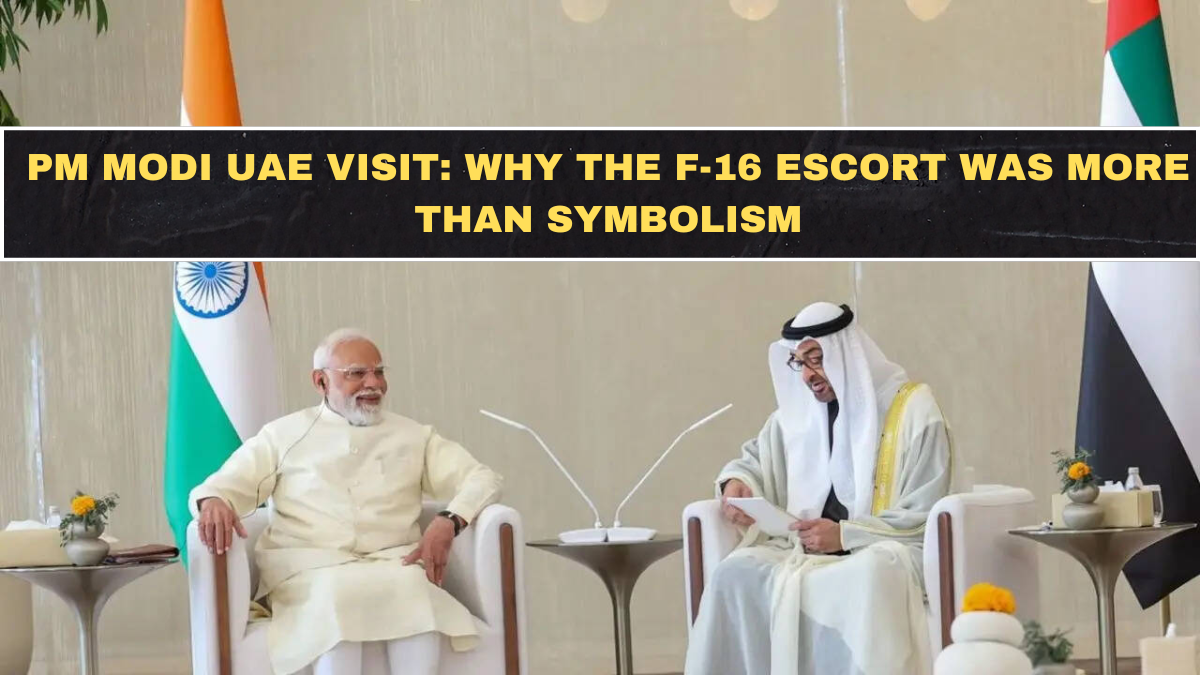
PM Modi’s UAE visit grabbed attention after UAE Air Force F-16 fighter jets escorted his aircraft as it entered Emirati airspace. The gesture came as Modi landed in Abu Dhabi on May 15, 2026, on the first leg of a five-nation tour. Such escorts are not everyday protocol; they are used to send a visible diplomatic message of honour, trust and strategic closeness.
But reducing this visit only to the F-16 visual would be shallow. The bigger story is that India and the UAE signed agreements in defence, energy and investment during the visit. In a region shaped by oil security, shipping routes, Indian diaspora strength and West Asia tensions, this visit carried more strategic weight than a ceremonial welcome.
What Made The F-16 Escort So Important?
The F-16 escort was a diplomatic signal before the formal meetings even began. It showed that the UAE wanted to publicly highlight the importance of India’s leadership and the India-UAE relationship. For ordinary readers, the message is simple: this was not just airport hospitality; it was a military-style honour displayed in the sky.
Such gestures matter because foreign policy is not only built through documents. Visual signals, protocol choices and military honours also shape public messaging. When fighter jets escort a visiting leader’s aircraft, the host country is saying that the visit matters, the relationship matters and the strategic partnership has moved beyond routine diplomacy.
| Visit Highlight | Why It Matters |
|---|---|
| F-16 escort | Strong visual signal of diplomatic honour |
| Abu Dhabi arrival | First leg of Modi’s five-nation tour |
| Defence pact | Pushes India-UAE security cooperation deeper |
| Energy agreements | Supports petroleum reserves and LPG supply security |
| Investment announcements | Strengthens economic and infrastructure ties |
What Agreements Did India And UAE Sign?
During the visit, India and the UAE signed major agreements covering strategic defence cooperation, petroleum reserves and LPG supply. Reuters reported that the two sides signed pacts in defence and petroleum during Modi’s visit, while other reports also mentioned investment and infrastructure-related announcements. These are not symbolic papers; they connect directly to India’s security and energy interests.
The defence pact is especially important because India’s interests in the Gulf are not limited to trade. India has millions of citizens working in the region, major energy dependence, shipping concerns and strategic stakes in West Asia stability. If the Gulf becomes unstable, India feels the impact through oil prices, remittances, trade routes and citizen safety.
Why Does UAE Matter So Much To India?
The UAE is one of India’s most important partners in the Gulf because the relationship covers trade, energy, diaspora, investment and security. Modi also thanked the UAE leadership for supporting Indians living there and described the bond in personal and strategic terms. That matters because the Indian community in the UAE is not a side issue; it is one of the strongest human links between the two countries.
India also needs dependable Gulf partners because West Asia is unpredictable. Any conflict, shipping disruption or oil shock can affect Indian households through fuel prices, inflation and job security for overseas workers. So when India signs energy and defence agreements with the UAE, it is not just foreign policy theatre; it is linked to real economic protection.
Why Is Gulf Security Important Now?
Modi strongly condemned recent attacks targeting the UAE and said India stands with the country. Reports from Abu Dhabi said the talks included regional security, energy cooperation and the evolving situation in West Asia. This context makes the defence pact more serious because it comes at a time when regional tensions can quickly affect trade, oil and air routes.
The blunt truth is that India cannot afford to watch Gulf instability from a distance. India’s economy, energy imports and overseas workforce are deeply linked to the region. Stronger defence and energy cooperation with the UAE gives India more room to protect its interests, but it also increases expectations that India will play a more visible role in regional stability.
What Should Readers Watch Next?
The real test will be implementation. Signing agreements is the easy part; turning them into defence coordination, energy security, investment flow and crisis cooperation is harder. Many diplomatic visits create big headlines, but the serious impact comes only when projects, supply arrangements and security mechanisms actually move forward.
Key things to watch now:
- How the strategic defence pact is implemented.
- Whether energy agreements improve supply stability.
- How UAE investment announcements move into real projects.
- Whether India plays a bigger role in West Asia peace efforts.
- How the Indian diaspora benefits from stronger bilateral ties.
Conclusion?
PM Modi’s UAE visit was bigger than the F-16 escort, even though that was the most striking visual moment. The escort showed diplomatic honour, but the defence, petroleum and LPG agreements showed the strategic depth of the relationship. India and the UAE are not only talking about friendship; they are building a partnership around security, energy and economic interests.
The clear takeaway is this: the Gulf is not a distant region for India. It affects fuel, jobs, trade, investment and national security. The UAE visit matters because it signals that India is strengthening ties where the stakes are high and mistakes can become expensive.
FAQs?
Why Did UAE F-16 Jets Escort PM Modi’s Aircraft?
UAE F-16 fighter jets escorted PM Modi’s aircraft as a special diplomatic gesture when he entered Emirati airspace. The escort was seen as a public signal of respect and growing strategic closeness between India and the UAE.
What Agreements Were Signed During PM Modi’s UAE Visit?
India and the UAE signed agreements related to strategic defence cooperation, petroleum reserves and LPG supply. Reports also mentioned investment and infrastructure-linked announcements as part of the wider push to deepen bilateral cooperation.
Why Is The India-UAE Defence Pact Important?
The defence pact is important because the UAE sits in a strategically sensitive region where security, energy and shipping routes matter to India. Stronger defence cooperation can support regional stability, protect economic interests and deepen trust between the two countries.
Why Does The UAE Matter To India?
The UAE matters because it is linked to India through trade, energy supply, investment, security cooperation and a large Indian diaspora. Any instability in the Gulf can affect fuel prices, jobs, remittances and India’s wider economic interests.