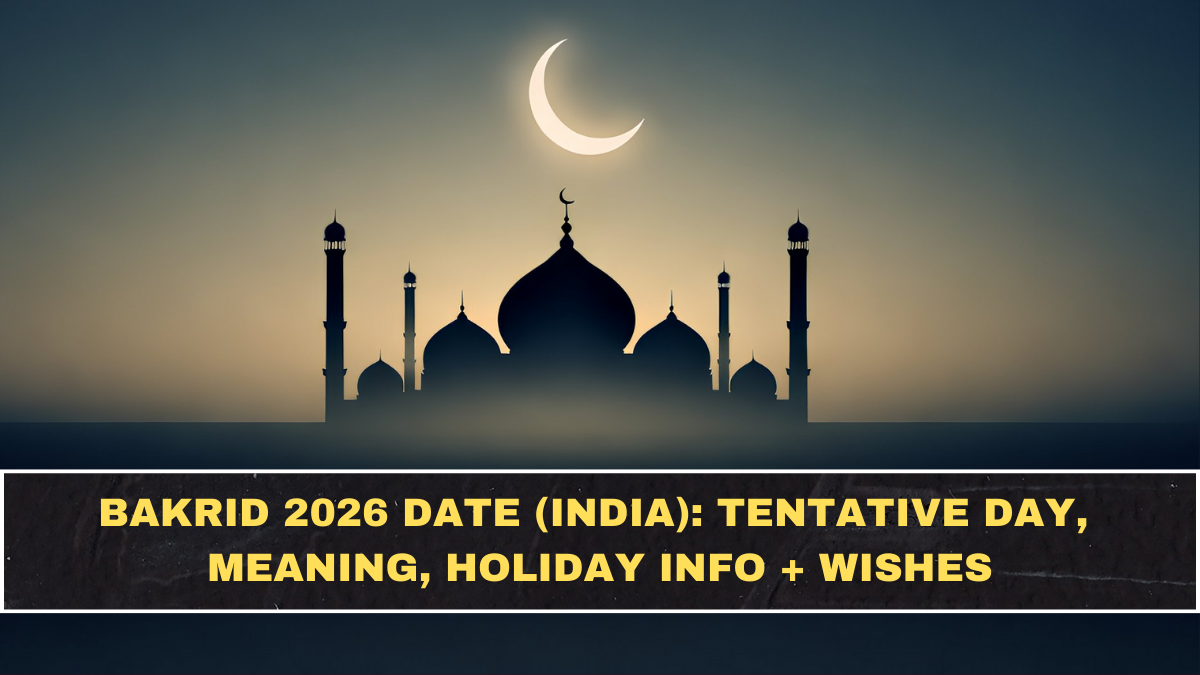
Bakrid, also known as Eid al-Adha, is one of the most important festivals observed by Muslims across India. Unlike festivals centered on celebration alone, Bakrid is deeply rooted in faith, sacrifice, and social responsibility. The day highlights obedience to God, compassion toward others, and the importance of sharing with those in need.
Every year, there is confusion around the exact date of Bakrid because it depends on moon sighting. People often search for clarity on whether it is a public holiday, how it is traditionally observed, and what the day truly signifies beyond rituals. This Bakrid 2026 guide explains the tentative date, meaning, holiday status, and observance in a clear and realistic manner.
Bakrid 2026 Tentative Date in India
Bakrid 2026 in India is expected to be observed on 27/05/2026, subject to moon sighting. Since the Islamic calendar follows lunar cycles, the final date is confirmed only after the crescent moon is sighted. As a result, the observance may shift by one day depending on regional announcements.
Understanding that the date is tentative helps avoid confusion and misinformation. Government holiday notifications, school calendars, and travel plans usually adjust once the moon sighting is officially confirmed. Using numeric dates instead of month names also ensures clarity across regions.
Is Bakrid a Public Holiday in India
Bakrid is widely recognized as a public holiday in India. Central and state government offices, banks, and many educational institutions remain closed on the day. In regions with a significant Muslim population, observance is especially prominent and well-coordinated.
Private-sector holiday policies may differ depending on organizational guidelines. Some workplaces treat Bakrid as a mandatory holiday, while others categorize it as a restricted holiday. Employees are advised to check official holiday lists rather than relying on assumptions.
Meaning and Religious Significance of Bakrid
Bakrid commemorates the willingness of Prophet Ibrahim to sacrifice his son in obedience to God’s command. According to Islamic belief, God replaced the sacrifice with an animal, symbolizing mercy and devotion. This act forms the core spiritual meaning of Eid al-Adha.
The festival emphasizes submission to divine will, selflessness, and empathy. It is not about the act of sacrifice alone, but about the intention, discipline, and compassion behind it. These values are central to how Bakrid is understood and observed.
How Bakrid Is Traditionally Observed
The day begins with special congregational prayers held in mosques and open prayer grounds. Devotees dress modestly, offer prayers, and listen to sermons that reinforce the moral lessons of the festival. Community participation plays a key role in the observance.
Animal sacrifice, where practiced, is carried out following religious and local guidelines. The meat is traditionally divided into portions for family, relatives, and the underprivileged. This sharing reflects the social responsibility aspect of Bakrid.
Modern Observance and Practical Adjustments
In modern urban settings, Bakrid observance has adapted to legal, civic, and environmental considerations. Many people choose organized facilities for sacrifice or participate through donations rather than direct involvement. This approach ensures hygiene and compliance with local regulations.
Digital greetings, charitable contributions, and community outreach programs have become more common. These practices allow people to observe Bakrid meaningfully even when traditional arrangements are not feasible.
Holiday Planning and Daily Life on Bakrid
Because Bakrid is a public holiday, markets, government offices, and banks usually remain closed. Essential services operate as per local arrangements, but reduced staffing is common. Planning important work around the holiday helps avoid inconvenience.
Public transport generally functions normally, though certain areas may experience crowding due to prayer gatherings. Allowing extra travel time is a practical step, especially in urban centers.
Bakrid Wishes and Greetings People Share
Bakrid greetings usually emphasize peace, prosperity, and goodwill. Messages often focus on unity, compassion, and blessings rather than elaborate expressions. Simple and respectful wishes align best with the spirit of the festival.
Sharing greetings personally or digitally helps maintain social connections. The tone remains warm and sincere, reflecting the underlying values of the occasion.
What Is Encouraged on Bakrid
Charity, kindness, and responsible behavior are strongly encouraged on Bakrid. Helping those in need, sharing food, and maintaining harmony are considered essential aspects of observance. Respect for local laws and community norms is equally important.
Practicing moderation and mindfulness throughout the day reinforces the ethical message of the festival. These actions give practical meaning to religious belief.
What Is Best Avoided
Wasteful behavior, public disturbance, and disregard for civic rules are discouraged. The focus remains on faith and responsibility rather than display or excess. Many people also avoid unnecessary arguments or confrontations on the day.
Observing Bakrid with awareness ensures that its purpose is not diluted.
Why Bakrid Continues to Matter Today
Bakrid’s message of sacrifice and compassion remains relevant in a society driven by consumption and individualism. The festival reminds people of shared responsibility and ethical restraint, values that extend beyond religion.
Its continued observance reflects the importance of balancing faith with social duty. This relevance is what keeps Bakrid meaningful across generations.
Conclusion: Observing Bakrid 2026 With Clarity and Respect
Bakrid 2026 in India, expected around 27/05/2026, is a day centered on faith, compassion, and responsibility. Understanding its tentative date, holiday status, and observance practices helps individuals approach the day with clarity rather than confusion.
Whether observed through prayer, charity, or quiet reflection, Bakrid’s essence lies in intention and conduct. A respectful and mindful observance keeps its values alive in everyday life.
FAQs
What is the tentative Bakrid 2026 date in India?
Bakrid 2026 is expected to be observed on 27/05/2026, subject to moon sighting.
Is Bakrid a public holiday in India?
Yes, Bakrid is a recognized public holiday across most states in India.
Why is Bakrid also called Eid al-Adha?
Eid al-Adha refers to the festival of sacrifice commemorating Prophet Ibrahim’s devotion.
Does the Bakrid date change every year?
Yes, the date changes annually because it follows the Islamic lunar calendar.
Is animal sacrifice mandatory on Bakrid?
No, participation depends on personal belief and capacity, and charity is equally valued.
Can Bakrid be observed without large gatherings?
Yes, many people observe Bakrid through prayer, charity, and family gatherings at home.