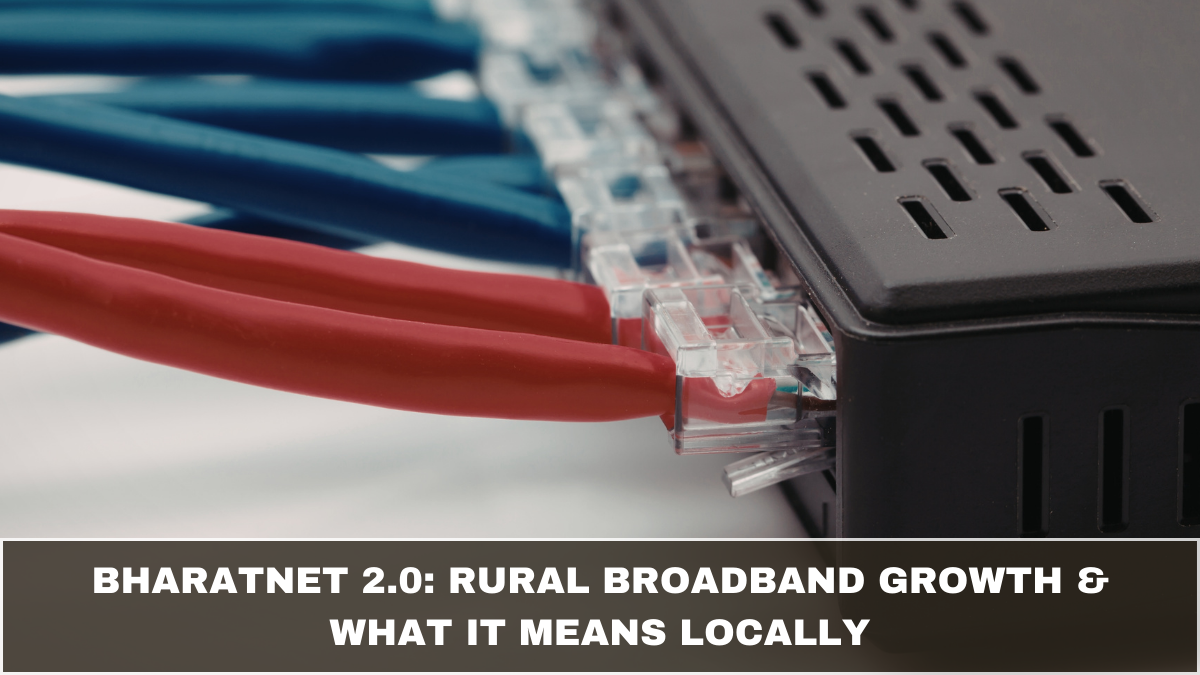
The BharatNet 2.0 rural internet push is set to transform connectivity across villages and small towns in India. With the government accelerating the rollout of high-speed broadband, millions of rural residents will gain access to digital services, online education, telemedicine, e-governance, and small business opportunities.
This article explores the scope of BharatNet 2.0, its deployment strategy, local impact, and benefits for rural communities in 2026.
What is BharatNet 2.0?
BharatNet 2.0 is the second phase of India’s ambitious rural broadband initiative aimed at connecting all gram panchayats with high-speed internet. The program builds on earlier efforts to expand connectivity to remote areas, focusing on:
-
Fiber-optic networks connecting villages to district hubs
-
Affordable, reliable broadband access for citizens
-
Infrastructure that supports public Wi-Fi, government services, and digital businesses
The BharatNet 2.0 rural internet push is critical for bridging the urban-rural digital divide and fostering socio-economic growth.
Current Progress and Deployment
As of 2026, BharatNet 2.0 is seeing significant momentum:
-
Thousands of gram panchayats already connected with fiber-optic broadband
-
Integration with state-run service providers to enhance coverage
-
Expansion to remote and tribal areas with satellite or wireless links where fiber is not feasible
-
Pilot programs for last-mile connectivity using local infrastructure
The government aims to achieve nationwide connectivity by the end of 2026, ensuring every village has access to fast, reliable internet.
Impact on Rural Communities
The BharatNet 2.0 rural internet push is expected to create multiple benefits for local populations:
-
Education: Online classes, digital libraries, and skill development programs become accessible
-
Healthcare: Telemedicine services reduce the need for long travel to urban hospitals
-
Government Services: Online applications, payments, and grievance redressal improve efficiency
-
E-commerce: Local entrepreneurs can sell products online, expanding market access
-
Agriculture: Farmers gain access to market prices, weather updates, and crop advisory services
This connectivity empowers rural communities and improves quality of life.
Opportunities for Small Businesses
Broadband access under BharatNet 2.0 opens avenues for local enterprises:
-
Setting up digital shops or online marketplaces
-
Offering local services through mobile apps
-
Expanding delivery networks for small-scale manufacturing
-
Accessing financial services, loans, and government schemes digitally
-
Training employees in digital skills for better productivity
Small businesses can leverage internet connectivity to scale operations and increase income.
Technology and Infrastructure
The BharatNet 2.0 rural internet push relies on advanced technology:
-
Fiber-optic cables linking villages to main internet nodes
-
Optical Line Terminals (OLTs) and distribution networks for local coverage
-
Public Wi-Fi hotspots in panchayats and community centers
-
Redundant and resilient network architecture to ensure uninterrupted service
This combination ensures high-speed, low-latency broadband that can handle multiple applications simultaneously.
Challenges and Solutions
Despite progress, challenges remain:
-
Geographical Barriers: Remote and hilly regions may require innovative wireless or satellite solutions
-
Power Supply Issues: Backup power systems are needed to maintain uninterrupted connectivity
-
Digital Literacy: Training programs help residents use broadband effectively
-
Affordability: Subsidized plans ensure that connectivity is accessible to all income levels
Addressing these challenges is vital to maximize the impact of BharatNet 2.0 in rural India.
Future Outlook
The BharatNet 2.0 rural internet push is expected to:
-
Connect over 2.5 lakh gram panchayats by end of 2026
-
Support integration with upcoming 5G networks for faster services
-
Enable smart village initiatives, including e-governance, IoT-based agriculture, and rural entrepreneurship
-
Boost digital literacy, employment opportunities, and overall economic growth in rural areas
This infrastructure will lay the foundation for India’s inclusive digital economy.
Conclusion
The BharatNet 2.0 rural internet push represents a transformative step toward nationwide digital inclusion. By providing high-speed broadband to villages and remote towns, the initiative enhances education, healthcare, entrepreneurship, and governance. For rural communities, BharatNet 2.0 is not just an internet upgrade—it is an opportunity to participate in India’s digital economy, improve livelihoods, and access essential services conveniently. As rollout accelerates in 2026, the benefits will extend to millions of people, shaping a digitally empowered rural India.
FAQs
What is BharatNet 2.0?
BharatNet 2.0 is India’s government initiative to provide high-speed broadband to all gram panchayats and rural communities.
How does it benefit rural residents?
It improves access to education, healthcare, government services, e-commerce, and agricultural information.
Which areas are being connected under BharatNet 2.0?
Thousands of gram panchayats across India, including remote, tribal, and underserved regions, are being connected.
What technologies are used for connectivity?
Fiber-optic cables, wireless links, optical line terminals, and public Wi-Fi hotspots ensure high-speed broadband access.
How will BharatNet 2.0 impact small businesses?
Businesses can expand online, access digital services, improve logistics, and train staff in digital skills to grow operations.