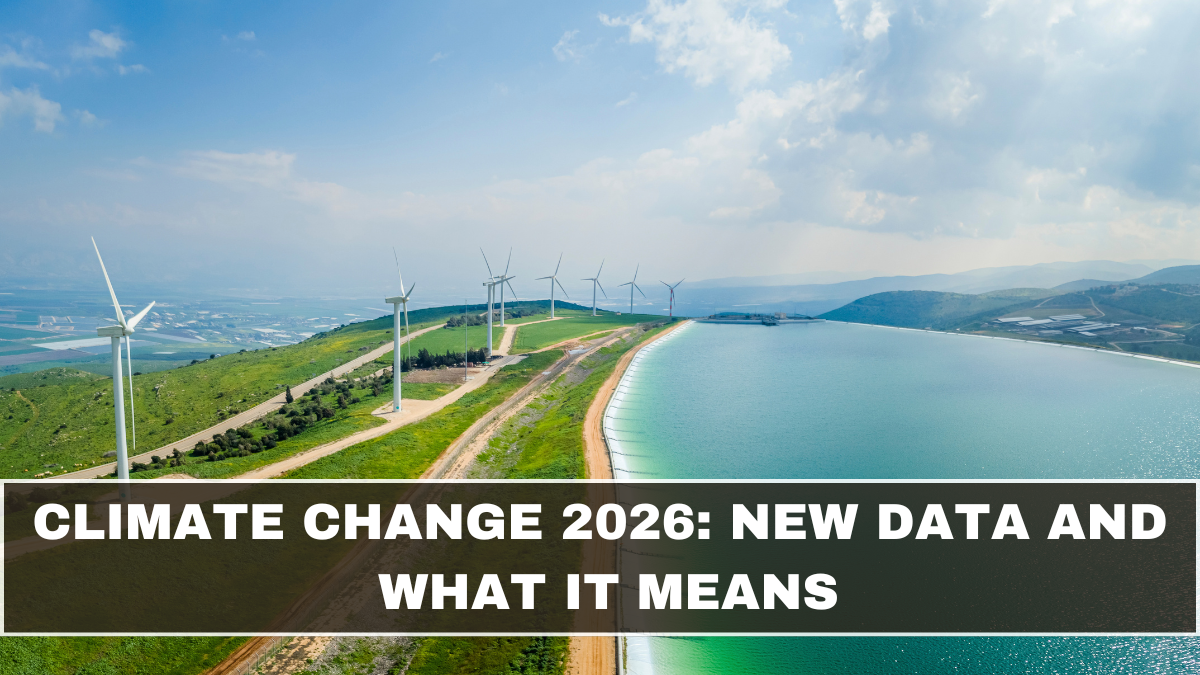
Climate change in 2026 is no longer a distant warning—it is a measurable, accelerating reality. Scientists around the world are reporting new temperature records, intensifying extreme weather events, and growing evidence that climate systems are approaching critical tipping points. The latest global warming data paints a clearer picture of where the planet stands—and where it may be heading next.
This update breaks down the newest climate indicators, extreme weather patterns, and what experts are warning about for the coming years.
Global Temperature Trends in 2026
Global average temperatures have continued their upward trend. Recent years have ranked among the hottest ever recorded, driven largely by rising greenhouse gas concentrations and amplified by natural climate patterns such as El Niño.
Climate monitoring agencies report:
-
Continued increases in global surface temperatures
-
Record-breaking ocean heat content
-
Reduced polar sea ice coverage
-
Accelerated glacier retreat
Ocean temperatures are particularly concerning. Warmer oceans not only contribute to sea-level rise but also intensify hurricanes and disrupt marine ecosystems.
Scientists warn that exceeding the 1.5°C warming threshold compared to pre-industrial levels could significantly increase climate-related risks, including ecosystem collapse and more severe heatwaves.
Rising Greenhouse Gas Concentrations
Carbon dioxide (CO₂), methane (CH₄), and nitrous oxide (N₂O) concentrations remain at historically high levels. CO₂ concentrations have steadily increased due to fossil fuel combustion, deforestation, and industrial activity.
Methane emissions—often linked to agriculture, landfills, and energy production—have also surged in recent years. Methane is particularly powerful because it traps significantly more heat than CO₂ over short timeframes.
Without major emission reductions, scientists project continued warming through the next several decades.
Extreme Weather Patterns Intensifying
One of the clearest climate signals in 2026 is the frequency and severity of extreme weather.
Observed trends include:
-
Longer and more intense heatwaves
-
Stronger tropical storms and hurricanes
-
Severe droughts in vulnerable regions
-
Increased flooding from heavy rainfall
-
Expanding wildfire seasons
Heatwaves are becoming both hotter and more prolonged. Urban areas, in particular, face rising heat risks due to the urban heat island effect. Wildfires are spreading faster and burning larger areas, partly due to drier vegetation and prolonged high temperatures.
Flooding events have also intensified, with warmer air holding more moisture and releasing it in heavy bursts of rainfall.
Sea-Level Rise and Coastal Risks
Global sea levels continue to rise due to two main factors:
-
Thermal expansion (water expands as it warms)
-
Melting glaciers and ice sheets
Low-lying coastal cities face growing risks of flooding, infrastructure damage, and population displacement. Some island nations are already experiencing regular tidal flooding.
Projections suggest that sea levels could rise significantly by the end of the century if emissions remain high, putting millions of people at risk.
Arctic and Antarctic Ice Loss
Polar regions are warming faster than the global average—a phenomenon known as Arctic amplification.
The Arctic continues to lose sea ice coverage during summer months, affecting:
-
Indigenous communities
-
Wildlife habitats
-
Global weather patterns
Meanwhile, parts of Antarctica are showing instability in key ice shelves, raising concerns about long-term sea-level contributions.
The loss of reflective ice surfaces also accelerates warming, as darker ocean water absorbs more solar energy.
Climate Tipping Points
Scientists are increasingly concerned about climate tipping points—thresholds beyond which certain changes become irreversible.
Examples include:
-
Collapse of major ice sheets
-
Amazon rainforest dieback
-
Disruption of ocean circulation systems
-
Permafrost thaw releasing stored methane
If triggered, these tipping points could accelerate warming beyond current projections, even if emissions are reduced later.
While not all tipping points are imminent, monitoring data suggests that risks are increasing as global temperatures rise.
Economic and Social Impacts
Climate change is not just an environmental issue—it is an economic and social one.
In 2026, climate-related disasters are costing billions annually due to:
-
Infrastructure damage
-
Agricultural losses
-
Insurance claims
-
Energy grid strain
Food security concerns are growing in regions affected by droughts and unpredictable rainfall patterns. Water scarcity is intensifying in parts of Africa, Asia, and the Americas.
Migration linked to climate stressors is also rising, creating geopolitical challenges.
Renewable Energy and Mitigation Progress
Despite the alarming trends, progress is being made.
Renewable energy capacity continues to expand, particularly in:
-
Solar power
-
Wind energy
-
Battery storage systems
Many countries are investing in green hydrogen, electric vehicles, and carbon capture technologies. However, scientists stress that current efforts are still insufficient to meet long-term climate targets.
Faster decarbonization and stronger policy implementation are widely considered essential.
Adaptation Efforts in 2026
In addition to reducing emissions, adaptation strategies are becoming central to climate policy.
Examples include:
-
Building flood-resistant infrastructure
-
Expanding urban green spaces
-
Updating building codes for heat resilience
-
Early warning systems for extreme weather
Climate adaptation is especially critical for vulnerable communities with limited resources.
What Scientists Are Warning
Experts emphasize that the window to limit severe warming is narrowing. Immediate and sustained emission reductions are necessary to stabilize global temperatures.
Key warnings include:
-
Delays increase long-term costs
-
Extreme weather will continue intensifying
-
Vulnerable populations face disproportionate impacts
-
Tipping points become more likely with each fraction of warming
The science remains clear: reducing fossil fuel reliance and accelerating clean energy adoption are critical steps.
FAQs
Is climate change getting worse in 2026?
Yes. Global temperature records, ocean heat levels, and extreme weather frequency all indicate that climate impacts are intensifying.
What is causing the increase in extreme weather?
Warmer air and oceans provide more energy and moisture to weather systems, leading to stronger storms, heavier rainfall, and longer heatwaves.
Are governments taking action?
Many countries are investing in renewable energy and climate adaptation, but scientists argue that global efforts still fall short of what is needed to limit severe warming.
Can climate change still be reversed?
While past warming cannot be undone immediately, future warming can be limited through rapid emission reductions and clean energy transitions.
What can individuals do?
Individuals can reduce carbon footprints through energy efficiency, sustainable transportation, and supporting climate-conscious policies and businesses.