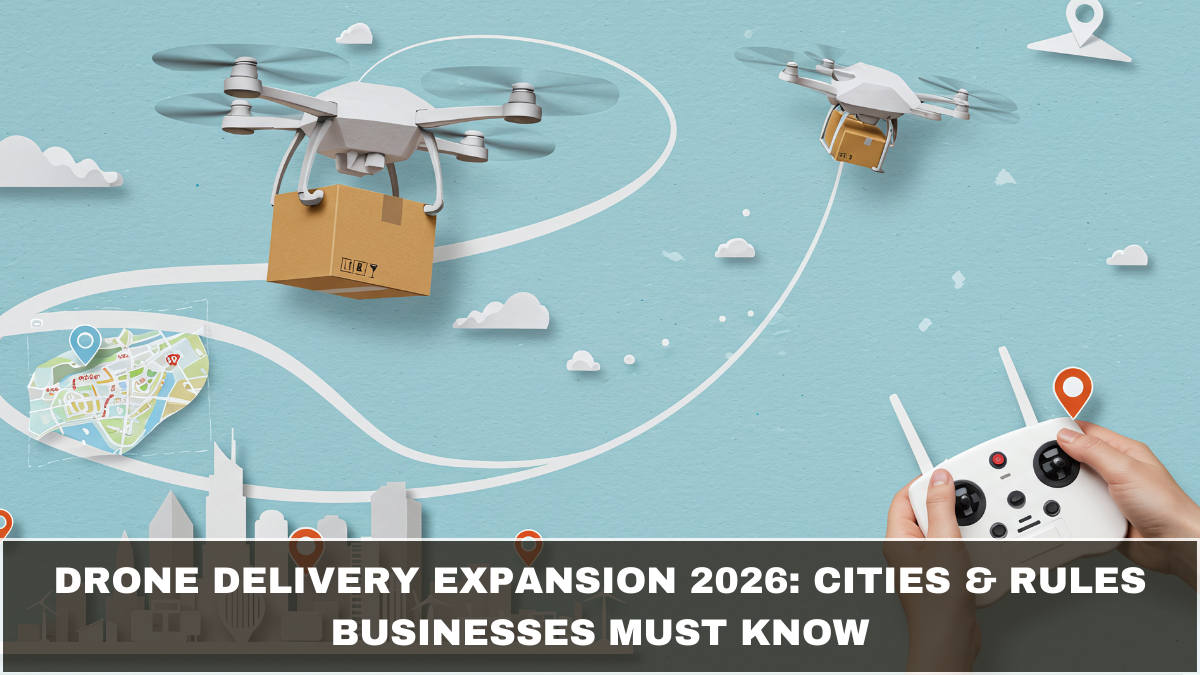
The drone delivery zones expansion India in 2026 is a landmark development for logistics, e-commerce, healthcare, and industrial sectors. With new drone policies and pilot projects, India is moving toward integrating unmanned aerial vehicles (UAVs) into mainstream delivery operations. Businesses, investors, and urban planners are watching closely as the government defines rules, safety standards, and designated operational zones across cities.
This article explains the current drone delivery zones, timelines, regulatory requirements, and business considerations for companies exploring drone logistics in India.
Why Drone Delivery Expansion Is Gaining Momentum
Drone deliveries are becoming increasingly relevant in India due to:
-
Rapid growth in e-commerce and express delivery demands
-
Need for last-mile logistics solutions in congested urban areas
-
Government initiatives supporting UAV technology and innovation
-
Expansion of drone startups and tech partnerships in logistics
The drone delivery zones expansion India allows businesses to test and scale operations in controlled environments while ensuring safety and compliance.
Cities and Zones Covered in 2026
The drone delivery pilot programs in India are expanding to multiple cities, with zones designated for commercial use:
-
Delhi-NCR: Priority corridors for express delivery and medical logistics
-
Bengaluru: Tech-focused testing for software and industrial drone applications
-
Mumbai: Urban last-mile delivery pilots in dense commercial areas
-
Hyderabad: Logistics and e-commerce testing with integrated city planning
-
Chennai and Pune: Industrial and warehouse-to-door delivery trials
These expansions aim to standardize operations, encourage adoption, and monitor performance in real-world Indian conditions.
Regulatory Framework and Drone Policy Updates
The Indian government has updated the drone policy for 2026 to facilitate commercial operations while maintaining safety:
-
UAVs must be registered with the Directorate General of Civil Aviation (DGCA)
-
No Drone Zones are designated around airports, sensitive locations, and high-security areas
-
Maximum weight limits and altitude restrictions apply for delivery drones
-
Remote pilot certification and mandatory insurance are required for operators
-
Compliance with visual line-of-sight (VLOS) and Beyond Visual Line-of-Sight (BVLOS) rules
These regulations ensure safe and responsible deployment of drones in urban and semi-urban zones.
Technology and Logistics Considerations
Businesses must adopt specific technology and operational measures to succeed:
-
Lightweight drones with payloads suitable for parcels, medical supplies, and small items
-
Route optimization software and geofencing to prevent entry into restricted zones
-
Real-time tracking for safety, regulatory reporting, and customer transparency
-
Weather-resistant drones for diverse Indian climate conditions
-
Integration with warehouse and delivery management systems
These measures enable safe, efficient, and scalable drone logistics operations.
Impact on Businesses and Industries
The drone delivery zones expansion India is expected to impact multiple sectors:
-
E-commerce: Faster last-mile deliveries, particularly for small and urgent packages
-
Healthcare: Rapid transport of medicines, vaccines, and critical supplies to remote areas
-
Industrial Logistics: Warehouse-to-warehouse or plant-to-site transport of lightweight components
-
Agriculture: Delivery of tools, seeds, or small sensors for precision farming
-
Disaster Relief: Quick deployment of essentials to flood or earthquake-affected zones
Companies adopting drone delivery can reduce costs, increase efficiency, and enhance customer satisfaction.
Timeline for Implementation
The government and industry stakeholders have outlined a phased expansion for drone delivery zones:
-
Early 2026: Initial expansion to major metro areas under controlled pilot programs
-
Mid-2026: Inclusion of Tier-2 cities for commercial and industrial deliveries
-
Late 2026: Wider adoption in semi-urban and rural corridors with BVLOS approvals
-
Continuous: Review of safety incidents, regulatory compliance, and technological advancements
This phased approach balances operational growth with safety and regulatory oversight.
Compliance Checklist for Businesses
To operate within the drone delivery zones expansion India, companies should:
-
Register drones and pilots with DGCA
-
Maintain operational and safety manuals
-
Follow weight, altitude, and route restrictions
-
Train staff for emergency handling and regulatory reporting
-
Stay updated on policy amendments and city-specific guidelines
Compliance is crucial for avoiding fines, penalties, or suspension of drone operations.
Conclusion
The drone delivery zones expansion India in 2026 represents a significant step toward modernizing logistics and delivery infrastructure. By designating urban and industrial zones, updating drone policy, and establishing safety protocols, the government is enabling businesses to adopt UAV technology effectively. With careful planning, regulatory compliance, and technological integration, drones can transform last-mile delivery, medical logistics, and industrial transport across India. Businesses that embrace this trend early are likely to gain operational efficiency, cost savings, and competitive advantages in the emerging drone logistics ecosystem.
FAQs
Which cities are included in the 2026 drone delivery expansion in India?
Delhi-NCR, Bengaluru, Mumbai, Hyderabad, Chennai, Pune, and selected industrial zones.
What regulations must businesses follow for drone delivery?
Registration with DGCA, weight and altitude limits, pilot certification, insurance, and compliance with VLOS/BVLOS rules.
What industries benefit most from drone delivery?
E-commerce, healthcare, industrial logistics, agriculture, and disaster relief operations.
What is the expected timeline for drone zone expansion?
Early 2026 for metros, mid-2026 for Tier-2 cities, and late 2026 for semi-urban and rural corridors.
How can businesses ensure safe drone operations?
Use geofencing, real-time tracking, route optimization, weather-resistant drones, and trained pilots.