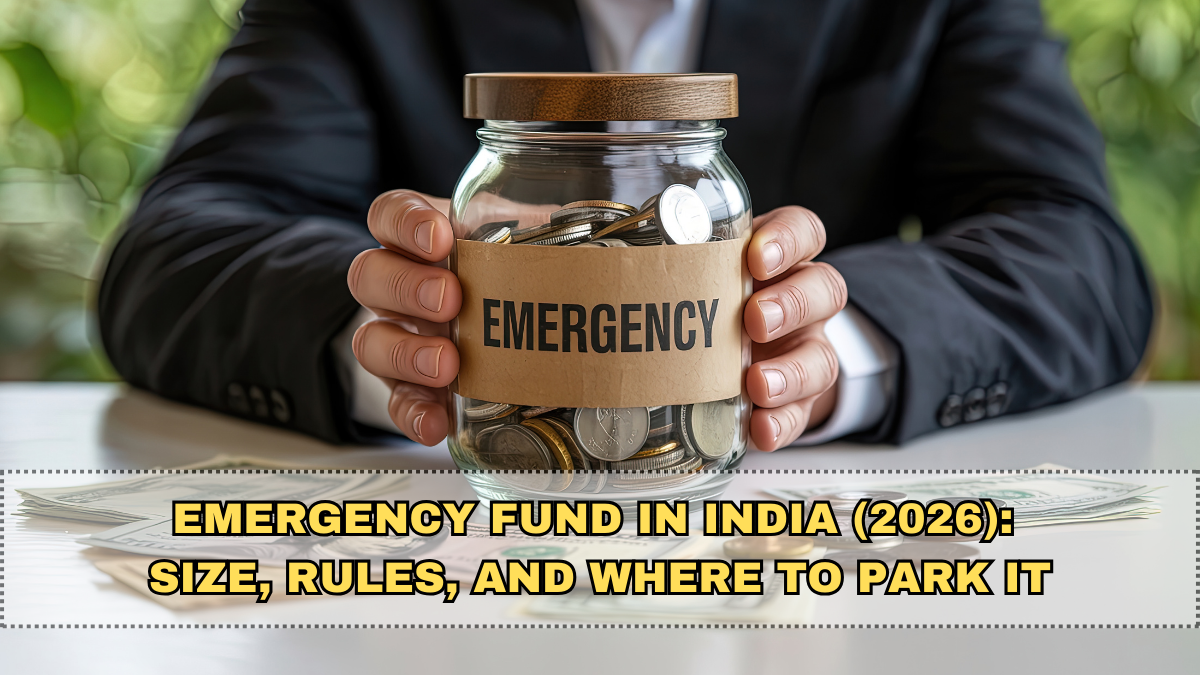
If your finances look good on paper but one unexpected expense can knock you off balance, you don’t have an investment problem—you have an emergency fund problem. In emergency fund India 2026, this is no longer optional or “nice to have.” It’s the base layer that keeps everything else from collapsing.
An emergency fund is not about returns, tax-saving, or optimization. It’s about survivability. This guide explains exactly how much to save, the non-negotiable rules, and where to park your money so it’s available when life doesn’t give you notice.
What an Emergency Fund Is (And What It Is Not)
Let’s kill confusion first.
An emergency fund is:
• Money for income disruption
• Medical or family emergencies
• Job loss or business slowdown
• Unplanned but essential expenses
An emergency fund is NOT:
• A vacation fund
• A market opportunity pool
• A “just in case markets fall” fund
• A tax-saving instrument
In emergency fund India 2026, clarity matters more than cleverness.
Why Emergency Funds Matter More in 2026
Income stability has changed.
Reality in 2026:
• Contract and gig income is common
• Job transitions are faster and less predictable
• Medical inflation is high
• EMI commitments are heavier
Without a buffer, even short disruptions force bad financial decisions.
How Much Emergency Fund Do You Really Need?
Forget one-size-fits-all advice. Use this logic.
For Salaried Employees
• 6 months of essential expenses
• 9 months if single income household
• 12 months if dependents + EMIs
Essential expenses = rent/EMI + food + utilities + insurance + transport.
For Freelancers & Business Owners
• 9–12 months of expenses minimum
• Separate personal and business buffers
• Assume delayed payments
In emergency fund India 2026, variable income = bigger cushion.
How to Calculate Your Emergency Fund Size
Simple method:
-
List monthly essentials
-
Multiply by required months
-
Ignore lifestyle costs
Example:
Monthly essentials: ₹40,000
Target (9 months): ₹3.6 lakh
That’s your number. Not negotiable.
The Golden Rules of an Emergency Fund
These rules exist because people keep breaking them.
Rule 1: Liquidity Over Returns
If it can’t be accessed in hours or days, it’s useless.
Rule 2: Capital Safety Is Mandatory
Market-linked volatility defeats the purpose.
Rule 3: No Emotional Usage
If it’s not an emergency, it stays untouched.
Rule 4: Separate It From Investments
Mixing emergency money with growth money leads to panic selling.
Where to Keep Emergency Fund in India (2026 Reality)
This is where most mistakes happen.
Savings Account (Partial Use)
Pros:
• Instant access
• Zero risk
Cons:
• Low returns
• Inflation erosion
Best for:
• 1–2 months of expenses only
Fixed Deposits (FD vs Fund Helps Decide)
FDs still work—when used correctly.
Pros:
• Capital safety
• Predictable returns
• Easy liquidation
Cons:
• Penalty on premature withdrawal
Best approach:
• Multiple small FDs (laddered)
• Not one big FD
This is where FD vs fund matters—FDs win on certainty.
Liquid Mutual Funds
Pros:
• Better returns than savings
• High liquidity
• Low volatility
Cons:
• Minor NAV fluctuation
• Exit load (usually for 7 days)
Best for:
• 2–6 months of expenses
Ultra-Short Duration Funds
Use cautiously.
Pros:
• Slightly higher yield
Cons:
• Small interest rate risk
Only for:
• Excess emergency buffer—not core money
What NOT to Use for Emergency Funds
Avoid these completely:
• Equity mutual funds
• Stocks
• Crypto
• Gold ETFs
• Locked insurance plans
If it can fall or lock you in, it’s not emergency money.
FD vs Fund: The Practical Split That Works
Instead of debating endlessly, split logically.
Recommended structure:
• 2 months → Savings account
• 3–4 months → Liquid fund
• Remaining → Laddered FDs
This structure balances access, safety, and minimal return drag.
How to Build an Emergency Fund (Without Stress)
Don’t wait to “finish” it in one go.
Steps:
• Start with one-month buffer
• Automate monthly transfers
• Use bonuses to accelerate
• Pause investing temporarily if needed
Emergency fund comes before aggressive investing.
Common Emergency Fund Mistakes in India
These cost people dearly:
• Treating credit cards as backup
• Investing emergency money for “better returns”
• Underestimating expenses
• Using emergency fund for lifestyle upgrades
Debt is not an emergency fund.
When to Revisit Emergency Fund Size
Review when:
• Income changes
• EMIs start or end
• Family size changes
• Health insurance coverage changes
Static funds don’t protect dynamic lives.
Emergency Fund vs Insurance: Don’t Confuse Them
They solve different problems.
Emergency fund:
• Handles cash flow gaps
Insurance:
• Covers catastrophic costs
You need both. One cannot replace the other.
Psychological Benefit Most People Ignore
An emergency fund buys:
• Calm decision-making
• Negotiation power
• Ability to say no to bad options
This mental safety net is undervalued but priceless.
Conclusion
The emergency fund India 2026 rule is simple: boring money saves exciting lives. Decide the right size, respect liquidity, and park funds where safety beats returns. Once this foundation is solid, investing becomes calmer, smarter, and far more effective.
Emergency funds don’t make you rich—but they stop you from becoming poor.
FAQs
How much emergency fund should I keep in India in 2026?
6–12 months of essential expenses, depending on income stability.
Is FD better than mutual fund for emergency fund?
FDs offer certainty; liquid funds offer flexibility. A mix works best.
Can I use credit cards instead of emergency fund?
No. Credit is expensive and unreliable during real emergencies.
Should emergency fund be invested in equity?
Never. Market risk defeats the purpose.
Do I need emergency fund if I have insurance?
Yes. Insurance doesn’t cover income gaps or immediate cash needs.