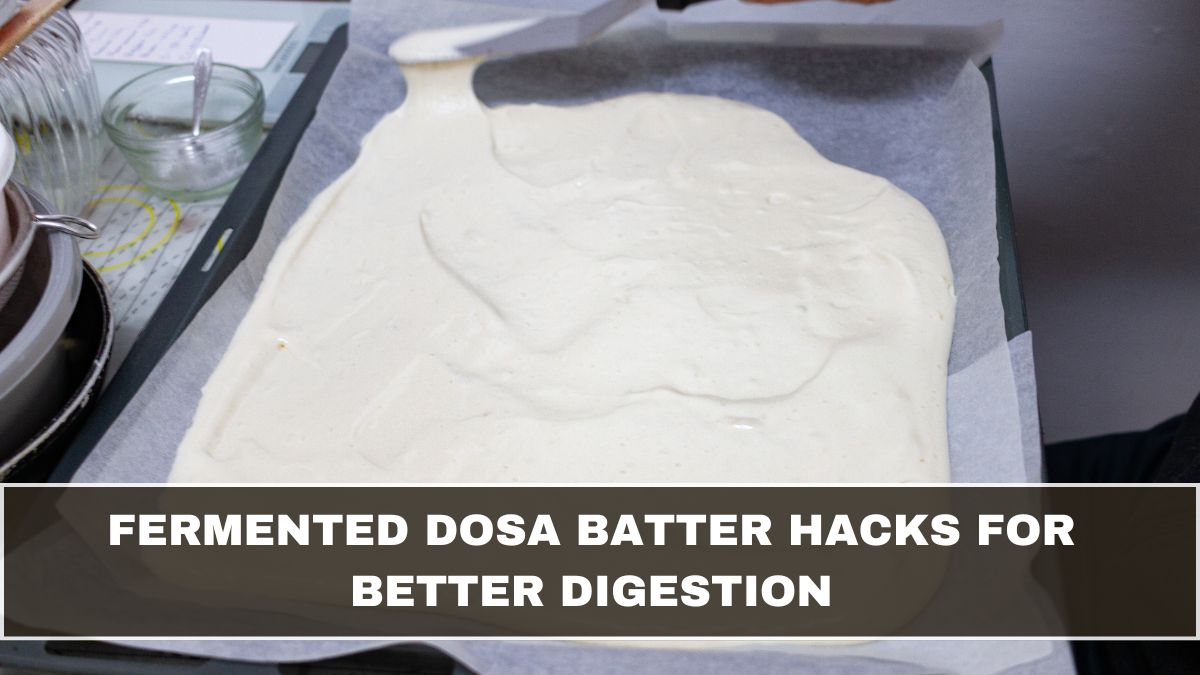
Dosas are a staple breakfast in many Indian homes, but the magic lies not just in cooking them right — it’s in the fermented dosa batter. Fermentation improves gut health, enhances flavor, and makes dosas lighter and crispier. For those looking to maximize the nutritional benefits, here are healthy fermented dosa batter hacks that will elevate your cooking and improve digestion.

Why Fermentation Matters
Fermented foods have long been part of Indian cuisine. Fermentation:
• Increases bioavailability of nutrients
• Boosts probiotics for gut health
• Reduces anti-nutrients like phytic acid in rice and lentils
• Enhances flavor, giving dosas a slight tang
By optimizing the fermentation process, you can enjoy dosas that are both delicious and beneficial for your digestive system.
Basic Dosa Batter Recipe
Ingredients:
• 2 cups rice (regular or parboiled)
• 1 cup urad dal (split black gram)
• 1 teaspoon fenugreek seeds
• Water as needed
• Salt to taste
Steps:
-
Wash and soak rice and urad dal (with fenugreek seeds) separately for 4–6 hours.
-
Grind to a smooth consistency, adding water gradually.
-
Mix both pastes thoroughly.
-
Cover and ferment at room temperature for 8–12 hours (depending on weather).
-
Add salt before making dosas.
The standard fermentation gives you good texture and mild sourness, but there are ways to make it even healthier.
3 Fermented Dosa Batter Hacks
1. Add Probiotic Boosters
Incorporate natural probiotics to speed up fermentation and improve gut health.
• Curd or yogurt: Add 1–2 tablespoons while mixing the batter.
• Fermented idli/dosa batter starter: Use a spoonful of previously fermented batter as a starter.
• Apple cider vinegar: A few drops can help jumpstart the process in colder climates.
These additions increase the population of beneficial bacteria and enhance the tangy flavor without overpowering the dosa.
2. Optimize Fermentation Environment
Temperature and moisture play a key role in healthy fermentation:
• Warm spots: Keep batter near a warm window or in an oven with the light on.
• Consistency: Slightly thicker batter ferments better; avoid making it too watery.
• Covering: Use a clean cloth or lid to allow air circulation while protecting from dust.
By creating the right environment, you can achieve consistent fermentation, producing dosas with better texture and digestibility.
3. Incorporate Nutrient-Rich Ingredients
Upgrade the batter with ingredients that add flavor and improve nutrition:
• Oats or millet: Replace ¼ of rice with oats, ragi, or millet flour for fiber and minerals.
• Sprouted dal: Sprout urad dal for a richer probiotic profile and easier digestion.
• Fenugreek seeds: Increase fenugreek slightly to enhance fermentation speed and add digestive benefits.
These small tweaks boost nutrient content while keeping dosas light and tasty.
Tips for Perfect Fermented Dosas
• Use freshly ground batter for best results.
• Avoid over-fermentation; too sour batter can overpower flavor.
• Mix gently before cooking to retain air bubbles for a soft texture.
• Cook on medium heat and lightly grease the pan for crisp dosas.
• Experiment with different rice varieties like sona masuri or parboiled rice for subtle flavor changes.
Health Benefits of Fermented Dosa Batter
• Gut-friendly probiotics improve digestion and strengthen immunity.
• Better nutrient absorption from rice and lentils.
• Lighter on the stomach, suitable for breakfast or post-workout meals.
• Low glycemic index, especially when millet or oats are added.
By following these hacks, you can enjoy a nutritious breakfast that aligns with modern health trends while staying rooted in Indian culinary traditions.
Conclusion
Healthy fermented dosa batter hacks make a significant difference in taste, texture, and digestive benefits. By adding probiotics, optimizing fermentation conditions, and incorporating nutrient-rich ingredients like millet or sprouted dal, you can transform simple dosa batter into a gut-friendly superfood. These methods are easy, practical, and perfect for Indian kitchens, ensuring that your dosas are not only delicious but also a nourishing start to your day.
FAQs
Why is fermentation important for dosa batter?
Fermentation increases probiotics, enhances flavor, and improves nutrient absorption, making dosas healthier and easier to digest.
How long should dosa batter ferment?
Typically 8–12 hours at room temperature, but timing may vary based on climate and starter use.
Can I use millet or oats in dosa batter?
Yes, replacing a portion of rice with millet or oats boosts fiber, minerals, and overall nutrition.
Do fermented dosas aid digestion?
Yes, the probiotics formed during fermentation improve gut health and digestion.
Can I speed up fermentation in colder weather?
Yes, use a warm spot, add a spoon of curd, or use a previous batch as a starter to accelerate fermentation.
Click here to know more.