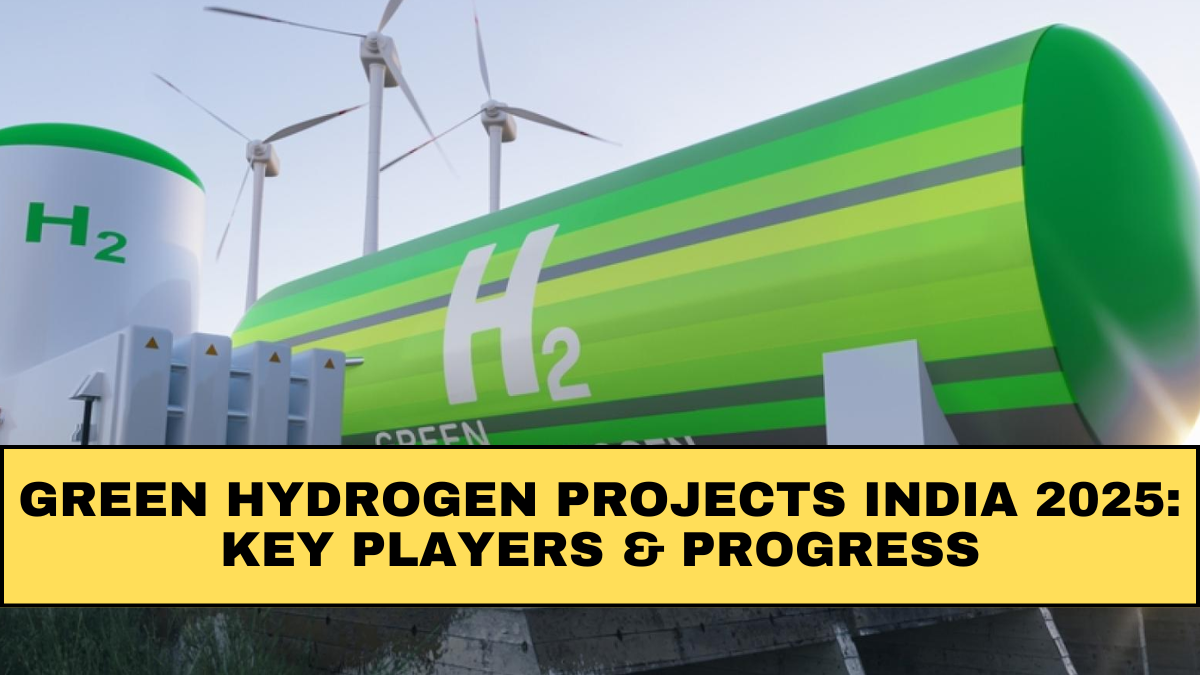
India’s clean energy roadmap is rapidly evolving, and green hydrogen has emerged as one of its boldest breakthroughs. In 2025, the country is pushing aggressively toward a hydrogen-powered future with new projects, corporate investments, and government-driven policies. As global economies shift to net-zero strategies, India aims to become a major producer and exporter of green hydrogen, strengthening both its sustainability and industrial innovation goals.
The National Green Hydrogen Mission has boosted confidence among companies, investors, and state governments. With falling renewable energy prices and improved electrolyser technology, hydrogen production is expected to scale faster than earlier predicted. The focus is now on cost reduction, reliable storage, and building a strong domestic manufacturing ecosystem.
India’s New Energy Landscape in 2025
India’s industrial clusters—steel, fertilizers, chemicals, and refineries—are adopting green hydrogen as a cleaner alternative to fossil-fuel-based hydrogen. In 2025, most new projects are designed around reducing emissions while cutting long-term energy costs. Several states, including Gujarat, Rajasthan, and Andhra Pradesh, are emerging as hydrogen hubs due to strong solar and wind resources.
The government is also providing incentives for electrolyser manufacturing, which helps companies reduce import dependence. Startups and research institutions are playing a big role by developing new storage materials, hydrogen engines, and last-mile distribution methods.
Key Companies Leading Projects in 2025
Reliance Industries (RIL) is among the most aggressive players, building giga-factories for solar, battery, and hydrogen technologies. Its Jamnagar project is expected to produce green hydrogen at competitive global prices. Adani Group is investing in renewable capacity and electrolyser facilities to create a massive hydrogen production ecosystem.
Public sector giants like NTPC and Indian Oil Corporation (IOC) are also executing pilot projects across refineries and power plants. Larsen & Toubro, ReNew Power, Greenko, and JSW Energy are expanding renewable assets and partnering with global technology providers for hydrogen production and export readiness.
How Green Hydrogen Supports India’s Clean Energy Goals
Green hydrogen can reduce dependency on imported fossil fuels while supporting electric mobility, industrial heating, and long-term energy storage. In 2025, it is being tested for use in trucks, shipping, steel smelters, and fertilizer plants. As industries shift from grey to green hydrogen, India expects significant carbon emission cuts.
The biggest advantage is scalability. When supported by solar and wind farms, hydrogen production becomes cleaner and more economical. With global buyers seeking low-carbon fuels, India has a strong opportunity to become a top exporter to Europe and Asia.
Challenges India Must Overcome
While 2025 shows major progress, challenges remain. Production costs are still higher than traditional fuels, though they are steadily decreasing. Hydrogen storage and transportation require new infrastructure, and companies must balance safety, regulation, and cost efficiency.
Another hurdle is electrolyser capacity. India is building factories, but large-scale adoption needs faster deployment. Skill development is also critical, as hydrogen projects require trained engineers, technicians, and safety specialists.
Conclusion
India’s green hydrogen journey in 2025 is defined by ambition, innovation, and strong policy support. With major companies, startups, and state governments pushing in the same direction, the country is rapidly emerging as a global hydrogen powerhouse. The coming years will determine how fast costs fall and how effectively India builds the infrastructure needed for large-scale clean fuel adoption. But the progress so far signals a powerful shift toward a greener, more sustainable energy future.
FAQs
What is green hydrogen?
Green hydrogen is produced by splitting water using renewable energy such as solar or wind, making it a clean alternative to fossil-fuel-based hydrogen.
Which companies are leading hydrogen projects in India?
Major players include Reliance, Adani, NTPC, IOC, Greenko, JSW Energy, and ReNew Power.
Why is green hydrogen important for India?
It helps reduce carbon emissions, cuts import dependence, supports clean industries, and positions India as a global energy exporter.
Which states are developing hydrogen hubs?
Gujarat, Rajasthan, Tamil Nadu, and Andhra Pradesh are leading due to strong renewable energy capacity.
Can green hydrogen be used in vehicles?
Yes, it can power fuel-cell electric vehicles, trucks, and even ships, and trials are expanding in 2025.