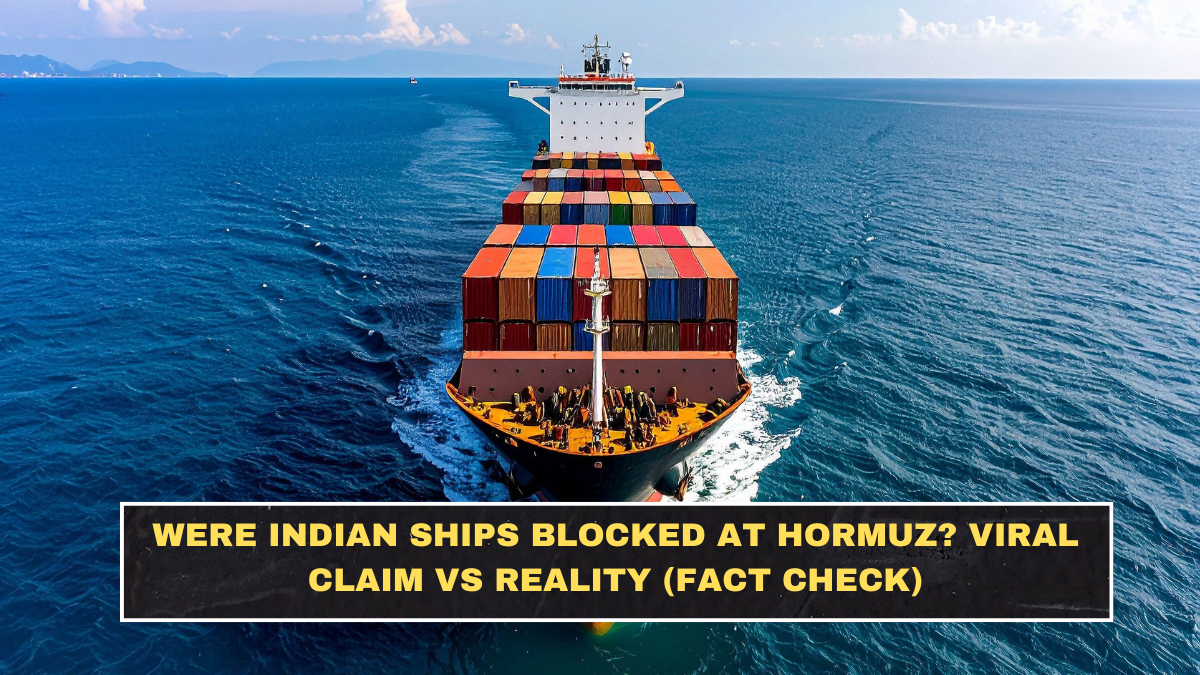
The claim that Indian ships were blocked at the Strait of Hormuz has gone viral across social media and messaging platforms. The spike in searches is driven by fear-based sharing, especially because Hormuz is one of the most critical oil shipping routes in the world.
But here’s the problem—most people are reacting before verifying whether the claim is actually true.
What the Strait of Hormuz Actually Is (Verified Context)
The Strait of Hormuz is a narrow maritime passage between the Persian Gulf and the Gulf of Oman. It is one of the world’s most important oil transit chokepoints.
According to widely reported global energy data:
-
Around 20% of global petroleum liquids pass through this route
-
Major oil exporters like Saudi Arabia, Iraq, UAE, and Kuwait depend on it
-
Countries like India rely heavily on shipments passing through Hormuz
This is why any claim about blockage immediately creates panic.
What Is Confirmed About the Viral Claim
There is no verified official confirmation that Indian ships have been blocked at the Strait of Hormuz.
What is fact-based:
-
No official statement from India’s Ministry of External Affairs (MEA) confirming blockage
-
No confirmed advisory stating Indian vessels are unable to pass
-
No verified disruption reported by major global shipping trackers
What likely triggered the claim:
-
Rising geopolitical tensions in the Middle East
-
Misinterpretation of general risk alerts or maritime advisories
This is a classic example of a situation where fear spreads faster than facts.
Shipping Reality: What Data Indicates
| Factor | Current Verified Status | What It Means |
|---|---|---|
| Strait of Hormuz Traffic | Ongoing (no confirmed full blockage) | Ships continue to pass |
| Indian Ship Movement | No official halt confirmed | No verified disruption |
| Government Advisory | No confirmed emergency directive | Situation under monitoring |
| Risk Level | Elevated due to tensions | Precaution, not shutdown |
The key takeaway: risk is higher, but movement has not stopped.
Why Such Claims Spread So Fast
Let’s be blunt—people don’t verify before forwarding.
This type of claim spreads because:
-
Hormuz is already known as a “sensitive” region
-
Oil supply fears trigger emotional reactions
-
Lack of immediate official clarification creates a vacuum
And once panic starts, it feeds itself.
What Real Risk Looks Like
Even though the viral claim is not confirmed, that doesn’t mean zero risk exists.
Realistic risks include:
-
Increased insurance costs for ships
-
Delays due to security checks
-
Temporary rerouting in extreme scenarios
But a complete blockade is a major global event, and it cannot happen quietly without immediate official confirmation worldwide.
What You Should Track Instead
If you want real information, watch these:
-
Official MEA statements
-
Global oil price movement
-
Shipping advisories from maritime authorities
-
Reports from major energy agencies
Anything else is noise unless verified.
Conclusion
The claim that Indian ships were blocked at the Strait of Hormuz is not supported by verified official data.
Shipping through the route continues, although with elevated caution due to regional tensions. The situation is sensitive—but not disrupted at the level being claimed online.
If you’re reacting to viral forwards without verification, you’re part of the misinformation cycle.
FAQs
Were Indian ships actually blocked at Hormuz?
No, there is no official confirmation that Indian ships have been blocked.
Why did this claim go viral?
Because of rising Middle East tensions and the strategic importance of the Strait of Hormuz.
Is there any real risk to shipping?
Yes, risk levels are elevated, but there is no confirmed complete disruption.
Should India be concerned about oil supply?
As of now, there is no confirmed disruption to oil supply routes affecting India.
Click here to know more.