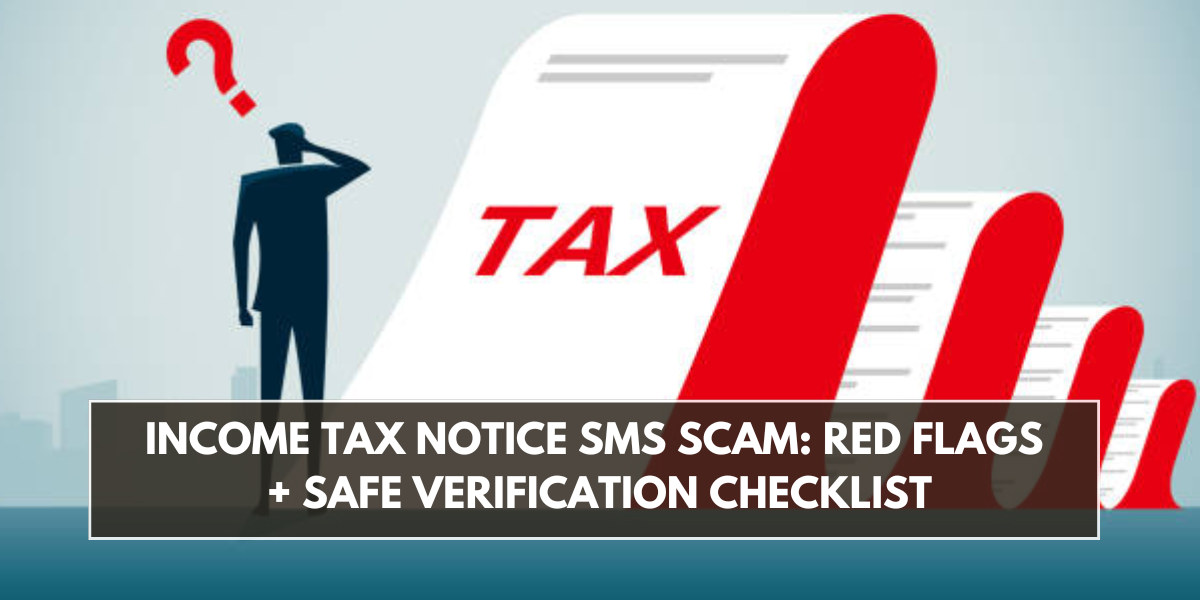
Cybercriminals are increasingly using fake income tax notice SMS messages to trick individuals into revealing personal and financial information. These scams usually appear during tax filing seasons when people are already expecting communication from the Income Tax Department. Fraudsters send messages claiming that the recipient has received a tax notice, refund alert, or penalty warning.
Because tax-related messages create urgency and fear, victims may click links without verifying the authenticity of the communication. These links typically lead to fake websites that resemble official government portals and attempt to capture login credentials, PAN details, Aadhaar numbers, or banking information.
How the Scam Message Usually Looks
Fraudulent tax messages often mimic official communication styles to appear legitimate. They may include words such as “Income Tax Department,” “refund notice,” or “urgent compliance alert.”
| Scam Message Feature | Example |
|---|---|
| Urgent warning | “Your PAN is under investigation” |
| Refund bait | “Income tax refund pending – claim now” |
| Suspicious link | Link leading to fake portal |
| Threat of penalty | “Respond immediately to avoid legal action” |
These messages are designed to create panic so that victims respond quickly without checking whether the message is genuine.
Common Tactics Used by Scammers
Cybercriminals rely on psychological tactics to make their messages convincing. They often impersonate government authorities to gain the victim’s trust.
| Scam Technique | Explanation |
|---|---|
| Phishing websites | Fake pages resembling official portals |
| Fake SMS sender IDs | Messages appear from official-looking names |
| Urgency tactics | Pressure to act immediately |
| Data collection forms | Requests for personal or banking details |
Once victims enter their details on these fake portals, scammers may use the information for financial fraud or identity theft.
Official Ways the Income Tax Department Communicates
The Indian Income Tax Department uses secure channels to communicate with taxpayers. Official messages generally direct users to log in to the official e-filing portal rather than asking for personal information through SMS links.
| Official Communication Channel | Purpose |
|---|---|
| Income Tax e-filing portal | Notices and tax updates |
| Registered email | Official tax communication |
| SMS alerts | Informational notifications |
| PAN-linked account | Secure taxpayer access |
Legitimate communication rarely asks users to share passwords, OTPs, or sensitive financial details.
Red Flags That Indicate a Scam
Recognizing suspicious signs can help taxpayers avoid falling victim to fraudulent messages.
| Red Flag | Why It’s Suspicious |
|---|---|
| Unknown website link | Not part of official government domain |
| Request for OTP or password | Government agencies never ask for it |
| Urgent legal threats | Scammers create pressure |
| Poor grammar or spelling | Often appears in fraudulent messages |
Checking these warning signs before clicking any link can prevent serious financial losses.
How to Verify a Tax Notice Safely
If you receive a message claiming to be from the Income Tax Department, verification should always be done through official platforms.
| Safe Verification Step | Action |
|---|---|
| Step 1 | Visit the official income tax e-filing website |
| Step 2 | Log in using your registered credentials |
| Step 3 | Check the “Pending Actions” or “Notices” section |
| Step 4 | Verify whether any official notice exists |
This process ensures that you are accessing genuine information rather than responding to a fraudulent message.
What to Do If You Clicked a Suspicious Link
If someone accidentally interacts with a scam message, immediate action can reduce the risk of financial loss or identity theft.
| Emergency Step | Purpose |
|---|---|
| Change account passwords | Protect online accounts |
| Inform your bank | Monitor suspicious transactions |
| Report scam to cybercrime portal | Register official complaint |
| Call cyber helpline 1930 | Immediate assistance |
Quick reporting increases the chances of stopping fraud before financial damage occurs.
Growth of Phishing Scams in India
As digital services expand, cybercrime incidents have also increased. Government agencies regularly warn citizens about phishing scams that impersonate official institutions.
| Indicator | Approximate Data |
|---|---|
| Cybercrime complaints annually | Millions reported |
| Online banking users | Hundreds of millions |
| Digital payment transactions | Billions monthly |
| Phishing scams | One of the most common fraud types |
This rise highlights the importance of cybersecurity awareness among internet users.
Why Awareness Is the Best Protection
Technology alone cannot stop every cybercrime attempt. Educating users about common scam tactics is one of the most effective ways to reduce fraud incidents. Understanding how official institutions communicate helps individuals identify fake messages more easily.
Remaining cautious with unsolicited messages, especially those involving financial or legal claims, significantly lowers the risk of becoming a victim of phishing attacks.
Conclusion
The Income Tax notice SMS scam is a growing phishing tactic that exploits fear and urgency to trick taxpayers into revealing sensitive information. By recognizing red flags such as suspicious links, urgent warnings, and requests for personal data, individuals can avoid falling into these traps.
Always verify tax-related messages directly through the official Income Tax e-filing portal and never share OTPs, passwords, or financial details with unknown sources. Staying informed and cautious is the most effective defense against digital scams.
FAQs
What is the Income Tax notice SMS scam?
It is a phishing scam where fraudsters send fake messages pretending to be from the Income Tax Department.
How can I verify if a tax notice is genuine?
Log in to the official Income Tax e-filing portal and check the notices section for official communication.
Do government agencies send links asking for personal details?
No. Government departments generally do not ask for passwords, OTPs, or sensitive information through SMS.
What should I do if I receive a suspicious tax message?
Do not click the link. Verify through the official portal and report the message if necessary.
Where can I report such scams?
You can report phishing scams on the cybercrime.gov.in portal or call the cybercrime helpline 1930.