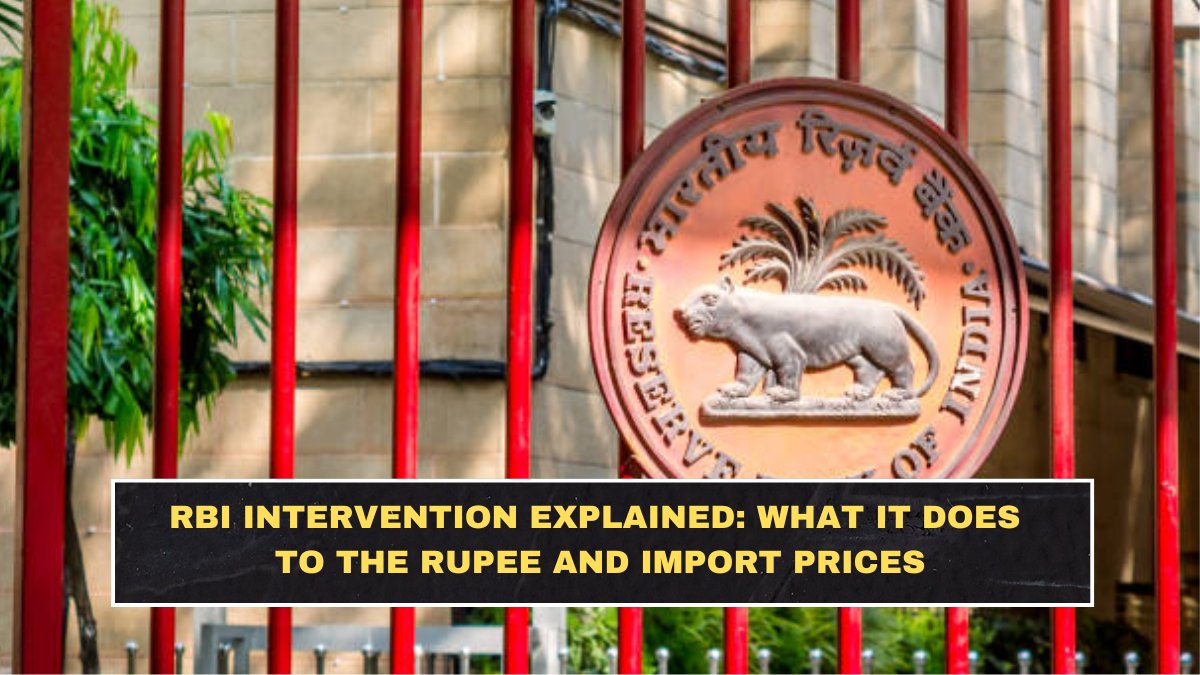
The Reserve Bank of India (RBI) occasionally intervenes in the foreign exchange market to stabilize the value of the Indian rupee against major global currencies, especially the U.S. dollar. Currency movements can be influenced by global economic conditions, capital flows, interest rates, and geopolitical developments.
When the rupee experiences rapid fluctuations, the central bank may step in to reduce volatility and maintain orderly market conditions. Such actions are known as currency market interventions.
Understanding how RBI intervention works helps explain changes in the USD/INR exchange rate, import prices, and overall economic stability.
Why RBI Intervenes in the Currency Market
Central banks intervene in foreign exchange markets primarily to prevent excessive currency volatility and maintain financial stability.
| Reason for Intervention | Explanation |
|---|---|
| Currency volatility | Reduce sudden exchange rate swings |
| Import cost control | Prevent rapid rise in import prices |
| Financial stability | Maintain confidence in currency markets |
| Capital flow management | Balance foreign investment flows |
These measures help ensure that currency fluctuations do not disrupt economic activity.
Tools Used by RBI for Currency Intervention
The RBI has several tools available to influence currency movements when needed.
| Tool | Purpose |
|---|---|
| Forex market operations | Buying or selling foreign currency |
| Forex reserves usage | Stabilizing exchange rate movements |
| Liquidity management | Adjusting money supply in markets |
| Policy signals | Guiding market expectations |
Using these tools, the central bank can moderate large fluctuations in exchange rates.
Impact on the USD/INR Exchange Rate
RBI intervention often aims to manage sharp movements in the USD/INR exchange rate, which is closely monitored by businesses, investors, and policymakers.
| Currency Movement | Possible RBI Response |
|---|---|
| Rapid rupee depreciation | Selling dollars to support rupee |
| Excessive rupee appreciation | Buying dollars to stabilize markets |
| Volatile trading | Market operations to reduce fluctuations |
Such actions are intended to keep currency movements orderly rather than targeting a fixed exchange rate.
How Currency Movements Affect Import Prices
India imports a large share of its energy, electronics, and industrial raw materials. Changes in the rupee’s value can directly affect these costs.
| Import Category | Impact of Rupee Weakness |
|---|---|
| Crude oil | Higher fuel import cost |
| Electronics | Increased gadget prices |
| Industrial inputs | Higher manufacturing costs |
| Gold imports | Price increases in domestic markets |
Because imports influence several sectors, currency stability becomes important for economic planning.
Influence on Inflation and Consumer Prices
Exchange rate movements can also affect inflation in the domestic economy.
| Economic Factor | Effect |
|---|---|
| Import costs | Higher costs may raise prices |
| Fuel prices | Impact transportation and logistics |
| Manufacturing | Increased production expenses |
| Retail goods | Potential rise in consumer prices |
Managing currency volatility helps limit these inflationary pressures.
India’s Foreign Exchange Reserves
Foreign exchange reserves provide the central bank with the resources required to intervene in currency markets when necessary.
| Reserve Component | Description |
|---|---|
| Foreign currency assets | Major part of reserves |
| Gold reserves | Stored as part of national assets |
| SDR holdings | International reserve assets |
| IMF reserve position | Reserve quota at IMF |
These reserves help maintain confidence in the country’s financial stability.
Conclusion
RBI intervention in the foreign exchange market plays an important role in maintaining stability in the USD/INR exchange rate. By managing sudden currency fluctuations, the central bank helps control import costs, support financial markets, and reduce economic uncertainty.
For consumers and businesses, currency stability can influence fuel prices, imported goods, and inflation. Monitoring central bank actions provides insight into how policymakers manage economic challenges in a globally connected financial system.
FAQs
What is RBI currency intervention?
It is when the Reserve Bank of India buys or sells foreign currencies to stabilize the rupee in the foreign exchange market.
Why does RBI support the rupee?
The RBI intervenes to reduce excessive volatility and maintain financial stability in currency markets.
How does rupee depreciation affect imports?
A weaker rupee increases the cost of importing goods such as oil, electronics, and raw materials.
What role do forex reserves play in intervention?
Foreign exchange reserves provide the resources needed for the RBI to buy or sell currencies in the market.
Does RBI fix the rupee at a specific exchange rate?
No. RBI usually aims to manage volatility rather than maintaining a fixed exchange rate.