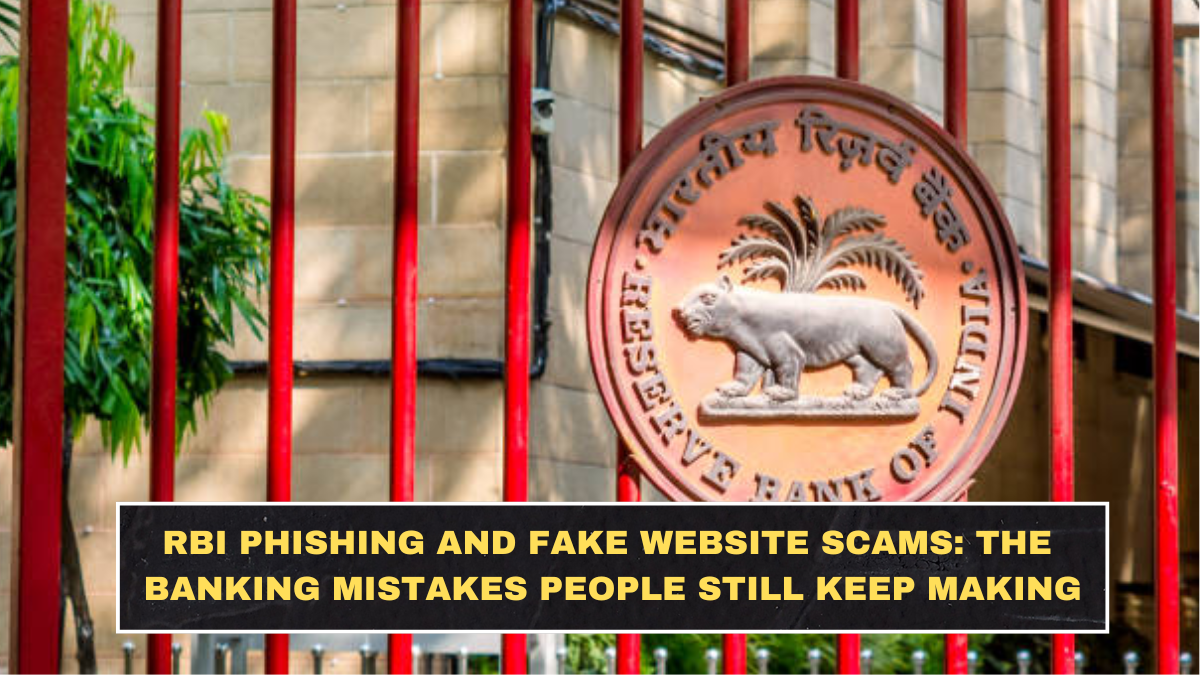
People love to think only “uneducated” users fall for phishing and fake banking sites. That is nonsense. These scams still work because fear, urgency, and fake authority override common sense. RBI has for years carried public cautions about fake websites in its name, phishing mails, and false requests for bank details, and those warnings still remain relevant because the fraud pattern has not disappeared.
This matters even more now because digital fraud is still a live issue in India. In March 2026, RBI issued draft guidelines aimed at better protecting customers against online and card-based fraud, which tells you the threat landscape is not theoretical or old news.
What RBI-related phishing and fake website scams usually look like
The classic fake-website scam is simple: fraudsters create a page that looks official and use RBI’s name or a bank-style interface to make you trust it. RBI publicly warned about one such fake site that offered an “RBI Savings Account” and asked people to apply online. That alone should tell you the central bank’s name is regularly abused to trap people.
Phishing works the same way through email, SMS, calls, or links. RBI’s own cautions say the public should not respond to mails asking for internet banking details and that RBI never asks for bank account details. If someone claims to be from RBI and asks for credentials, account details, OTPs, or urgent payments, the problem is not subtle. It is a scam until proven otherwise.
The mistakes people still keep making
The first mistake is trusting branding instead of verification. A logo, letterhead, or official-looking URL does not make something real. RBI has repeatedly had to warn the public about fake websites and phishing messages in its name, which proves people still confuse appearance with legitimacy.
The second mistake is sharing sensitive details because the message sounds urgent. RBI’s public caution material is blunt: do not respond to messages asking for internet banking account details, and remember RBI never asks for your bank account details. If you hand over credentials because somebody mentioned account blocking, KYC failure, or a suspicious transaction, you are doing the scammer’s work for them.
The third mistake is delaying the response after a fraudulent transaction. RBI’s customer-liability awareness page says that if there is a fraudulent transaction in your bank account, you should notify your bank immediately to limit your loss. Delay helps the fraud, not you.
The simplest red-flag table
| Red flag | Why it is dangerous |
|---|---|
| Message asks for bank login, card data, or OTP | RBI says it does not ask for bank account details, and phishing messages often do exactly that. |
| Website uses RBI’s name for customer banking services | RBI warned about a fake site offering “RBI Savings Account,” which is a clear fraud pattern. |
| Email or SMS creates panic and demands immediate action | Urgency is a standard phishing tactic, especially in banking fraud. |
| You are told to pay or share details before “unblocking” an account | That is classic credential theft or fraud setup, not standard RBI conduct. |
| You notice unauthorized transactions but do nothing right away | RBI says immediate reporting helps limit customer loss. |
What you should do instead
First, verify through the official source, not the message you received. If a message claims to be from RBI or a bank, do not click the link inside it and do not call the number provided there. Go to the official RBI or bank site yourself. RBI’s public-facing caution pages exist precisely because fake communication keeps circulating.
Second, report fast if money is involved. RBI’s Sachet complaints platform points people to the National Cybercrime Reporting Portal and the national helpline 1930 for cybercrimes, including online financial fraud. RBI also points customers to immediate bank notification in unauthorized electronic transactions.
What this means for ordinary users
The real lesson is not just “watch out for fake RBI emails.” The real lesson is that people still outsource their judgment to fear. Fraudsters do not need brilliant technology if they can make you panic and click first. RBI’s repeated cautions over many years, plus its current push for better fraud protection, show the same pattern keeps working because users keep making the same basic mistakes.
Conclusion
RBI phishing and fake website scams are not sophisticated because they look impossible to spot. They work because people trust urgency, logos, and official-sounding language more than verification. RBI has repeatedly warned the public about fake websites, phishing messages, and false requests for banking details, and the advice is still brutally simple: do not share credentials, do not trust random links, and report fraud immediately.
If you still click first and verify later, you are not unlucky. You are behaving exactly the way scammers need you to behave.
FAQs
Does RBI ever ask for bank account details by email or message?
No. RBI’s public caution material says RBI never asks for your bank account details.
Has RBI really warned about fake websites in its name?
Yes. RBI publicly warned about fake websites using its name, including one offering an “RBI Savings Account.”
What should I do if I suspect an online banking fraud?
Notify your bank immediately and report the cyber fraud through the national helpline 1930 or the National Cybercrime Reporting Portal, as referenced on RBI’s Sachet complaints page.
Why do phishing scams still work?
Because people panic, trust branding too easily, and share information before verifying whether the communication is real. RBI’s repeated cautions exist because these scams keep finding victims.