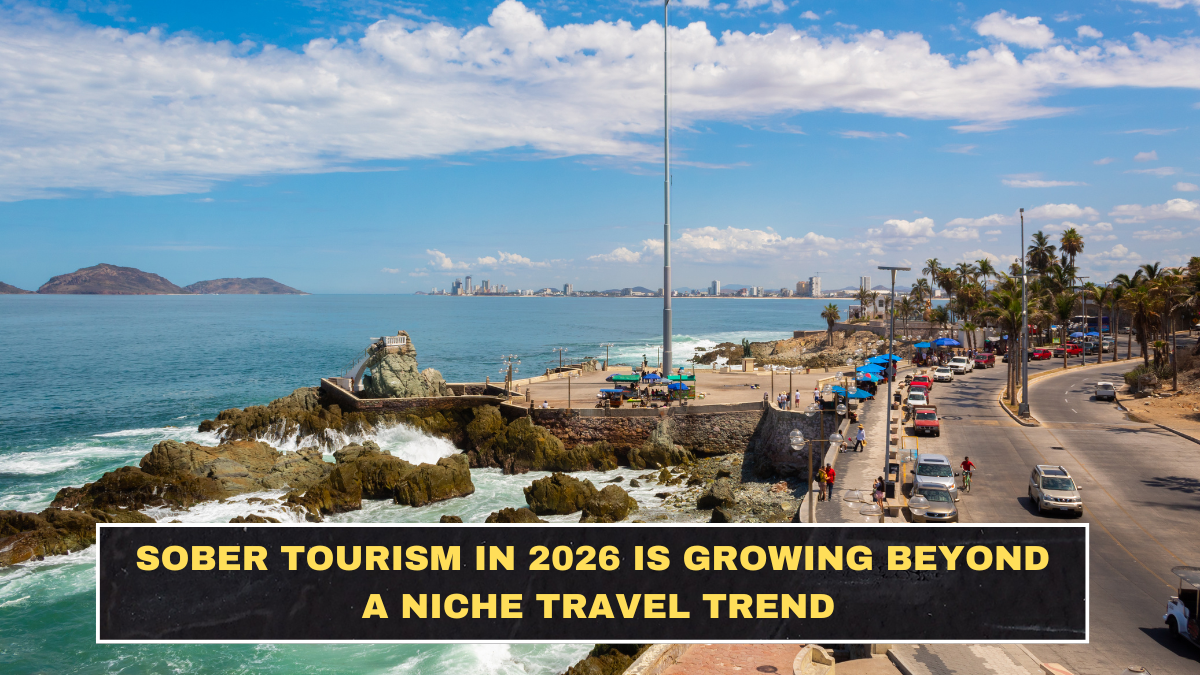
Sober tourism is no longer just a “Dry January” headline. It is becoming a broader travel behavior, especially among younger travelers who want trips built around better sleep, outdoor activity, food, culture, and mental wellness instead of drinking-heavy itineraries. Hilton’s 2025 Trends Report found that 1 in 4 global travelers had reduced or stopped alcohol consumption in the prior year, while travel coverage in early 2026 shows hotels and resorts responding with more alcohol-free menus and wellness-led experiences.
This trend is also tied to a bigger shift in drinking habits. Gallup reported in August 2025 that young adults’ drinking rates had fallen sharply, and NIAAA’s March 2026 update said 47.5% of U.S. adults ages 18 to 25 reported past-month drinking in 2024. That does not mean young people have stopped drinking altogether. It means a larger share of them now travel without centering alcohol in the experience.
Why sober tourism is growing in 2026
The first reason is health. Travelers are paying more attention to sleep, recovery, anxiety, fitness, and how alcohol affects the next day of a trip. Hilton’s report also found strong interest in active travel and sleep-focused wellness experiences, which fits naturally with alcohol-free or lower-alcohol travel choices. WHO continues to warn that alcohol contributes to major health harms globally, and it says alcohol is the leading risk factor for premature mortality and disability among people aged 20 to 39.
The second reason is money. Drinking on holiday adds up fast, and many younger travelers are already stretching their budgets. Skyscanner’s 2026 travel outlook says travelers are trying to make room for richer experiences while managing costs more carefully. Sober or low-alcohol travel often fits that mindset because travelers can spend more on food, activities, nature, or better accommodation instead of nightlife.
What sober tourism looks like now
| Sober tourism pattern | What travelers are choosing instead |
|---|---|
| Nightlife-centered breaks | Wellness stays, sunrise activities, nature trips |
| Drinking-led social plans | Mocktail menus, tea rituals, food-led experiences |
| Recovery days after partying | Sleep retreats, spa visits, slower itineraries |
| Impulse-heavy weekends | Intentional, budget-aware travel planning |
This is why the trend is moving beyond a tiny niche. Booking.com highlighted sober-friendly destinations in 2025, Hilton reported rising “sober curiosity,” and 2026 travel coverage shows more properties creating inclusive alcohol-free offerings rather than treating them as an afterthought.
Why Gen Z is pushing the trend
Gen Z is not inventing sobriety, but it is helping normalize alcohol-free travel. Gallup’s data shows younger adults are drinking less than they used to, and recent travel reporting says Gen Z travelers are increasingly drawn to trips that feel restorative, intentional, and socially shareable without the usual party script. That is a cultural shift, not just a wellness gimmick.
There is also a social reason. Alcohol-free travel is easier when destinations and hotels stop making nondrinkers feel like an afterthought. Condé Nast Traveller reported for 2026 that properties are seeing strong responses to curated non-alcoholic menus and more inclusive beverage programs. That matters because a trend becomes real only when hospitality businesses adapt to it.
What the travel industry is getting right and wrong
The smart travel brands are not selling sober tourism as moral superiority. They are selling it as a better-fit option for travelers who want energy, clarity, and more memorable days. Mocktails alone are not enough. The full offer needs to include good food, calm spaces, outdoor experiences, and social settings that do not revolve around alcohol.
The weak players still treat alcohol-free travel like a temporary fad. That is lazy. When one in four global travelers say they have reduced or stopped alcohol consumption, ignoring that shift is bad hospitality math.
What this means for travelers
For travelers, sober tourism does not require total sobriety or strict labels. In practice, it often means building a trip around how you want to feel, not around what everyone else expects you to drink. That can mean fewer drinks, no drinks, or just choosing destinations where wellness, food, culture, and rest are strong enough to carry the trip on their own.
Conclusion
Sober tourism in 2026 is growing because more travelers want trips that leave them feeling better, not depleted. Health awareness, changing youth drinking habits, budget pressure, and stronger wellness travel options are all pushing the trend forward. Anyone still treating alcohol-free travel as a tiny niche is reading the market badly.
FAQs
1. Is sober tourism only for people who never drink?
No. It also includes travelers who are drinking less, taking a break, or choosing trips where alcohol is not the center of the experience. Hilton’s trend data points to that broader “sober curiosity” shift.
2. Why is Gen Z linked to sober tourism?
Because younger adults are reporting lower drinking rates than in past years, and travel reporting shows they are increasingly drawn to wellness, intentional travel, and alcohol-free options.
3. Does sober tourism mean boring travel?
No. That is lazy thinking. The better versions focus on food, nature, sleep, movement, culture, and social experiences that do not depend on drinking.
4. Is this trend actually growing or just getting media attention?
It is getting media attention because the underlying behavior is changing. Hilton found that 1 in 4 global travelers had reduced or stopped drinking, and multiple travel brands are now building products around that shift.