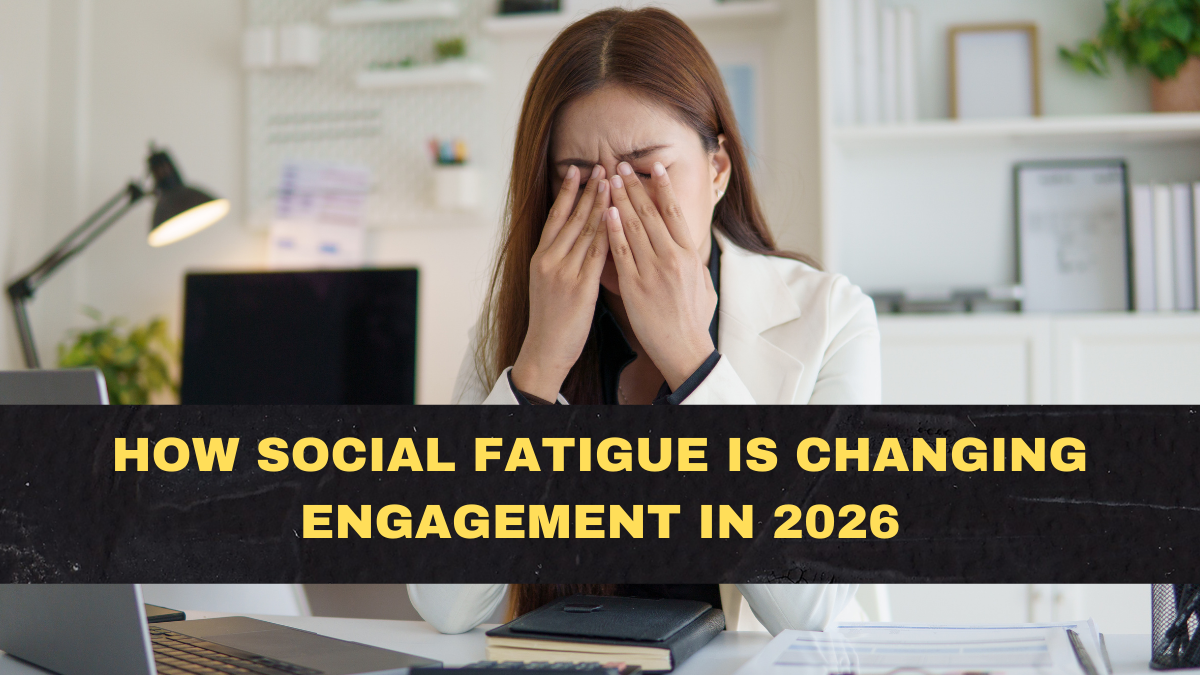
The conversation around social fatigue and response has become unavoidable in 2026. Users aren’t quitting social media altogether, but they are fundamentally changing how they interact with it. Endless feeds, constant notifications, and pressure to stay visible have created a sense of exhaustion that’s reshaping platform usage at every level.
This isn’t a sudden collapse of social media. It’s a correction. People are becoming intentional about attention, choosing quality interaction over constant presence.
What Social Fatigue Really Means in 2026
Social fatigue isn’t just boredom. It’s a form of emotional and cognitive overload caused by nonstop digital interaction.
Common signs include:
• Feeling drained after scrolling
• Muting or unfollowing aggressively
• Avoiding posting despite being active
• Consuming content without engaging
This fatigue is closely linked to digital burnout, not lack of interest.
Why Digital Burnout Is Accelerating
The scale and speed of content have outpaced human capacity to process it. Every platform competes for attention at once.
Key drivers of burnout include:
• Algorithmic pressure to stay active
• Constant comparison and performance anxiety
• Notification overload
• Blurred lines between work and leisure
As a result, users are rethinking how and when they show up online.
How Platform Usage Is Becoming More Selective
One of the clearest outcomes of social fatigue and response is selective engagement. People are no longer everywhere, all the time.
Selective behaviors include:
• Logging in with a purpose
• Limiting time on certain platforms
• Engaging only with trusted creators
• Prioritizing private or smaller spaces
This makes platform usage more intentional and less reactive.
Why Lurking Is Replacing Posting
Many users still consume content but rarely contribute. Lurking isn’t disengagement — it’s self-protection.
Reasons people lurk more:
• Reduced pressure to perform
• Avoiding public judgment
• Conserving emotional energy
• Still wanting information and connection
This shift changes how engagement should be interpreted.
How Content Consumption Habits Are Shifting
In 2026, users are consuming less content overall — but more of what matters to them.
New consumption patterns include:
• Longer time with fewer creators
• Preference for informative or calming content
• Reduced tolerance for clickbait
• Higher value placed on usefulness
This reflects a mature social fatigue and response pattern.
Why Meaning Matters More Than Virality
Virality feels empty to fatigued users. Meaningful content feels restorative.
Content that performs better now:
• Teaches something practical
• Offers emotional validation
• Feels honest and unpolished
• Respects the viewer’s time
Meaning-driven engagement outlasts trend-chasing.
How Creators Are Adapting to Fatigued Audiences
Creators who survive burnout cycles adjust tone and expectations.
Effective creator adaptations include:
• Posting less, but with purpose
• Reducing pressure-driven calls to action
• Creating calm, consistent formats
• Building trust over hype
Creators who ignore fatigue lose relevance faster.
Brands Are Rethinking Frequency and Messaging
High-frequency campaigns now feel intrusive. Brands must adapt to quieter consumption.
Smart brand responses include:
• Fewer but clearer messages
• Educational or supportive content
• Respectful retargeting limits
• Opt-in communication models
Ignoring digital burnout risks audience rejection.
Why Breaks and Boundaries Are Being Normalized
Taking breaks from platforms is no longer seen as failure. It’s seen as self-regulation.
Normalization includes:
• Announcing posting breaks
• Using “do not disturb” modes
• Unfollowing without guilt
• Curating feeds aggressively
This normalization shapes healthier long-term platform usage.
What This Means for the Future of Engagement
Engagement in 2026 is quieter but deeper. Metrics based only on volume are losing meaning.
The social fatigue and response trend suggests:
• Fewer interactions, higher intent
• Smaller audiences, stronger loyalty
• Slower growth, better retention
Attention has become selective — and valuable.
Conclusion
Social fatigue is not killing digital platforms; it’s forcing them to evolve. The social fatigue and response seen in 2026 reflects a collective push toward mindful platform usage, emotional sustainability, and meaningful interaction.
Those who respect attention will earn it. Those who exploit it will be filtered out.
FAQs
What is social fatigue?
It’s emotional and cognitive exhaustion caused by constant social media exposure and pressure.
How is social fatigue changing platform usage?
Users are becoming more selective, engaging less often but with more intention.
Is reduced engagement a bad sign for creators?
Not necessarily. Deeper, more loyal engagement matters more than volume.
Why are people posting less but still scrolling?
To conserve energy while staying informed or entertained without performance pressure.
Will social fatigue continue beyond 2026?
Yes. As long as digital overload exists, mindful engagement will remain a priority.