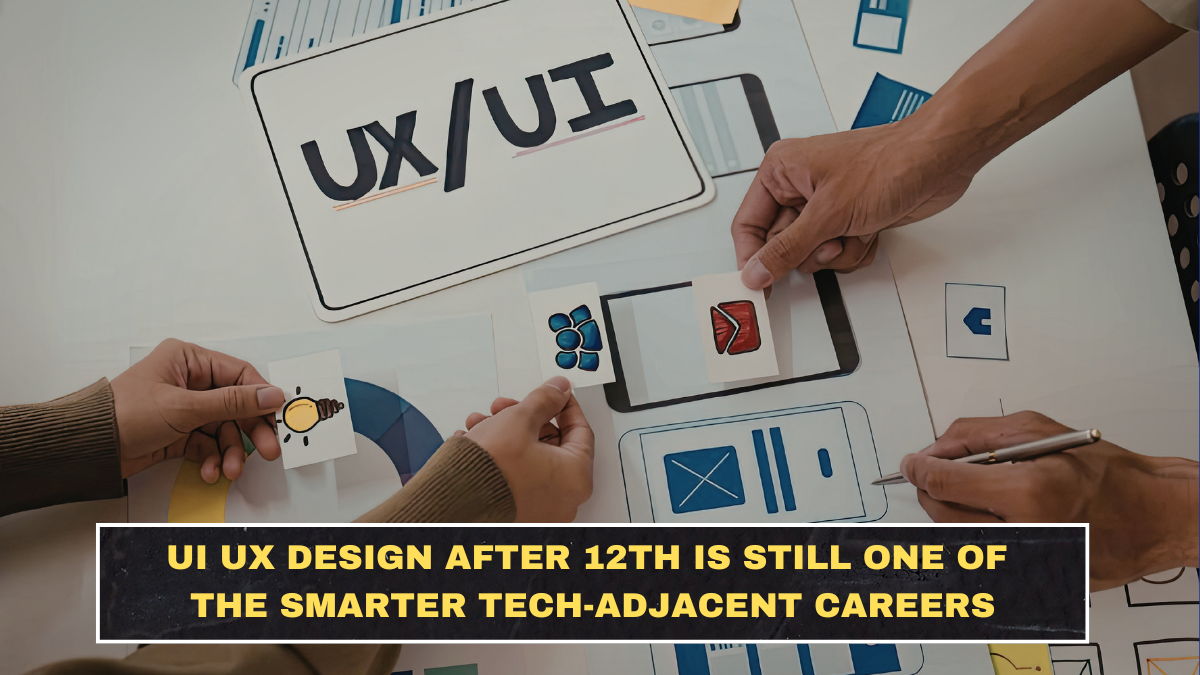
UI UX design is one of those careers people either oversell or completely misunderstand. One group talks as if learning Figma is enough to get hired. The other dismisses design as soft, unstable, or secondary to coding. Both views are wrong. The World Economic Forum’s Future of Jobs Report 2025 says design and user experience is among the skills expected to increase in use by 2030, alongside AI and big data, creative thinking, and technological literacy. That makes UI UX one of the clearer tech-adjacent paths for students who are creative but still want market relevance.
This matters even more in India because digital products are not slowing down. IBEF says India’s IT spending is expected to rise to about US$ 161.5 billion in 2025 from US$ 145.4 billion in 2024, and the broader digital economy keeps pulling more services, apps, platforms, and user-facing products online. More digital systems usually means more need for usable interfaces, better onboarding, cleaner journeys, and clearer product experiences.

What students usually get wrong about UI UX
The biggest mistake is thinking UI UX is only about making screens look pretty. That is amateur thinking. Real UI UX work sits at the intersection of product logic, user behavior, interface clarity, research, testing, and business goals. The second mistake is assuming this is an easy no-coding shortcut. It is not. Good designers need thinking, structure, communication, and tool fluency, not just visual taste. WEF’s skills outlook makes that obvious because it places creative thinking, technological literacy, and design and user experience in the same growth conversation.
Best routes after 12th for a UI UX career
| Course path | Why it makes sense | Typical direction later |
|---|---|---|
| Bachelor’s in design | Strongest direct route for interface and product design | UI designer, UX designer, product designer |
| BDes / communication design / interaction design | Builds design thinking and digital product skills | Product design, UX, visual systems |
| BA / BSc + UX tools and portfolio | Works for students who add practical skills seriously | UX writing, junior UX, content design |
| BCA / tech degree + design transition | Good for students who want stronger product-tech understanding | Product design, UX, design systems |
| Mass communication / psychology + UX upskilling | Useful for research, content, and user behavior roles | UX research, content design, UX writing |
Why this career still makes practical sense
UI UX still has practical value because digital products keep multiplying, and users still hate bad experiences. AI may help generate layouts or speed up workflow, but it does not remove the need for human-centered design. In fact, WEF’s 2025 data suggests the opposite: as technology grows, design and user experience becomes more useful, not less. That is because more products, more interfaces, and more automation create more chances for confusion if nobody designs the experience properly.
This is where students fool themselves. They either chase design because it looks trendy, or avoid it because it is not engineering. The smarter view is that UI UX sits in a valuable middle ground. It is technical enough to stay relevant in digital industries, but human-centered enough that pure automation does not wipe it out easily. That mix is exactly why it remains one of the smarter creative-tech paths after 12th.
Skills that matter more than course labels
Students who want UI UX should focus on building the right stack, not just joining a course with a modern name.
- visual hierarchy and interface basics
- user research and problem framing
- wireframing and prototyping
- product thinking and usability
- communication and portfolio work
The uncomfortable truth is that many students do a design-related degree and still stay unemployable because they never build a portfolio. A weak degree plus no real work samples is a dead end. A decent degree plus strong projects is far more useful.
What students should be careful about
A lot of private institutes sell fake promises around UI UX. If the course only teaches tools without product thinking, research, testing, and portfolio work, it is weak. Students should also stop imagining that UI UX is effortless because it is “creative.” Good design roles are competitive, and the hiring bar is higher now because companies want designers who can think beyond pixels.
Before choosing a course, check these basics:
- does it include real projects
- does it teach user research and usability
- does it build a portfolio
- does it connect design to digital products, not just graphics
Conclusion
UI UX design after 12th is still one of the smarter tech-adjacent careers because it combines creativity, digital relevance, and growing demand for better product experiences. WEF’s 2025 outlook shows design and user experience as a rising skill area, and India’s growing digital economy keeps creating more products that need better interfaces and clearer user journeys.
The real mistake is not choosing UI UX. The real mistake is treating it like an easy shortcut instead of a serious product-facing career that rewards skill, structure, and proof of work.
FAQs
Is UI UX design a good career after 12th?
Yes. It remains one of the stronger creative-tech paths because design and user experience is listed by WEF as a skill expected to increase in use by 2030.
Which course is best after 12th for UI UX?
A design-focused bachelor’s degree is usually the strongest direct route, but students from communication, psychology, BCA, or related backgrounds can also enter if they build solid UX skills and a strong portfolio.
Does UI UX require coding?
Not always. Some product teams value basic front-end understanding, but many UI UX roles rely more on research, interface logic, prototyping, and product thinking than on programming.
Is UI UX better than graphic design for future scope?
For many students, yes. UI UX is more closely tied to digital products and user behavior, while graphic design is broader and often less directly linked to product workflows.