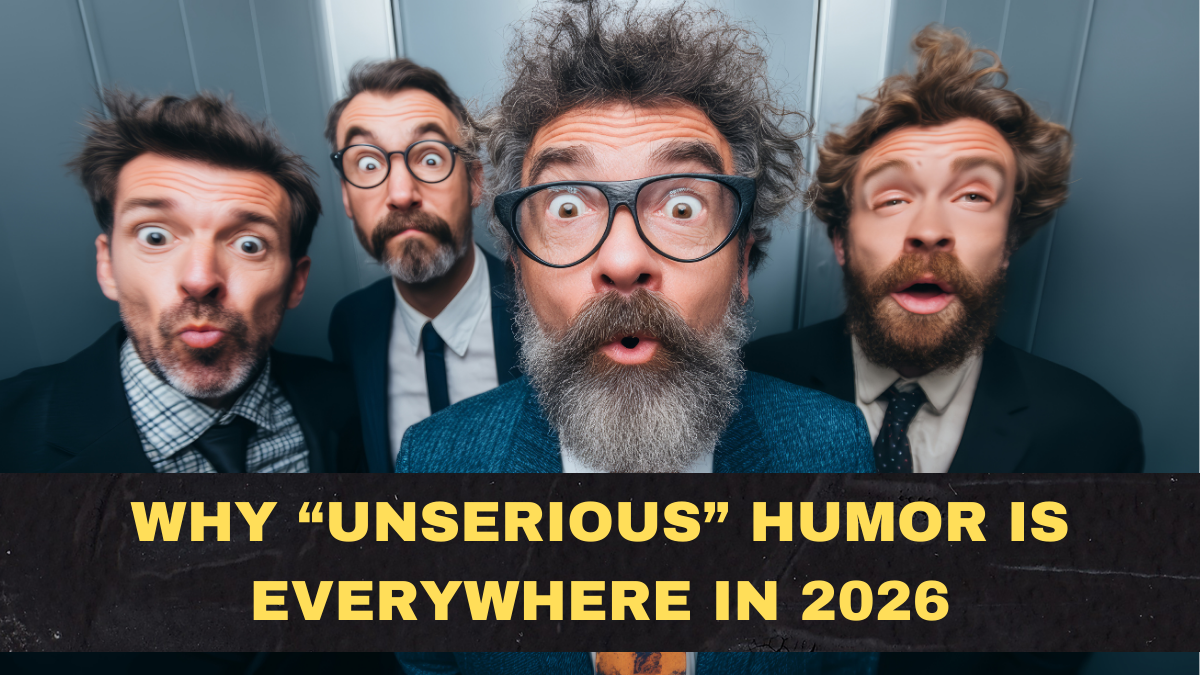
The spread of the unseriousness humor trend is one of the clearest cultural signals of 2026. Across memes, videos, brand campaigns, comment sections, and even news reactions, humor is becoming darker, more absurd, less polished, and intentionally chaotic. Jokes now feel half-finished, emotionally detached, ironic, and sometimes deliberately meaningless.
This is not random internet noise. It is a psychological response to pressure, uncertainty, and overstimulation. Audiences are no longer looking for clever punchlines or clean comedy. They are looking for release, distance, and emotional relief through humor that refuses to take anything seriously.
In 2026, humor is no longer entertainment. It is emotional coping infrastructure.

Why Unserious Humor Is Rising So Fast
Several forces pushed culture toward this style.
The strongest drivers include:
• Constant news anxiety
• Political and economic uncertainty
• Burnout from productivity culture
• Social media overstimulation
• Collapse of traditional optimism narratives
Instead of:
• Inspirational humor
• Motivational comedy
• Relatable sitcom jokes
Audiences now prefer:
• Absurd memes
• Deadpan reactions
• Ironic detachment
• Dark one-liners
• Chaotic edits
The unseriousness humor trend works because it allows people to laugh without pretending everything is fine.
What “Unserious” Humor Actually Looks Like in 2026
This style has clear characteristics.
Common features include:
• Intentionally low effort visuals
• Random timing and jump cuts
• Anti-punchline structure
• Emotionless delivery
• Irony layered on irony
Popular formats include:
• Blank-face reactions
• Sudden absurd endings
• Fake seriousness
• Overly dramatic narration for trivial topics
• Deliberate nonsense
The humor comes not from jokes, but from:
• Emotional distance
• Shared exhaustion
• Mutual recognition of chaos
In 2026, humor is less about being funny and more about being understood.
How Meme Culture Shifted From Relatable to Detached
Earlier meme culture focused on:
• Daily life struggles
• Workplace jokes
• Relationship humor
• Student experiences
Now it focuses on:
• Existential absurdity
• Emotional numbness
• System fatigue
• Identity confusion
• Detached observation
Memes now say:
• “Nothing matters, and that’s funny”
• “This is ridiculous, and we accept it”
• “I am tired, but I am laughing”
This reflects a generation that no longer expects:
• Stability
• Linear progress
• Predictable futures
Meme culture has become a mirror of emotional reality.
Why Dark Humor Is Becoming More Socially Accepted
Dark humor used to be niche.
Now it is mainstream.
Reasons include:
• Higher mental health awareness
• Normalization of therapy language
• Reduced stigma around anxiety and depression
• Cultural comfort with vulnerability
• Shared generational trauma narratives
People now laugh about:
• Burnout
• Failure
• Existential dread
• Social collapse
• Personal anxiety
Not because they trivialize pain, but because humor offers:
• Distance
• Control
• Relief
• Community
Dark humor is now less offensive and more therapeutic.
How Gen Z Is Redefining What Comedy Means
Gen Z leads this shift.
They prefer humor that is:
• Anti-polished
• Emotionally raw
• Ironically detached
• Meta-aware
• Self-referential
They dislike:
• Forced positivity
• Corporate comedy
• Overproduced skits
• Traditional punchline formats
Instead, they gravitate toward:
• Low-budget edits
• Awkward timing
• Self-mockery
• Identity humor
• Social commentary
For Gen Z, humor is not performance.
It is identity expression.
Why Brands Are Struggling With This Trend
This style is difficult to imitate.
Brands often fail because:
• They try too hard
• They over-produce
• They explain the joke
• They sanitize the edge
• They miss cultural timing
Unserious humor requires:
• Cultural fluency
• Emotional authenticity
• Self-awareness
• Risk tolerance
• Fast reaction speed
Brands that succeed:
• Laugh at themselves
• Avoid selling directly
• Embrace absurdity
• Allow imperfection
In 2026, humor marketing works only when it feels human, not strategic.
How Social Platforms Amplify This Style
Platform mechanics reward this trend.
Algorithms now favor:
• Short chaotic clips
• Unexpected edits
• Reaction-driven content
• High comment engagement
• Emotional resonance
Unserious humor performs well because:
• It stops scrolling
• It invites interpretation
• It sparks sharing
• It creates inside jokes
• It builds community language
In comment sections, humor often continues the joke, creating:
• Layered memes
• Remix culture
• Collaborative comedy
The joke is no longer finished by the creator.
It is finished by the community.
Why This Humor Signals Deeper Cultural Shifts
This trend reveals important changes.
It signals:
• Lower faith in institutions
• Reduced belief in control
• Acceptance of uncertainty
• Emotional fatigue
• Adaptive resilience
Instead of pretending:
• Everything will work out
Audiences now say:
• “This is messy, and we are still here”
Unserious humor is not nihilism.
It is survival language.
It allows people to:
• Cope without denial
• Laugh without lying
• Share pain without confession
How This Affects Media, News, and Commentary
Even serious content now adopts this tone.
We now see:
• Deadpan news reactions
• Meme-style political commentary
• Satirical crisis coverage
• Ironic headlines
• Absurd explainer videos
This reflects:
• Shorter attention spans
• Distrust of authority
• Desire for emotional buffering
• Need for lighter framing of heavy topics
In 2026, seriousness alone no longer holds attention.
Humor is required to process reality.
Why This Trend Will Continue
Long-term drivers remain strong:
• Ongoing global uncertainty
• Digital overload
• Mental health discourse
• Youth cultural leadership
• Platform dynamics
Future humor will become:
• More meta
• More ironic
• More layered
• More community-driven
• More emotionally coded
The unseriousness humor trend is not fashion.
It is a cultural adaptation to modern life.
Conclusion
The rise of the unseriousness humor trend shows how deeply emotional culture has changed in 2026. Humor is no longer about wit or cleverness. It is about distance, relief, and shared recognition of absurd reality.
Through dark humor and evolving meme culture, audiences are building new ways to cope, connect, and survive emotionally in an unpredictable world.
In this era, laughter is no longer optimism.
It is resilience disguised as comedy.
And that may be the most honest humor culture has ever produced.
FAQs
What is the unseriousness humor trend?
It is a style of humor based on absurdity, irony, detachment, and emotional distance rather than traditional punchlines.
Why is dark humor more popular in 2026?
Because it helps people cope with stress, uncertainty, and emotional fatigue in a socially acceptable way.
Which generation drives this trend most?
Gen Z leads this trend due to their comfort with irony, self-expression, and mental health awareness.
Why do brands struggle with unserious humor?
Because it requires authenticity, cultural timing, and emotional intelligence, which are difficult to manufacture strategically.
Will this humor style fade?
Unlikely soon. As long as uncertainty and digital overload persist, unserious humor will remain culturally relevant.
Click here to know more.