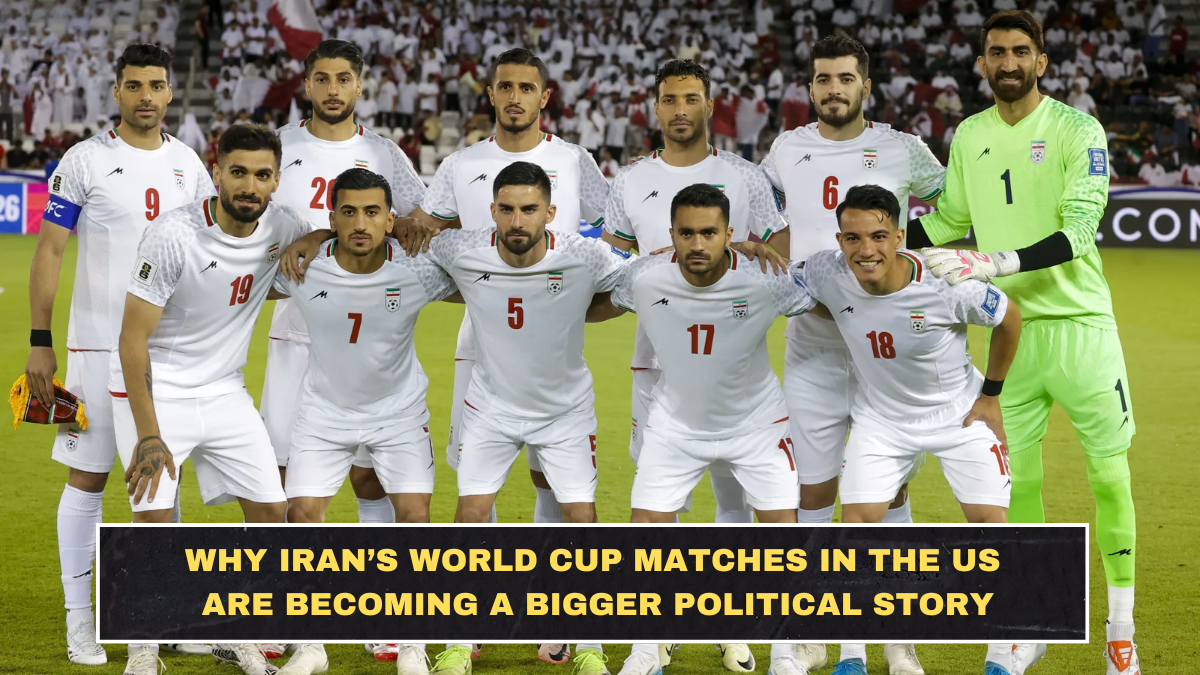
Iran playing World Cup matches in the United States should have been a routine tournament detail. It is not. FIFA president Gianni Infantino has now said clearly that Iran will still play in the US as scheduled, despite Iran’s request to move those games to Mexico because of security concerns linked to the current conflict with the US and its allies. That decision turns a football scheduling issue into a story about diplomacy, visas, fan access, security planning, and political symbolism.
Why this issue is bigger than football
Iran is not a borderline team hoping to qualify. It already secured its place at the 2026 World Cup in March 2025, and the expanded 48-team tournament will run from June 11 to July 19, 2026, across the United States, Mexico, and Canada. That matters because once qualification, group placement, and host commitments are locked in, moving one team’s matches becomes politically sensitive and operationally difficult. FIFA’s message has been blunt: there is no relocation plan.
What FIFA has actually said
Infantino told reporters in Turkey that Iran would play its World Cup matches in the United States “as planned.” Reuters and AP both reported that Iran had asked for those matches to be moved to Mexico, but FIFA rejected that request. AP also reported Infantino’s line that there is only “Plan A,” meaning FIFA is publicly refusing to frame this as a tournament with fallback venues for Iran.
Why the politics are so awkward
This is where the story gets messy. Iran’s sports ministry recently banned Iranian sports teams from traveling to countries it considers “hostile,” and Reuters reported that policy was introduced because of safety concerns for Iranian athletes. At the same time, FIFA is insisting that Iran’s group-stage schedule in the US will stand. That creates an obvious contradiction: Iran says travel is unsafe, while FIFA says the tournament plan will not change.
The practical problem most people are missing
The team may still be able to enter, but fan travel is a different story. Reuters reported in January that athletes, coaches, and support staff for major sporting events were exempted from US travel restrictions, but fans, media, and corporate visitors from affected countries would not automatically qualify. That means the political story is not only about whether Iran can play. It is also about whether ordinary Iranian supporters can realistically attend matches in the US.
Key facts at a glance
| Issue | Confirmed detail | Why it matters |
|---|---|---|
| Tournament dates | June 11 to July 19, 2026 | Fixed event timeline leaves little room for late political improvisation. |
| Tournament format | 48 teams | Larger event means more logistics, more security pressure, and more political exposure. |
| Iran status | Qualified in March 2025 | This is not speculation; Iran already earned its place. |
| FIFA position | Iran will play in the US as scheduled | FIFA is refusing a venue shift. |
| Iran’s request | Asked to move matches to Mexico | Shows the concern is official, not just media noise. |
| Fan access risk | Athlete exemptions exist, fans may still face restrictions | The team’s participation does not guarantee supporter access. |
What makes this such a sensitive World Cup story
A normal sports dispute is about tactics, squads, or injuries. This one is about whether a qualified national team can safely travel to a host country it now views as hostile, and whether that same host country can manage the optics of staging those matches without turning every game into a geopolitical flashpoint. Reuters has already reported broader human-rights concerns around the 2026 World Cup, including immigration enforcement fears for some groups of fans. Iran’s case makes that tension even sharper.
What readers should watch next
The biggest developments to watch are simple:
- whether Iran’s government softens its travel position for the national team
- whether US visa rules create a visible gap between player access and fan access
- whether FIFA keeps insisting on a single plan if tensions rise further
- whether security planning around California and Seattle becomes more public
None of that is minor. If any one of those points changes, this stops being a football administration story and becomes a much larger diplomatic controversy.
Conclusion
FIFA wants this to look simple: Iran qualified, the draw is done, and the matches stay in the United States. But the reality is more complicated. Iran’s own safety concerns, FIFA’s refusal to relocate games, and the difference between athlete exemptions and fan restrictions have turned these fixtures into one of the most politically loaded stories of the 2026 World Cup. The football may still happen on schedule, but pretending the politics are secondary is just not serious.
FAQs
Why is Iran’s World Cup schedule in the US controversial?
Because Iran asked FIFA to move its games to Mexico over security concerns, while FIFA refused and said the matches will stay in the United States.
Has Iran already qualified for the 2026 World Cup?
Yes. Iran officially qualified in March 2025.
Can Iranian players still enter the United States for the World Cup?
Current reporting indicates athletes, coaches, and support staff for major sporting events have exemptions, so the team can still travel.
Can Iranian fans easily attend the matches in the US?
Not necessarily. Reuters reported that fan and media travel from affected countries may still face restrictions even when athlete exemptions apply.
Why does this matter beyond football?
Because it involves security policy, visa access, diplomacy, and the broader question of how global sports events function when host-country politics collide with participating nations.