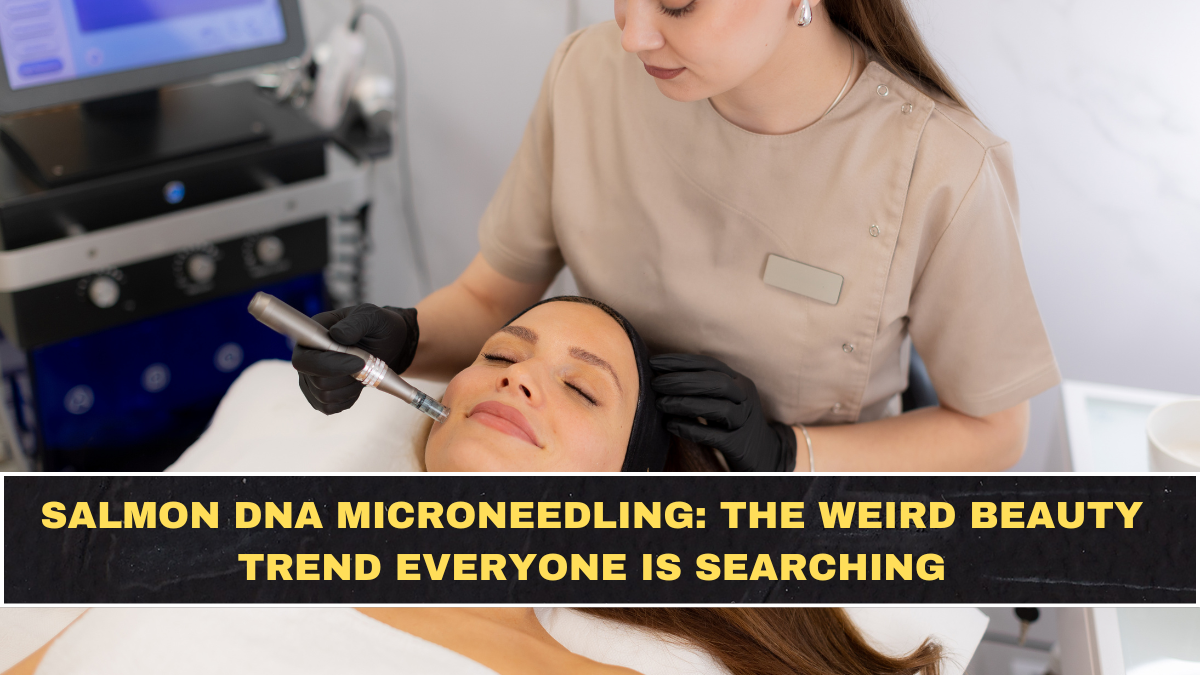
Salmon DNA microneedling is one of the strangest beauty trends getting serious attention because it combines two popular skincare ideas: microneedling and PDRN, also called polydeoxyribonucleotide. PDRN is commonly linked to purified DNA fragments sourced from salmon or trout sperm, and it has been studied for tissue repair, anti-inflammatory effects and wound-healing support. That sounds impressive, but people need to stop confusing “promising science” with “guaranteed glow-up.”
The trend became popular through Korean beauty clinics, celebrity skincare routines and viral “salmon sperm facial” headlines. Some users claim it improves dullness, scars, texture, hydration and fine lines, especially when paired with microneedling or professional skin treatments. But the truth is more controlled: early evidence is interesting, yet the treatment is not magic, not risk-free and definitely not something to try casually at cheap unlicensed salons.

What Is Salmon DNA Microneedling?
Salmon DNA microneedling usually means using microneedling to create controlled micro-injuries in the skin, followed by application or delivery of PDRN-based skincare. Microneedling itself is used in dermatology for concerns like scars, uneven tone, wrinkles and skin texture, because the tiny injuries can stimulate the skin’s repair process. When PDRN is added, the claim is that it may support regeneration and recovery more effectively.
| Feature | What It Means |
|---|---|
| Trend Name | Salmon DNA microneedling |
| Main Ingredient | PDRN or polynucleotides |
| Source | Purified salmon or trout DNA fragments |
| Main Claim | Skin repair, glow, texture improvement |
| Common Pairing | Microneedling, laser or injectable treatment |
| Risk Level | Depends heavily on provider and skin condition |
| Best Advice | Consult a qualified dermatologist |
Why Is PDRN Becoming So Popular?
PDRN is getting attention because it has a more “clinical” sound than normal beauty ingredients. Reviews in aesthetic medicine suggest polynucleotides may help improve skin texture, elasticity, wrinkle depth and overall facial appearance. That gives brands and clinics a strong marketing angle, especially when they present it as regenerative skincare rather than just another serum.
The problem is that social media removes all nuance. A treatment may have potential in controlled professional settings, but that does not mean every PDRN cream, mask or salon facial will deliver the same result. Experts have also noted that topical PDRN faces challenges because larger molecules may not penetrate skin easily, meaning some consumer products may be selling hype more than proven transformation.
What Benefits Are People Expecting?
The benefits people expect are mostly linked to smoother texture, better hydration, faster recovery and a brighter-looking skin surface. These claims are attractive because they target common concerns among people dealing with acne marks, dull skin, early ageing and damaged skin barriers. But results will depend on skin type, product quality, delivery method, clinic hygiene and whether the person is even a suitable candidate.
Popular claims include:
- Better skin glow and hydration.
- Softer texture and reduced roughness.
- Support for post-treatment recovery.
- Fine-line and elasticity improvement.
- Mild scar and dullness improvement.
- Stronger skin barrier appearance.
What Are The Real Risks?
The biggest risk is not the salmon DNA itself; it is bad procedure quality. Microneedling breaks the skin barrier, so poor hygiene can lead to infection, irritation, pigment changes and scarring. AAD says microneedling should be avoided when someone has a recent tan, skin infection, painful deep acne or recent isotretinoin use. Ignoring these warnings is not “self-care”; it is careless skin damage.
A major warning comes from needle-based cosmetic procedures done in unsafe settings. AP reported that three women contracted HIV after “vampire facial” procedures at an unlicensed New Mexico spa where disposable equipment was reused. That case was not about PDRN specifically, but it proves the larger point: any treatment involving needles must be done with strict medical hygiene and licensed professionals.
Who Should Avoid This Trend?
People with active acne, skin infections, eczema flare-ups, open wounds, keloid tendency, uncontrolled diabetes, pregnancy-related concerns or very sensitive skin should not jump into this treatment without medical advice. Anyone allergic to animal-derived ingredients should also be careful because PDRN may come from salmon or trout sources. The uglier truth is that many people chasing glass skin are ignoring basic skin-barrier health.
You should be extra cautious if:
- Your skin is inflamed, infected or sunburned.
- You are using strong acne medication.
- You scar easily or develop keloids.
- You have a weak immune system.
- The clinic cannot explain sterilisation clearly.
- The offer looks suspiciously cheap.
Conclusion: Should You Try Salmon DNA Microneedling?
Salmon DNA microneedling is not nonsense, but it is also not the miracle treatment social media makes it look like. PDRN has genuine research interest around repair and regeneration, while microneedling has established dermatology use. The combination may help some people, but only when done by a qualified professional with proper hygiene, realistic expectations and the right skin assessment.
The blunt advice is simple: do not let a viral beauty trend bully you into damaging your face. If you want to try it, ask a dermatologist whether your skin actually needs it, what product is being used, how it is delivered and what risks apply to you. Trendy skincare can be useful, but blind trend-chasing is how people turn a beauty treatment into a skin disaster.
FAQs?
What Is Salmon DNA Microneedling?
Salmon DNA microneedling is a skincare treatment where microneedling is combined with PDRN or polynucleotide-based products derived from purified fish DNA fragments. The goal is usually skin repair, glow, hydration and texture improvement. It should be done professionally because microneedling breaks the skin barrier.
Is Salmon DNA Skincare Scientifically Proven?
PDRN and polynucleotides have promising research in tissue repair, wound healing and aesthetic medicine, but consumer beauty claims are still ahead of the strongest evidence. Some studies and reviews suggest potential benefits for texture, wrinkles and elasticity. Still, results vary and should not be treated as guaranteed.
Is Salmon DNA Microneedling Safe?
It can be safe when done by trained professionals under proper hygiene, but it is not risk-free. Microneedling can cause redness, irritation, infection, pigment changes or worse problems if done incorrectly. People with active acne, infections, sunburn or certain medical conditions should avoid it unless cleared by a dermatologist.
Is It Better Than Retinol Or Vitamin C?
Not automatically. Retinoids and vitamin C have stronger mainstream evidence and are easier to use safely when chosen correctly. Salmon DNA treatments may be useful for selected people, but replacing proven skincare with a viral clinic trend is not smart. The better approach is to build a basic routine first, then consider advanced treatments only if needed.