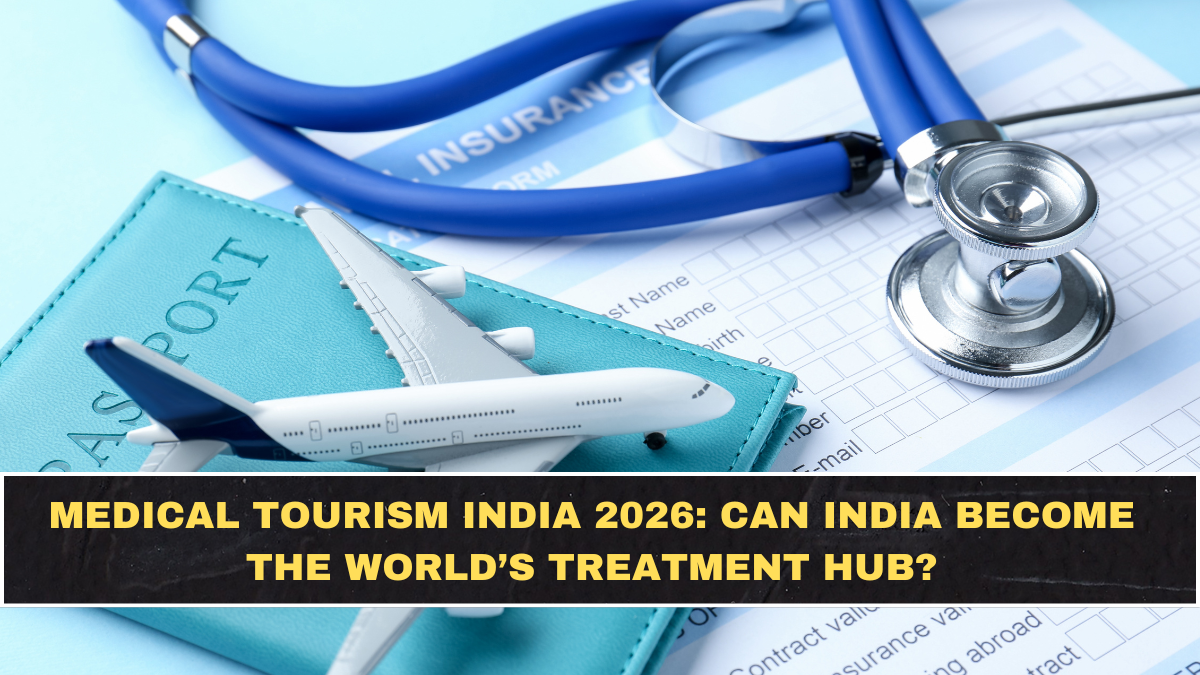
India’s medical tourism story is gaining serious attention in 2026 because the government is now treating it as more than hospital business. The official term is Medical Value Travel, where foreign patients come to India for affordable treatment, shorter waiting times, specialist doctors and wellness care. PIB says India’s medical tourism market was estimated at about USD 8.7 billion in 2025 and is projected to reach USD 16.2 billion by 2030, which explains why this sector is suddenly becoming a national growth story.
The opportunity is real, but India should not get carried away by slogans. Becoming a global treatment hub requires trust, hygiene, transparent pricing, smoother visas, airport support, quality hospitals and strong after-care. Cheap treatment alone is not enough because foreign patients are not buying a discount coupon; they are taking a health risk in another country.
Why Is Medical Tourism Becoming Big In India?
India has a strong advantage because it offers advanced medical treatment at lower costs compared with many Western and Gulf countries. Patients often come for cardiac care, cancer treatment, orthopaedics, organ-related care, fertility treatment, dental work and post-surgery rehabilitation. The government is also positioning India as a destination that combines modern medicine with wellness systems like Ayurveda, Yoga and other AYUSH-based treatments.
| Key Factor | Why It Matters For India |
|---|---|
| Lower Treatment Cost | Attracts patients from high-cost healthcare markets |
| Skilled Doctors | Builds confidence in complex treatments |
| Private Hospitals | Supports premium international patient care |
| AYUSH And Wellness | Adds preventive and holistic health appeal |
| Medical Visas | Makes patient travel easier |
| Regional Hubs | Can spread growth beyond big metros |
| Digital Portal | Helps patients plan treatment more smoothly |
What Did Budget 2026 Announce?
Union Budget 2026–27 has proposed five Regional Medical Hubs in partnership with state governments and the private sector. These hubs are expected to work as integrated healthcare complexes with medical, educational and research facilities under one roof. PIB also says these hubs will include AYUSH centres, Medical Value Tourism facilitation centres, advanced diagnostics, post-treatment care and rehabilitation infrastructure.
This is the right direction because India’s medical tourism cannot depend only on Delhi, Mumbai, Chennai, Bengaluru and Hyderabad forever. Regional hubs can create jobs for doctors, nurses, allied health professionals, translators, hospitality workers and healthcare coordinators. But the execution must be strict because poorly managed hubs will damage India’s reputation faster than they build it.
Why Do Foreign Patients Choose India?
Foreign patients usually choose India because treatment can be faster, more affordable and medically advanced in several specialities. Many patients from South Asia, Africa, the Middle East and Central Asia look at India because of geographic access, cultural familiarity and lower hospital bills. The government has also extended e-Medical Visa and e-Medical Attendant Visa facilities to nationals of 172 countries, while e-AYUSH Visa categories support traditional treatment travel.
Main reasons patients may prefer India:
- Lower cost for surgeries and specialist treatment.
- English-speaking doctors and hospital staff in major centres.
- Shorter waiting time compared with some countries.
- Strong private hospital networks in metro cities.
- AYUSH, yoga and wellness add-on options.
- Easier visa categories for patients and attendants.
What Can Go Wrong For India?
The biggest weakness is trust. If patients face confusing pricing, poor coordination, hidden charges, weak follow-up or unverified facilitators, India’s medical tourism brand can suffer. The Ministry of Tourism’s roadmap focuses on institutional coordination, quality assurance through NABH accreditation, and registration or rating of Medical Value Travel facilitators to build international trust.
There is also geopolitical risk. Economic Times reported recently that conflict in West Asia hit overseas patient flow to Indian hospitals, with some hospitals seeing a sharp drop in international patients. That proves medical tourism is not immune to wars, visa disruption, flight uncertainty or diplomatic tension. India needs a resilient system, not just optimistic growth projections.
Can India Compete With Global Medical Hubs?
India can compete, but only if it stops selling itself only as a “cheap treatment” destination. Countries like Thailand, Turkey, Singapore and the UAE already market medical travel with strong branding, hospital packages and patient experience. India has the doctors and cost advantage, but it still needs cleaner patient journeys from inquiry to airport pickup, hospital admission, recovery stay and post-return consultation.
The government is upgrading the Medical Value Travel portal to offer end-to-end support where patients can explore, plan, book, make payments and access post-operative care. Plans also include MVT concierge and lounges at important airports to help patients through immigration, customs and baggage claims. These details sound small, but for a sick patient entering a foreign country, they can decide whether India feels organised or chaotic.
Conclusion: Can India Become The World’s Treatment Hub?
India has a serious chance to become one of the world’s leading medical tourism hubs because it has skilled doctors, strong hospitals, affordable treatment and a growing wellness ecosystem. Budget 2026’s five regional medical hubs can push the sector beyond big-city hospitals and turn it into a wider healthcare economy. If executed well, this can create jobs, attract foreign exchange and strengthen India’s global healthcare image.
But India should not confuse potential with achievement. Patients need trust, safety, clean pricing, accredited hospitals, trained staff, visa support and strong after-care. If India solves those gaps, medical tourism can become a major 2026–2030 growth story. If it relies only on low cost and big claims, other countries will take the premium patients while India fights for volume.
FAQs
What Is Medical Tourism In India?
Medical tourism in India means foreign patients travelling to India for treatment, surgery, recovery, rehabilitation or wellness care. It is also called Medical Value Travel because patients are looking for quality care at better value. India’s appeal comes from cost advantage, specialist doctors, private hospitals and wellness systems like Ayurveda and Yoga.
What Did Budget 2026 Announce For Medical Tourism?
Budget 2026–27 proposed support for states to establish five Regional Medical Hubs with private-sector participation. These hubs are planned as integrated complexes with medical, educational and research facilities. They will also include AYUSH centres, diagnostics, rehabilitation and Medical Value Tourism facilitation centres.
How Big Is India’s Medical Tourism Market?
PIB says India’s medical tourism market was estimated at about USD 8.7 billion in 2025 and is projected to reach USD 16.2 billion by 2030. This growth is being driven by global healthcare costs, long waiting times abroad and demand for affordable quality treatment. The sector can become a major healthcare-economy story if governance improves.
Click here to know more