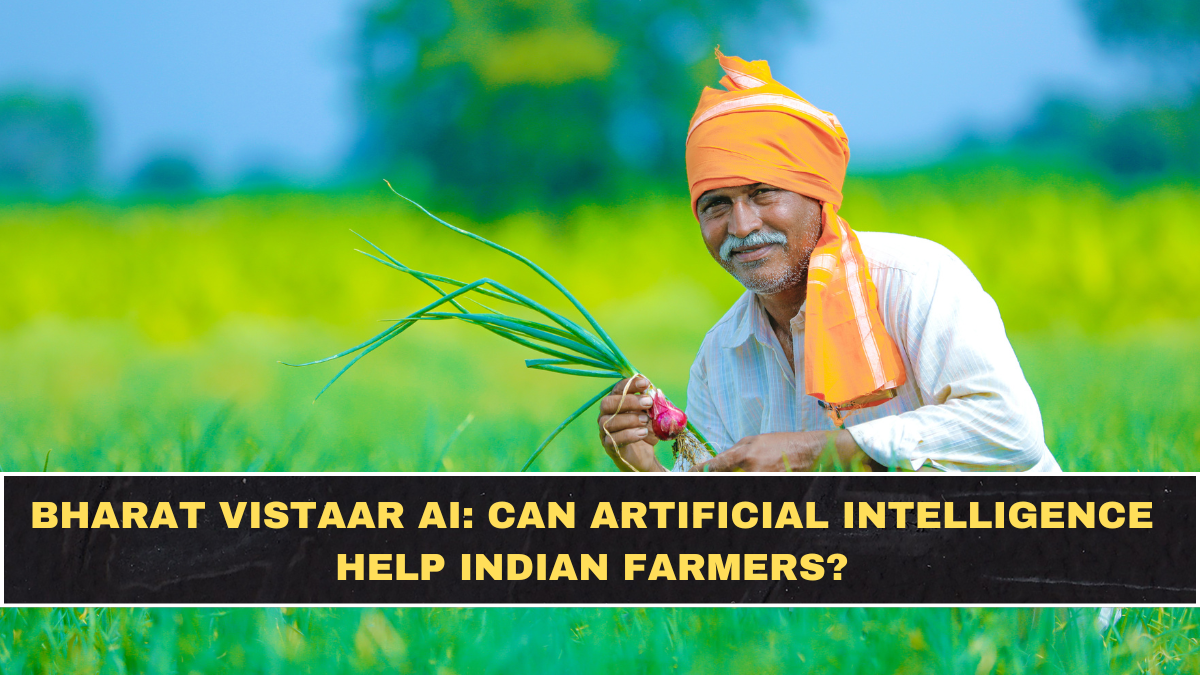
Bharat-VISTAAR has become one of the most important agriculture-tech ideas from Union Budget 2026–27 because it tries to take AI directly to farmers, not just to startups and policy rooms. PIB says Bharat-VISTAAR stands for Virtually Integrated System to Access Agricultural Resources, and it is proposed as a multilingual AI tool that will integrate AgriStack portals with ICAR’s package of agricultural practices. The aim is to improve productivity, support farmer decision-making and reduce risk through customised advisory support.
That sounds powerful, but farmers do not need fancy AI slogans. They need practical advice in their own language, at the right time, for their crop, soil, weather and market reality. If Bharat Vistaar becomes a simple, trustworthy advisory system, it can help small farmers make better choices. If it becomes another confusing government-tech portal, it will fail where it matters most: the field.
What Is Bharat Vistaar AI?
Bharat Vistaar is being positioned as an AI-powered advisory layer for Indian agriculture. Instead of forcing farmers to search through scattered information, the platform is expected to combine government data, AgriStack records and ICAR’s scientific farm practices into personalised guidance. In simple words, the farmer should be able to get clearer advice on what to do, when to do it and what risk to watch.
| Feature | What It Could Mean For Farmers |
|---|---|
| Full Name | Virtually Integrated System to Access Agricultural Resources |
| Main Technology | Artificial Intelligence |
| Language Focus | Multilingual advisory |
| Data Base | AgriStack and ICAR farm practices |
| Main Goal | Better decisions and lower farming risk |
| Possible Advice | Crop, soil, weather, pest and input guidance |
| Biggest Test | Trust, accuracy and local usefulness |
Why Can AI Matter In Indian Farming?
Indian farming is risky because farmers face uncertain rainfall, pest attacks, soil problems, price changes and rising input costs. Many small farmers still depend on local dealers, informal advice or guesswork for decisions that directly affect income. AI can help only if it converts complex data into simple, timely guidance that farmers can actually use.
PIB reported that India’s AI agriculture push is linked to broader work around the India AI Mission, sovereign compute, datasets and startup infrastructure. It also highlighted Agri Param, a domain-specific agriculture model under BharatGen that works in 22 Indian languages, making farmer advisory more accessible beyond English-speaking users.
What Problems Can Bharat Vistaar Solve?
The biggest value of Bharat Vistaar will be in reducing bad decisions before they become losses. A farmer may need to know whether to irrigate today, spray pesticide now, delay sowing, change seed choice or sell produce at a better time. If AI can combine weather, crop stage, soil type and local advisory, it can become useful.
Key areas where it may help:
- Crop-specific advisory in local languages.
- Weather-linked alerts before damage happens.
- Pest and disease risk warnings.
- Better input timing for fertiliser and irrigation.
- Market-linked decision support.
- Access to government schemes and services.
How Big Can The Impact Be?
The potential impact is not small. PIB quoted Union Minister Dr. Jitendra Singh saying India’s 140 million farm holdings, most of them small and marginal, could together generate an estimated ₹70,000 crore annual value if AI-enabled advisories help each farmer save even ₹5,000 a year through better input timing, pest prediction and market linkage. That is a serious economic argument, not just a tech headline.
CSTEP also noted that Union Budget 2026–27 allocated ₹1,62,671 crore to agriculture and allied activities, a 7% increase over the 2025–26 revised estimate. It said Bharat-VISTAAR has an allocation of ₹150 crore for implementation and could convert fragmented agricultural data into actionable insights if designed properly.
What Could Go Wrong?
The biggest risk is bad data. If land records, crop details, soil data or local weather inputs are incomplete, the advice can become inaccurate. Farmers will not give a second chance to an AI tool that causes one bad crop decision. In agriculture, trust is earned slowly and lost quickly.
Another serious issue is data governance. CSTEP warned that Bharat-VISTAAR’s credibility will depend on farmers’ consent and trust in data sharing, especially as private partnerships expand. That is the blind spot many tech promoters ignore: farmer data is not free raw material for companies to exploit. It must be handled transparently, legally and ethically.
Conclusion: Can Bharat Vistaar Change Indian Farming?
Bharat Vistaar AI can help Indian farmers if it stays focused on usefulness instead of buzzwords. Its promise is strong because it combines multilingual access, AgriStack data, ICAR knowledge and AI-based advisory into one farmer-facing system. If it gives reliable crop, weather, pest and market guidance in simple language, it can reduce risk for millions of small farmers.
But the execution must be brutally practical. Farmers need advice that works offline or in low-connectivity areas, respects local crop realities and protects their data. Bharat Vistaar will not succeed because it has AI in its name. It will succeed only if farmers trust it enough to use it before making real decisions on real fields.
FAQs
What Is Bharat Vistaar AI?
Bharat-VISTAAR means Virtually Integrated System to Access Agricultural Resources. It is a proposed multilingual AI tool from Union Budget 2026–27 that will integrate AgriStack portals and ICAR’s agricultural practices package. Its goal is to provide customised advisory support to farmers and reduce farming risk.
How Can Bharat Vistaar Help Farmers?
Bharat Vistaar can help farmers by giving crop-specific, weather-linked and risk-based advice in local languages. It may support decisions around sowing, fertiliser use, irrigation, pest management and market timing. The real benefit will depend on how accurate, simple and locally relevant the advice becomes.
Will Bharat Vistaar Work In Local Languages?
Yes, the government has highlighted multilingual AI as a core part of the agriculture AI push. PIB reported that Agri Param, a domain-specific agriculture model under BharatGen, operates in 22 Indian languages. This matters because farmers need advisory support in the language they actually use, not only in English.
What Is The Biggest Risk With Bharat Vistaar?
The biggest risks are inaccurate data, poor connectivity, low trust and weak data privacy safeguards. If farmers receive wrong advice or feel their data is being misused, adoption will collapse. AI can support farming, but it cannot replace local knowledge, field experience and accountable agricultural extension.