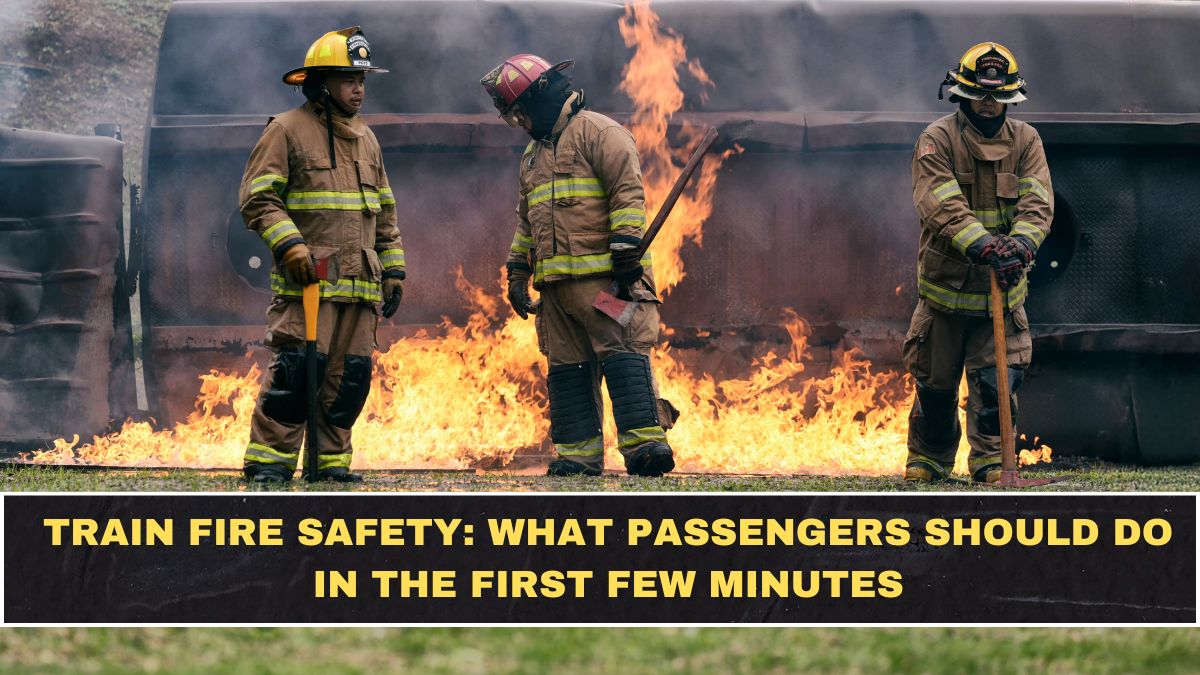
Train fire safety becomes critical because the first few minutes can decide whether passengers escape calmly or panic turns a small fire into a bigger emergency. Indian Railways safety instructions say that in case of fire in a passenger train, passengers should pull the alarm chain, stop the train immediately and try to put out the fire if possible.
But passengers need to use judgment, not heroics. If smoke is spreading, flames are growing or people are trapped, evacuation matters more than luggage, videos or arguments. The worst mistake is wasting time collecting bags while other passengers are trying to move out safely.
What Should You Do First?
The first step is to alert others and railway staff immediately. If there is a clear fire emergency, the alarm chain can be used to stop the train, but it should not be misused for non-emergency reasons. Southern Railway has warned that pulling the alarm chain without reasonable and sufficient cause is punishable under Section 141 of the Railways Act, 1989.
| Situation | Correct Action |
|---|---|
| Smoke or flame seen | Alert passengers and railway staff |
| Fire spreading | Move away from affected coach |
| Train needs stopping | Use alarm chain only for genuine emergency |
| Heavy smoke | Stay low and cover nose/mouth if possible |
| Panic crowd | Do not block doors or gangways |
Passengers should not behave like spectators during an emergency. Recording videos, shouting without direction or blocking exits can slow everyone down. The goal is simple: alert, move, help vulnerable passengers and get away from the fire source.
Should You Fight The Fire?
If the fire is small and safe to approach, passengers may try to extinguish it using available fire extinguishers or staff assistance. Indian Railways fire-prevention guidance says passengers should not panic, pull the alarm chain, and evacuate passengers to adjacent coaches away from fire through vestibules where possible.
But do not play firefighter if the fire is spreading fast or smoke is thick. Smoke inhalation can become dangerous before flames reach you. If breathing becomes difficult, your priority should be evacuation, not proving courage. Smart action saves lives; reckless bravery creates more victims.
What Should You Never Do?
Most passenger mistakes happen because people panic or become selfish. They rush toward doors, pull luggage from racks, push others or try to return for phones and bags. In a train fire, these actions are dangerous because narrow aisles and coach doors can quickly become blocked.
Avoid these mistakes immediately:
- Do not stop to collect heavy luggage
- Do not push children, elderly people or women
- Do not open unknown electrical panels
- Do not spread rumours inside the coach
- Do not return to the affected coach
- Do not misuse the alarm chain for convenience
Indian Railways has also issued passenger-safety messaging against carrying inflammable material and smoking inside coaches. A 2025 parliamentary reply noted that fire posters are provided in coaches to educate passengers about fire prevention, including warnings on inflammable items, explosives and smoking prohibition.
How Can You Prepare Before Travel?
Passengers should not wait for an emergency to learn safety basics. After boarding, look at the coach layout, door location, emergency window markings and where staff may be available. Keep essential items like ID proof, medicines and money in a small pouch instead of burying everything inside a large suitcase.
This does not mean travelling in fear. It means travelling with basic awareness. Long-distance passengers, especially families with children and elderly members, should decide in advance who will help whom if there is a sudden emergency. Confusion wastes time, and time is the one thing you may not have during a fire.
What About AC Coaches?
AC coaches can feel more confusing during a fire because windows are sealed and passengers may depend on doors or vestibule movement. If smoke enters an AC coach, passengers should move away from the affected area and follow staff instructions. Emergency windows and coach exits should be used only as directed or when evacuation becomes necessary.
Do not assume premium trains are risk-free. A better coach does not remove the need for passenger awareness. Electrical faults, pantry issues, smoking, inflammable items or other causes can still create danger. Safety is shared between Railways and passengers, and both sides must behave responsibly.
Conclusion?
Train fire safety is not complicated, but it demands fast and disciplined action. In the first few minutes, passengers should alert others, use the alarm chain only in a genuine emergency, move away from smoke or flames, and help vulnerable passengers evacuate safely. Luggage, phones and videos can wait; life cannot.
The blunt truth is that panic and selfish behaviour can make a train fire worse. Passengers must travel with awareness, avoid banned items, keep aisles clear and follow railway staff instructions. Fire safety is not only a railway responsibility; passenger behaviour can also decide the outcome.
FAQs?
What should I do first if fire breaks out in a train?
Alert nearby passengers and railway staff immediately. If it is a genuine fire emergency, use the alarm chain to stop the train and move away from the affected coach as quickly and calmly as possible.
Should I carry my luggage during a train fire?
No, do not waste time collecting heavy luggage during an active fire emergency. Carry only essential items if they are already with you and do not block exits or delay evacuation.
Can passengers pull the alarm chain during fire?
Yes, fire is a genuine emergency where alarm chain use may be necessary. However, alarm chain misuse for non-emergency reasons is punishable under railway rules.
How can passengers prevent train fire risk?
Passengers should not smoke inside coaches, carry inflammable materials, block aisles or tamper with electrical fittings. They should also read safety posters and follow instructions from railway staff during travel.