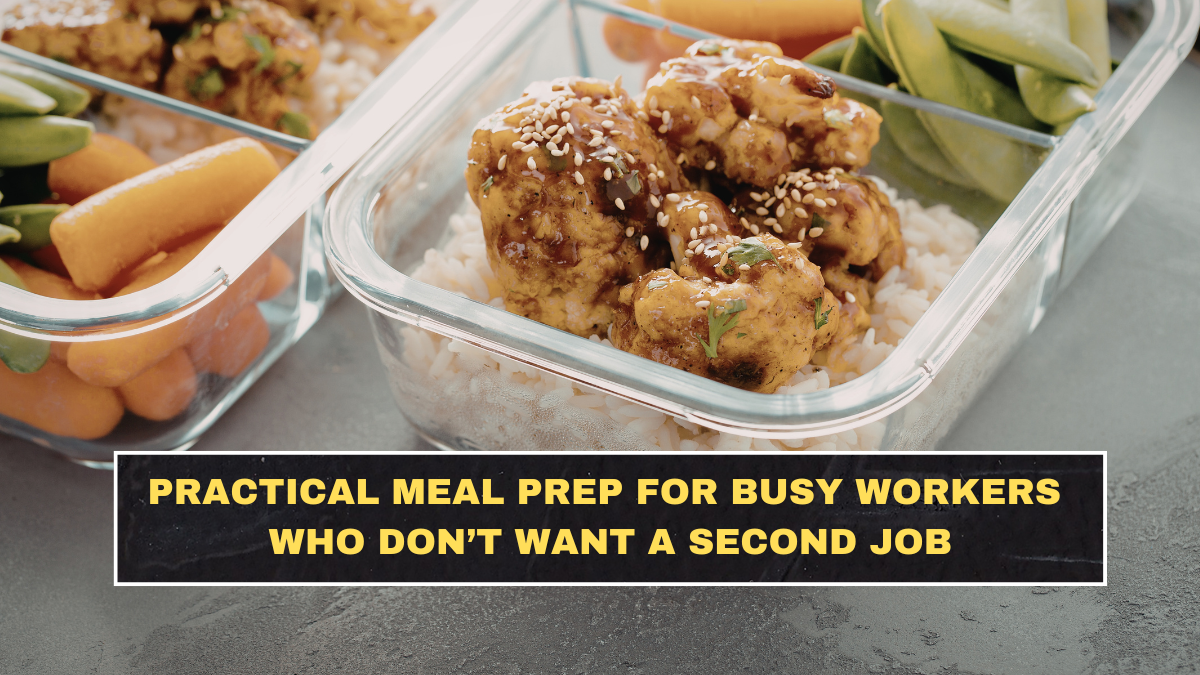
Most meal-prep advice fails because it assumes people have unlimited patience, perfect energy, and a clean Sunday afternoon waiting to be sacrificed. They do not. Real workers need a system that reduces decisions without turning food into another exhausting project. That is why the best meal prep is not the prettiest version. It is the version you can repeat when work is busy, your energy is low, and you still need lunch tomorrow. MyPlate’s planning guidance says prepping basics like chopped vegetables, cooked grains, baked potatoes, and marinated proteins ahead of time makes it easier to pull together meals on busy days.
The other reason meal prep keeps working is that it helps with both budget control and impulse control. The American Heart Association recommends planning menus and grocery lists ahead because it can help prevent impulse food choices and make healthier choices easier. That matters more than motivational talk. If your weekday lunch depends on willpower at 1 p.m., your system is weak.
What makes meal prep practical instead of annoying?
Practical meal prep starts with lower ambition. That is the part people resist. They think success means cooking every meal in advance, portioning seven flawless containers, and eating like a productivity influencer. That is how the whole thing collapses by Wednesday. A better model is “prep components, not a performance.” MyPlate’s guidance supports this directly by recommending advance prep of grains, vegetables, greens, potatoes, and protein foods so meals can be assembled quickly later.
Mayo Clinic’s “cook once, eat twice” approach points in the same direction. Cooking extra for a second meal saves time and reduces the planning burden later in the week. That is the version real workers can live with. You do not need a Sunday marathon. You need a few ingredients and leftovers that can be reused intelligently.
Which meal-prep strategy works best for busy workers?
| Strategy | Why it works | Example |
|---|---|---|
| Prep components, not full meals | More flexible and less boring | Cook rice, roast vegetables, prep chicken |
| Cook once, eat twice | Cuts time and effort fast | Make extra dinner for next day lunch |
| Use one dependable lunch formula | Removes weekday decision fatigue | Grain + protein + vegetable + sauce |
| Keep backup convenience foods | Prevents takeout panic | Yogurt, eggs, canned beans, hummus |
| Build from pantry staples | Helps control spending | Rice, beans, oats, frozen veg, tuna |
This is the real framework. MyPlate explicitly recommends repurposing proteins across meals, such as using the same base in soup, casserole, or salad. The American Heart Association’s pantry guidance also emphasizes keeping staples on hand that can be mixed and matched into balanced meals while watching sodium, added sugars, and saturated fat.
What should workers actually prep each week?
A realistic weekly prep session should cover just four things: one protein, one carb base, one vegetable set, and one flavor booster. That is enough. Anything more and many people start hating the process. For example, roasted chicken or chickpeas, cooked rice or quinoa, chopped cucumbers and roasted vegetables, plus one yogurt sauce or vinaigrette. MyPlate’s prep-ahead document recommends exactly this kind of approach by focusing on grains, vegetables, greens, and proteins that can be reused quickly across meals.
Recent EatingWell meal-prep coverage keeps reinforcing the same practical pattern. Their current lunch roundups repeatedly center high-fiber and/or higher-protein meals that can be made ahead and held for the week, and even their newer 10-minute lunch content leans on fast assembly rather than elaborate cooking. That is a clue. The winning system is not complexity. It is repeatable structure.
How can meal prep stay healthy without becoming boring?
Use one formula, then rotate the flavor. That is how adults keep going without feeling trapped in a chicken-and-rice punishment loop. A grain bowl can become Mediterranean with lemon and yogurt, spicy with salsa, or savory with soy and chili oil. The ingredients stay mostly the same while the flavor changes. That is smarter than trying to prep five unrelated recipes every week.
The American Heart Association recommends comparing labels and choosing options lower in sodium, added sugars, and saturated fat when stocking meal-prep ingredients. That matters because “healthy meal prep” can quietly become sodium-heavy if everything relies on packaged sauces, deli meats, and convenience foods. Use shortcuts, but use them with some intelligence.
What are the easiest lunch ideas for office workers?
The easiest office lunches are bowls, wraps, soups, and snack-box style meals. Bowls work because they hold up well and are easy to customize. Wraps work because they travel well and feel less repetitive. Soup works because leftovers stretch. Snack-box lunches work because some people do better with assembled small foods than with one big reheated meal.
Recent EatingWell examples show this clearly: chickpea salad lunch boxes, quinoa bowls, fast protein lunches, and no-cook lunch ideas keep appearing because they are practical, not flashy. The common theme is low friction. If the lunch is annoying to pack, reheat, or eat at work, it stops being useful.
What mistakes make meal prep fail?
The biggest mistake is prepping too much food that you do not actually want to eat twice. The second is choosing recipes that are too complicated for a workweek system. The third is failing to keep backup food in the house. Then one rough day turns into expensive takeout and the whole “meal prep system” disappears.
The American Heart Association’s budget-planning advice pushes menus and grocery lists partly because planning ahead reduces those impulse choices. Mayo Clinic also emphasizes using leftovers creatively in stir-fries, soups, salads, or other second meals instead of expecting every meal to be brand new. In other words, meal prep fails less when you stop expecting novelty and start building for convenience.
What is the smartest realistic meal-prep routine?
Do one short prep session, not a full cooking takeover. Cook a grain, prep a protein, wash or roast vegetables, and make or buy one simple sauce. Then let weekday meals assemble themselves. Keep one fallback shelf-stable or fridge meal option for bad days. That is the version most people can survive.
Conclusion
Practical meal prep for busy workers is supposed to reduce work, not become more of it. The best version is simple: prep a few components, reuse leftovers, keep basic staples around, and rely on one or two dependable lunch formulas instead of chasing variety for its own sake. MyPlate, Mayo Clinic, and the American Heart Association all point toward the same truth in different ways: planning ahead, prepping basics, and reusing food intelligently make healthy eating easier under real-life pressure.
FAQs
What is the easiest meal-prep method for busy workers?
Prepping components instead of full meals is usually easiest. MyPlate recommends chopping vegetables, cooking grains, and preparing protein foods ahead so meals can be assembled quickly later.
Does meal prep actually save money?
Yes, it can help reduce impulse purchases and takeout decisions. The American Heart Association recommends planning menus and grocery lists ahead partly to avoid unhealthy and impulsive food choices.
What foods should be prepped first each week?
Start with one protein, one carb base, and vegetables. MyPlate specifically suggests prepping grains, greens, vegetables, and proteins in advance.
Is cooking every meal in advance necessary?
No. Mayo Clinic’s “cook once, eat twice” idea is a more realistic model for many people because it saves time without requiring full-week batch cooking.