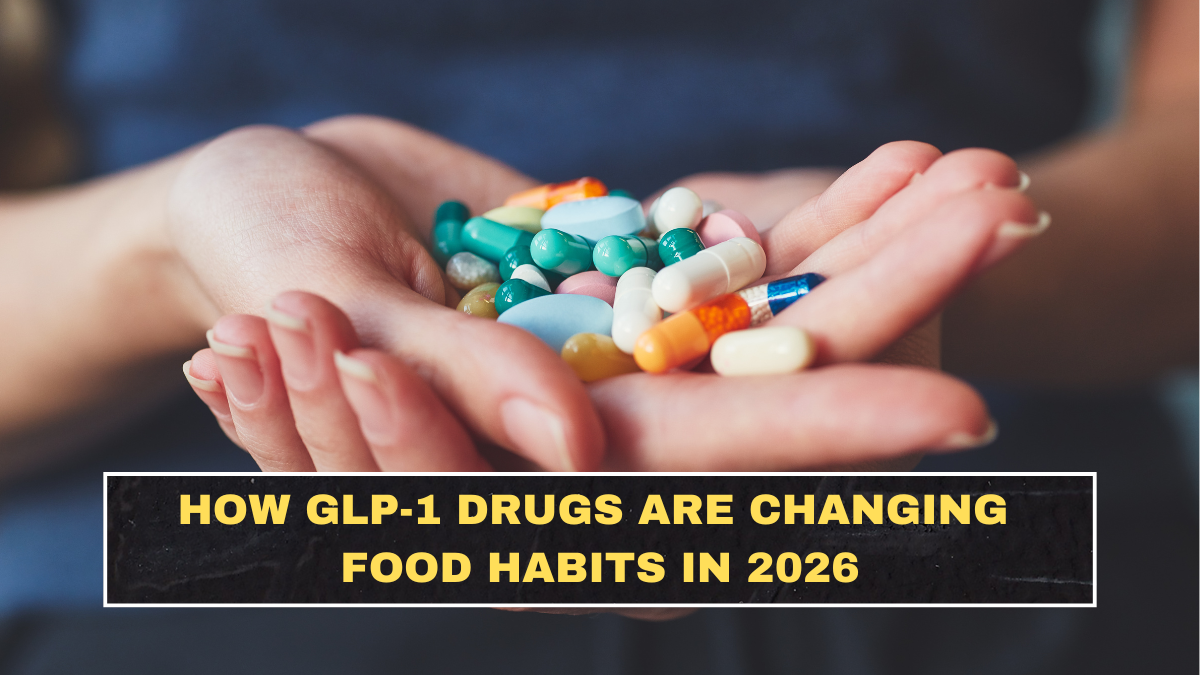
GLP-1 drugs are changing food habits because they are changing appetite itself. That is the core shift. These medicines, including semaglutide-based products used for obesity and diabetes, target areas of the brain involved in appetite and food intake. NIDDK says semaglutide mimics GLP-1 and acts on brain pathways that regulate appetite and food intake, while clinical research has found reduced hunger, lower energy intake, fewer food cravings, and altered food preferences among users. This is why the food conversation around GLP-1 is no longer just about weight loss. It is now about what people want to eat, how much they can tolerate, and what kinds of foods fit better into smaller appetites.
Why are GLP-1 drugs affecting food habits so much?
Because they do not just “help with weight.” They change the eating experience. Research on semaglutide has shown lower appetite, increased fullness, reduced cravings, and lower overall energy intake. A 2025 joint nutrition advisory from major professional groups warned that during GLP-1 use, patients may face altered dietary preferences and intakes, gastrointestinal side effects, nutrient deficiencies, and risks to muscle and bone mass if nutrition is handled badly. That means food habits are being reshaped both by biology and by necessity. People often eat less, get full faster, and become less tolerant of heavy meals.
What food changes are showing up most clearly in 2026?
The biggest changes are smaller portions, more interest in protein, more attention to hydration, and a shift toward foods that feel easier to tolerate. Circana says food purchases among GLP-1 users are shifting both at home and away from home, with shoppers spending more on foods that support their health plan and help with side effects. Industry tracking in 2026 is pointing in the same direction. NACS reported demand rising for smaller portions, protein snacks, beverages, and occasional indulgences, while Innova said brands are adapting to demand for smaller portions, higher nutrient density, and lower-carb, protein-focused options.
| Food habit shift | Why it is happening | What it looks like in real life |
|---|---|---|
| Smaller portions | Appetite drops and fullness comes faster | Half meals, split meals, snack-sized eating |
| Higher protein focus | Lower intake raises concern about muscle loss and nutrient gaps | Protein shakes, yogurt, eggs, lean meat, high-protein snacks |
| More hydration support | GI side effects and reduced intake can make hydration more important | Water, electrolyte drinks, easier-to-sip beverages |
| Less tolerance for rich foods | High-fat or heavy foods can worsen side effects | Simpler meals, lighter textures, bland options |
| More functional snacking | Big meals feel harder, so smaller nutrient-dense options make more sense | Bars, protein drinks, portable snacks |
Why is protein suddenly such a big deal?
Because eating less can create a nutrition problem fast. The 2025 nutrition advisory on GLP-1 therapy specifically warns about nutrient deficiencies and the need to preserve muscle and bone mass through appropriate diet and resistance training. That is why protein is getting so much attention in 2026. This is not just food marketing. It is a practical response to the risk that lower calorie intake can also mean lower protein intake. That is also why food companies are rushing into “GLP-1-friendly” protein snacks and drinks. The demand is not imaginary. It is tied to a real nutritional pressure point.
Why are snacks and drinks becoming more important?
Because for many users, three big meals stop making sense. Smaller appetites change the structure of eating. NACS says convenience stores are seeing GLP-1-driven demand for protein snacks, drinks, and smaller portions. Circana also points to a shift toward snacks that support protein, hydration, energy, and convenience. This is what happens when appetite is lower but nutrient needs do not disappear. People still need enough protein, fluids, and overall nutrition, so the market is shifting toward smaller, denser, easier options.
Are GLP-1 users eating healthier, or just eating less?
Both can happen, and that is where people oversimplify the trend. Some users do move toward more nutrient-dense foods because heavy, greasy, or overly rich foods may feel worse. Cleveland Clinic guidance says GLP-1 eating patterns generally center on nutrient-dense foods such as fruits, vegetables, lean proteins, and whole grains, while high-fat foods can worsen side effects. But eating less is not automatically eating better. The nutrition advisory makes that very clear by warning about deficiencies, muscle loss, and the need for structured nutrition support. So the honest answer is this: GLP-1 drugs can push people toward healthier patterns, but they can also expose weak nutrition habits if users just eat less without eating smarter.
How are food brands and retailers reacting?
They are not waiting around. Circana says GLP-1 use is already changing consumer spending on food and beverages, and industry sources in 2026 are describing new opportunities in smaller portions, protein-rich formats, hydration products, and function-led foods. Innova says brands are adapting menus and launches around smaller portions, higher protein, and lower-carb or nutrient-dense options. In plain terms, the industry sees a growing customer group that still buys food, just differently. This is why “shrinking appetite” is not the whole story. The basket is evolving, not disappearing.
What should people be careful about with this trend?
First, GLP-1 drugs are real prescription medicines, not lifestyle accessories. The UK government says they should be used only for licensed medical purposes and not casual cosmetic use, and the FDA has warned against unapproved products sold as semaglutide or related compounds. Second, the food trend around GLP-1 can get stupid fast. A product labeled for GLP-1 users is not automatically useful or healthy. The real priorities are still basic: enough protein, enough fluids, enough fiber where tolerated, and enough total nutrition to avoid deficiencies. The medicine may change appetite, but it does not erase the need for actual dietary quality.
Conclusion?
GLP-1 drugs are changing food habits in 2026 by changing appetite, portions, cravings, and food tolerance. That is why smaller meals, protein-heavy choices, hydration support, and functional snacks are all gaining ground. Medical guidance also makes it clear that eating less is not enough by itself. Nutrition quality matters more, not less, when intake drops. So the real shift is not just weight-loss culture. It is a broader move toward smaller, denser, more deliberate eating patterns shaped by both biology and behavior.
FAQs
What do GLP-1 drugs do to appetite?
They mimic a hormone that affects areas of the brain involved in appetite and food intake, which can reduce hunger and increase fullness.
Why are GLP-1 users eating more protein?
Because lower appetite can reduce overall food intake, raising concern about protein shortfalls, nutrient deficiencies, and muscle loss if diet quality is poor.
Are smaller portions a real GLP-1 trend?
Yes. Consumer and retail data in 2026 point to growing demand for smaller portions, snack-sized formats, and easier-to-tolerate foods.
Are GLP-1-friendly foods an official medical category?
No formal medical food category is established by regulators here. What matters more is whether the food supports adequate nutrition, protein, hydration, and side-effect management.
Should people buy unapproved GLP-1 products online?
No. The FDA has specifically warned against unapproved GLP-1 products sold directly to consumers because they may be unsafe or of unknown quality.
Click here to know more