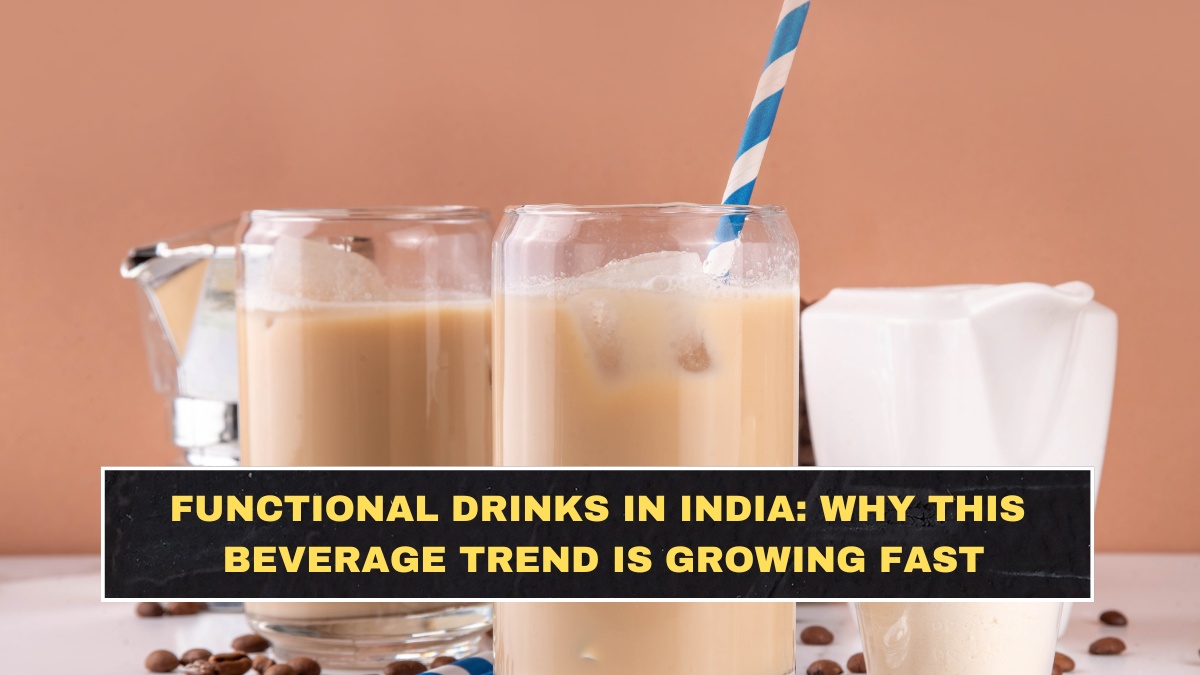
Functional drinks are growing fast in India because buyers no longer want beverages that only taste good or cool them down. They want drinks that claim to do something: improve hydration, support digestion, add protein, boost energy, help recovery, or fit into a broader wellness routine. Trend trackers and market reports in 2026 are pointing in the same direction. Innova says functional drinks are one of India’s key food and beverage trends for 2026, while market outlook reports estimate India’s functional drinks category at roughly $4.2 billion to $6.9 billion in 2025, with strong projected growth ahead.
That sounds exciting, but most people talk about this category badly. They lump everything together and pretend every “wellness drink” deserves the same trust. It does not. Functional drinks include very different products, from electrolyte beverages and protein shakes to kombucha, probiotic drinks, nootropic-style beverages, and energy drinks. Some of these solve real consumer needs. Some are mostly branding with a health halo.
What Are Functional Drinks in India?
Functional drinks are beverages marketed with a benefit beyond basic thirst. In India right now, that usually means hydration drinks, protein beverages, probiotic or gut-health drinks, energy drinks, fortified beverages, and herbal or adaptogen-style drinks. Innova’s India 2026 trend report specifically lists functional drinks alongside gut health and protein-rich options as major themes shaping consumer food choices.
The cleaner way to think about the category is by use case, not hype. A protein shake is solving a different problem from a kombucha bottle. An electrolyte drink is solving a different problem from a caffeinated “focus” drink. When people fail to separate these use cases, they become easy targets for marketing. That is why the category is booming: it meets real needs, but it also gives brands lots of room to exaggerate.
Why Is This Trend Growing So Fast?
The demand is rising because Indian consumers are increasingly linking food and drink to everyday wellbeing. Innova says Indian consumers are paying more attention to how nutrition connects with digestion, mood, sleep, and overall health, which makes functional beverages easier to sell. Mint reported in late 2025 that younger consumers are increasingly reaching for drinks tied to wellness, including gut-friendly brews like kombucha, matcha, and other function-led formats.
There is also a format advantage. Drinks are easier to market than meals. A consumer may not overhaul their diet, but they will try one bottled product that promises energy, hydration, or better digestion. That does not mean the drink is useless. It means convenience is doing a lot of the work.
Which Functional Drink Segments Matter Most?
In India, the strongest segments appear to be nutraceutical drinks, energy drinks, hydration beverages, gut-health drinks, and protein-focused products. Grand View Research’s India outlook says nutraceutical drinks were the largest revenue-generating type in 2025, while energy drinks and shots were the fastest-growing segment. IMARC’s India market snapshot also points to herbal infusions, probiotic beverages, and energy-oriented options as notable parts of the mix.
That breakdown matters because not all segments carry the same value or risk. Hydration drinks and protein beverages often have clearer use cases. Gut-health drinks can make sense when they are part of a broader diet. Energy drinks are where the category gets more dangerous, because the promise of fast performance is easy to oversell and easy to misuse.
| Segment | Why It Is Growing | What Buyers Should Check |
|---|---|---|
| Hydration drinks | Heat, travel, exercise, daily convenience | Sugar level, electrolyte need, actual use case |
| Protein drinks | Fitness, satiety, meal support | Protein amount, sugar, price per serving |
| Gut-health drinks | Digestion and wellness interest | Fermentation, sugar, realistic expectations |
| Energy drinks | Fast energy and alertness | Caffeine load, frequency of use, health risk |
| Fortified drinks | Easy “nutrition upgrade” positioning | Added nutrients, label clarity, overall diet fit |
This table is the practical view most buyers need. Otherwise they end up buying by buzzword and packaging instead of function.
Which Claims Actually Matter?
The claims that matter most are the boring ones: hydration, protein, electrolyte replacement in the right context, and sometimes gut-health positioning when the product genuinely contains fermented or probiotic content. These claims are easier to evaluate because they connect to clearer needs and clearer ingredients. AP’s recent reporting on Gatorade’s repositioning also shows that big beverage brands are leaning harder into functional language because consumers want hydration and recovery products beyond hardcore sports use.
The claims that need more skepticism are the vague ones: “boosts mood,” “supports immunity,” “helps sleep,” “improves focus,” or “balances wellness” without meaningful evidence or transparent formulation. Those are not automatically false, but they are much easier to sell than to prove. Buyers should assume that the fuzzier the claim, the more carefully the label needs to be checked.
What Should Indian Buyers Watch Out For?
The biggest risk is assuming “functional” means “healthy.” It often just means “positioned cleverly.” A drink can contain caffeine, sugar, additives, and strong marketing all at once. Recent reporting from the Times of India cited doctors warning about rising liver-damage concerns among young Indians linked to heavy energy-drink consumption, with concern focused on high caffeine, sugar, and additive loads.
The second thing to watch is regulation and labeling. FSSAI maintains standards and regulatory frameworks for functional foods, nutraceuticals, and related products, which matters because this category sits close to the line between food and health-positioned product. That does not guarantee that every claim on a bottle is meaningful. It means buyers should respect the label and the category enough to read properly instead of buying blindly.
Which Functional Drinks in India Make the Most Sense?
The smartest choices are usually the simplest ones. Hydration drinks make sense for heat, heavy sweating, and travel. Protein drinks can make sense for people who genuinely need portable protein. Gut-health drinks can fit as a supplement to a decent diet, not a replacement for one. Fortified beverages may help in specific routines, but they should not become an excuse for poor overall eating. Innova’s 2026 India trends suggest consumers still want value, familiar formats, and practical wellness, which is exactly why drinks that are easy to understand will likely keep winning.
The dumber approach is buying every new beverage category because it sounds futuristic. India does not need more beverage hype. It needs more label literacy.
Conclusion?
Functional drinks in India are growing fast because the category fits how modern consumers shop: quick, portable, and tied to specific wellbeing goals. Some of that demand is real and justified. Hydration, protein, and some gut-health formats have clear consumer logic. But the category also invites exaggeration, especially when brands rely on vague claims instead of useful formulation. The smart buyer should judge the function, the label, the sugar and caffeine load, and whether the drink solves an actual problem. If it does, the trend makes sense. If it does not, it is just expensive flavored marketing.
FAQs
What are functional drinks in India?
They are beverages marketed for benefits beyond hydration, such as energy, protein, gut support, electrolytes, or fortification.
Why are functional drinks growing in India?
Because consumers are linking beverages with wellness, digestion, energy, sleep, and convenience more than before.
Are all functional drinks healthy?
No. Some have clear use cases, but others rely on vague claims, sugar, caffeine, or additives that buyers should evaluate carefully.
What should buyers check first?
Check the claimed function, sugar, caffeine, protein or electrolyte amount, and whether the drink fits a real need instead of a marketing mood.
Click here to know more