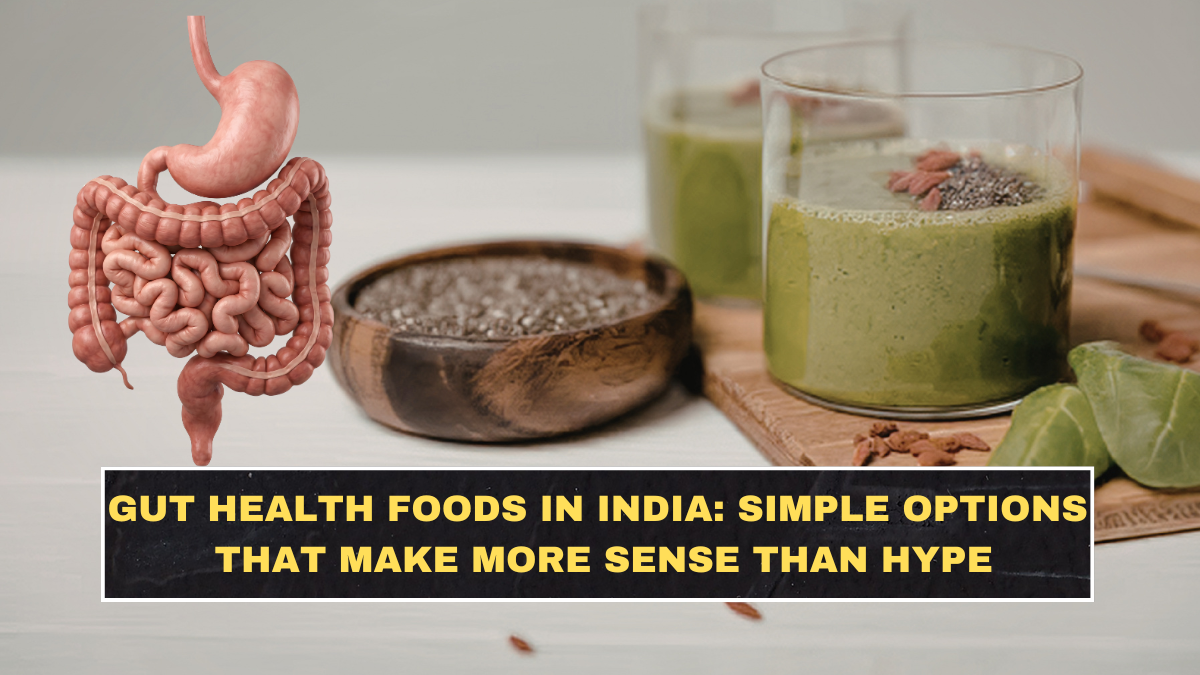
Gut health is becoming a bigger topic in India because people are tired of two things: constant bloating and useless advice. Most “gut health” content is either supplement marketing or vague wellness fluff. The boring truth is better. A stronger gut-friendly diet usually comes from more fiber, more variety, and sensible fermented foods, not from one miracle product. ICMR-NIN’s 2024 dietary guidelines push exactly that direction by emphasizing vegetables, fruits, pulses, whole grains, and dietary diversity in a balanced Indian plate. Harvard’s gut-health coverage also points to the same basic pattern: fiber and fermented foods can support the gut microbiome, but they work best as part of an overall diet, not as a trend hack.
That matters in India because the answer is often already sitting in the kitchen. Curd, buttermilk, dal, chana, fruits, vegetables, oats, millets, idli-dosa batter, and traditional fermented foods make far more sense than blindly buying imported “gut shots” or expensive probiotic powders. The 2026 review on Indian fermented foods also highlights that traditional Indian diets rich in fermented foods can support beneficial bacteria, while Cleveland Clinic explains that prebiotics are basically food for your gut microbes. So the smart route is simple: feed the gut first, then worry about trends later.
What Do “Gut Health Foods” Actually Mean?
Gut health foods usually fall into two useful groups: prebiotic foods and probiotic foods. Prebiotic foods contain fibers and resistant starches that feed beneficial gut microbes. Probiotic foods contain live microbes from fermentation. Cleveland Clinic explains that prebiotics act as fuel for gut microorganisms, while fermented foods such as yogurt and similar foods can supply beneficial live bacteria.
This is where people get confused. They chase probiotics and ignore fiber. That is backward. A gut-friendly diet cannot run on curd alone if the rest of the plate is low in vegetables, pulses, and whole grains. Harvard Health notes that fiber helps gut microbes produce beneficial compounds like short-chain fatty acids, and ICMR-NIN’s 2024 guidance keeps returning to variety, legumes, and plant foods for a reason. Your gut does not need a brand identity. It needs regular, decent food.
Which Gut Health Foods in India Make the Most Sense?
The most sensible Indian gut-health foods are the common ones people already know but rarely use consistently: curd, chaas, idli-dosa batter, dhokla, kanji-style ferments, pulses, chana, rajma, oats, fruits, vegetables, and whole grains or millets. The 2026 review on Indian fermented foods specifically discusses traditional Indian fermented foods and their relevance to gut microbes, while recent India-focused coverage still points to curd, buttermilk, idli, dosa, and kanji as practical fermented choices.
The fiber side matters just as much. Beans, pulses, oats, whole grains, onions, garlic, bananas, and vegetables support the gut by feeding microbes rather than just adding bacteria for a day. Cleveland Clinic and Harvard both emphasize the role of prebiotic fiber in fueling gut bacteria and supporting digestion. That means the best gut-health meal is usually not exotic. It is something like dal plus vegetables, curd rice with added vegetables, chana chaat, oats with curd, or a meal that combines fermented food with real fiber.
Which Everyday Indian Foods Help Most?
A practical Indian gut-health list should start with foods that are cheap, repeatable, and actually available. Curd and chaas are useful because they are familiar fermented dairy foods. Idli and dosa batter matter because fermentation changes the food and can support digestibility. Pulses and beans matter because they bring fiber and prebiotic support. Vegetables and fruits matter because gut health improves with plant diversity, not with one hero ingredient. Harvard’s reporting specifically links fiber and fermented foods to microbiome support, while ICMR-NIN’s plate model emphasizes fruits, vegetables, pulses, and diversity.
| Food | Main Gut Benefit | Why It Is Practical in India |
|---|---|---|
| Curd | Fermented dairy, probiotic support | Cheap, common, easy daily use |
| Chaas | Fermented dairy, light digestion support | Easy in hot weather and with meals |
| Idli/Dosa batter | Fermented staple | Fits normal breakfast habits |
| Dal/Chana/Rajma | Fiber and prebiotic support | Affordable, filling, familiar |
| Oats/whole grains/millets | Fiber support | Good for breakfast or mixed meals |
| Fruits and vegetables | Diversity and fiber | Core daily gut-support foods |
This is the basic table people need. Not “detox powders,” not influencer jars, and not imported fermented drinks pretending to be essential.
What Mistakes Do People Make With Gut Health in India?
The first mistake is treating bloating as proof that fiber is bad. Often the real issue is that people go from low-fiber eating to aggressive fiber intake overnight, then blame the food instead of their bad transition. Even recent coverage of fiber-rich foods notes that increasing intake too quickly can cause discomfort. The second mistake is over-relying on probiotic products while ignoring vegetables and pulses. That is like hiring workers and never feeding them.
The third mistake is poor food hygiene with fermented foods. This matters in India, especially in hot weather. Recent reporting tied to FSSAI guidance highlighted that fermented foods need careful storage and hygiene because warmer temperatures can increase contamination risk. So yes, fermented foods can help, but sloppy handling can turn “gut health” into food poisoning. That is not wellness. That is negligence.
How Should Someone Build a Gut-Friendly Daily Routine?
Start with one fermented food and one fiber-rich food every day instead of trying to “heal the gut” in a weekend. Breakfast could be idli with sambar, dosa with chutney plus vegetables, or oats with curd and fruit. Lunch could be dal, sabzi, curd, and rice or roti. Dinner could include beans, vegetables, and some fermented dairy if tolerated. ICMR-NIN’s 2024 plate approach supports exactly this kind of balanced meal structure.
The smarter goal is consistency and variety. Harvard Health says fiber and fermented foods support the microbiome, but that support works through regular patterns, not one-off “gut cleanse” behavior. If your daily diet is mostly refined flour, fried snacks, and low plant diversity, no probiotic drink is going to rescue it.
Conclusion?
Gut health foods in India do not need to be fashionable to work. The strongest options are usually the simplest ones: curd, chaas, fermented batters, pulses, beans, vegetables, fruits, oats, and whole grains. The real mistake is chasing probiotics while ignoring fiber, diversity, and basic food safety. If people stop looking for a miracle product and start eating more thoughtfully, gut health becomes far less mysterious and far more practical.
FAQs
Is curd good for gut health in India?
Yes, curd is one of the most practical fermented foods in India and can support the gut as part of a broader diet with enough fiber and plant variety.
Are idli and dosa good for gut health?
They can be useful because they come from fermented batter, but they work best when the overall meal also includes fiber-rich foods and not just refined extras.
What is more important for gut health, probiotics or fiber?
Fiber is often the more neglected piece because it feeds gut microbes consistently. Probiotics can help, but without enough fiber the bigger diet problem remains.
What is the biggest mistake people make with gut health foods?
Blindly buying probiotic products while eating a low-fiber, low-variety diet and ignoring food hygiene with fermented foods. That is trend behavior, not smart nutrition.