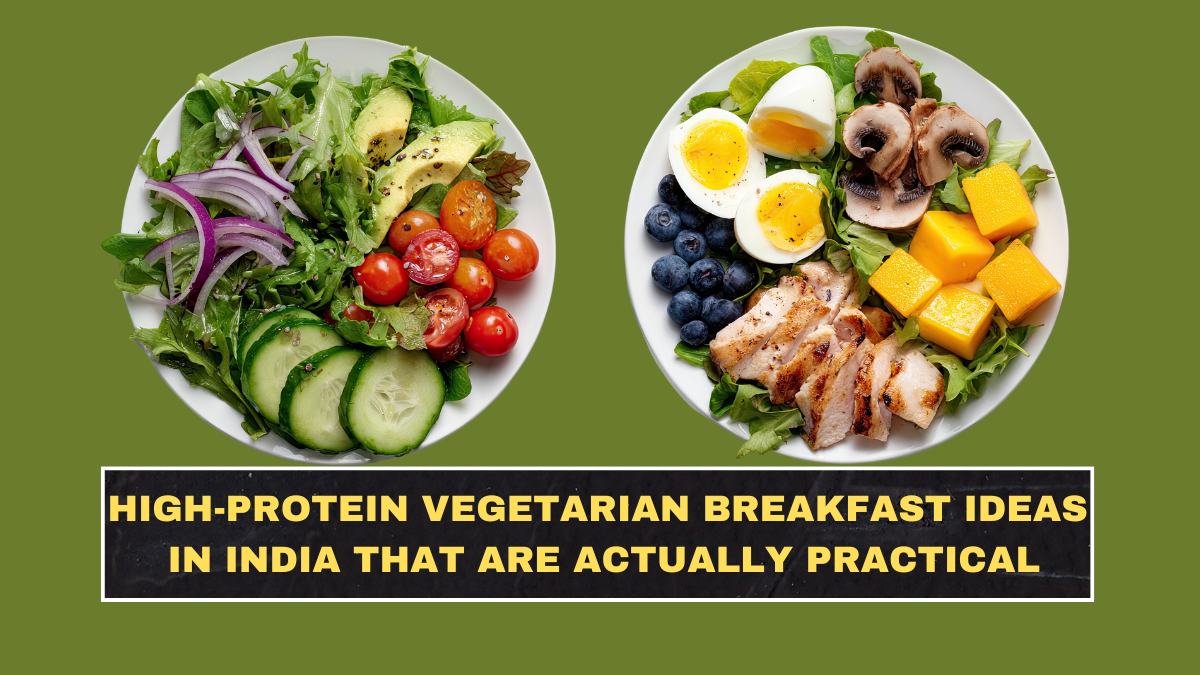
High-protein vegetarian breakfasts are getting more attention in India because too many people still start the day with meals that are heavy on carbs and weak on protein. ICMR-NIN’s guidance sets protein needs for healthy adults at 0.83 g per kg per day, and notes that for cereal-based diets with lower-quality protein, requirements can be closer to 1 g per kg per day. That matters in India because many meal patterns still lean too heavily on roti, poha, bread, biscuits, or plain idli without enough stronger protein support.
The bigger issue is not just total protein grams. It is breakfast quality. If the first meal is mostly refined carbs or a light starch-heavy plate, people get hungry again fast and then wonder why energy and satiety collapse by mid-morning. A better vegetarian breakfast does not need imported powders or absurd recipes. It needs smarter use of dal, besan, paneer, curd, soy, sprouts, and dairy in formats people can actually repeat. That is the difference between a useful diet change and performative nutrition content.
Why Is Protein Breakfast Becoming a Bigger Topic in India?
Protein is becoming a bigger breakfast conversation because Indian diets often underuse high-quality protein early in the day. ICMR’s dietary guidance recommends meeting protein needs through ordinary foods such as pulses, soy, dairy, and eggs rather than relying blindly on supplements. That fits breakfast perfectly, because it is one of the easiest meals to improve with better planning.
There is also a practical reason. High-protein breakfasts usually improve fullness and make later meals easier to control. In real life, that means fewer random snacks, less overeating at lunch, and better consistency for people trying to manage weight, fitness, or general energy. The mistake most people make is assuming one “healthy” breakfast item is enough. It usually is not. A plain bowl of poha or two idlis without a stronger protein partner is still a weak protein breakfast.
Which Vegetarian Breakfasts in India Are Actually Practical?
The most practical options are the ones built from familiar Indian ingredients and ordinary cooking methods. Moong dal chilla, besan chilla, paneer paratha, sprouts chaat with curd, sattu-based breakfasts, soy-stuffed parathas, and curd-oats combinations all work better than trendy nonsense because they fit how people already cook. Recent Indian nutrition and food coverage repeatedly points to moong, besan, paneer, soy, and chana-based breakfasts as reliable protein upgrades.
The important part is portion logic. People fool themselves by eating a tiny amount of a “protein food” and assuming the meal is suddenly high protein. One spoon of sprouts thrown on poha does not fix breakfast. One thin chilla with barely any filling does not either. The meal needs enough actual protein source to matter.
Which Breakfast Options Give the Best Protein for Effort?
Moong dal chilla is one of the strongest answers because it is familiar, affordable, and scales well. Recent India-focused breakfast coverage puts moong dal chilla around 18 g protein per serving, while besan chilla is often estimated around 16 g and paneer paratha around 18 g depending on stuffing and serving size. Those are meaningful numbers, not decorative ones.
Soy-based breakfasts are also underrated. Times of India recently covered a soya-chana-dal paratha at roughly 12 to 14 g protein per serving, and soy remains one of the densest vegetarian protein ingredients available in Indian kitchens. The reason many people avoid it is not nutrition. It is habit. They are used to carb-first breakfasts and never learned to build protein-first ones.
| Breakfast option | Typical protein | Why it works |
|---|---|---|
| Moong dal chilla | ~18 g per serving | Easy, familiar, filling |
| Besan chilla | ~16 g per serving | Fast batter, budget-friendly |
| Paneer paratha | ~18 g per serving | Strong vegetarian protein with good satiety |
| Soya-chana-dal paratha | ~12–14 g per serving | Better than plain paratha by a mile |
| Sprouted moong + curd bowl | varies, often ~14–18 g depending on portion | No heavy cooking needed |
| Oats + milk/curd + nuts/seeds | varies, often ~12–15 g depending on build | Useful for rushed mornings |
These numbers should be treated as practical ranges, not laboratory truth, because recipes vary. But they are still far more useful than vague advice like “eat healthy Indian breakfast.”
What Makes a Vegetarian Breakfast High in Protein Instead of Just Looking Healthy?
A high-protein breakfast has to do one thing clearly: deliver a meaningful protein source in enough quantity. That usually means dal batter, gram flour, paneer, curd, milk, soy, roasted chana, or a combination of them. A breakfast can look clean and still be protein-poor. Fruit alone is not enough. Toast alone is not enough. Upma alone is not enough. Even idli-sambar may still need help if the portion is small and the sambar is thin.
The smarter move is to combine foods. Chilla plus curd works. Paneer paratha plus plain dahi works. Sprouts plus curd works. Oats made with milk plus seeds and nuts works better than dry oats made like punishment food. The basic principle is simple: stop building breakfast around starch only.
How Can People Make These Breakfasts Easier to Repeat?
Repeatability is where most “healthy eating” advice collapses. The best breakfast is not the most impressive one. It is the one you can actually make on a weekday without cursing your life. Moong batter can be pre-soaked. Besan chilla is quick. Paneer stuffing can be made ahead. Sprouts can sit ready in the fridge. Curd needs no cooking. Sattu also works because it turns into a fast, protein-supporting option with almost no prep.
This is also where people sabotage themselves by chasing variety too hard. You do not need ten fancy options. You need three or four decent ones you can rotate without fail. That is how habits work. People who keep waiting for a “perfect diet plan” are usually just avoiding consistency.
What Do Most People in India Get Wrong About Vegetarian Protein Breakfasts?
The biggest mistake is underestimating portion size. People eat a light breakfast, call it healthy, then complain about low energy. The second mistake is assuming vegetarian means weak protein by default. That is lazy thinking. A badly planned vegetarian breakfast is weak. A well-built one with dal, besan, paneer, curd, soy, or sprouts is completely workable.
The third mistake is relying on expensive packaged “protein foods” before fixing ordinary meals. Most people do not need a protein bar at 8 a.m. They need a better breakfast plate. That is cheaper, more filling, and usually more sustainable long term.
Conclusion?
High-protein vegetarian breakfasts in India do not need to be complicated. The best options are usually the most practical ones: moong dal chilla, besan chilla, paneer paratha, soy-based parathas, sprouts with curd, and milk- or curd-based bowls built properly. The real fix is not trendy ingredients. It is building breakfast around a real protein source instead of hoping carbs will somehow do the same job. If the meal keeps you full, gives you enough protein, and is easy to repeat, that is the breakfast that wins.
FAQs
Which vegetarian breakfast has the most practical protein in India?
Moong dal chilla, besan chilla, paneer paratha, and soy-based parathas are among the most practical because they use common ingredients and can deliver meaningful protein per serving.
Is oats enough for a high-protein vegetarian breakfast?
Not by itself in many cases. Oats become more useful when combined with milk, curd, nuts, seeds, or another protein source. Otherwise, the protein total may still be too weak for a truly high-protein breakfast.
Is paneer a good breakfast protein?
Yes. Paneer works well because it is easy to add to parathas, bhurji, sandwiches, or bowls and usually gives a stronger protein boost than plain cereal-based breakfasts.
How much protein should a vegetarian breakfast aim for?
There is no single perfect number for everyone, but the bigger goal is that breakfast should contribute meaningfully to daily needs. ICMR-NIN sets adult protein needs at 0.83 g per kg per day, with cereal-based diets often needing closer to 1 g per kg per day, so a breakfast with only token protein is usually not enough.